Strong growth in employment Campuses and Science Parks in the Netherlands
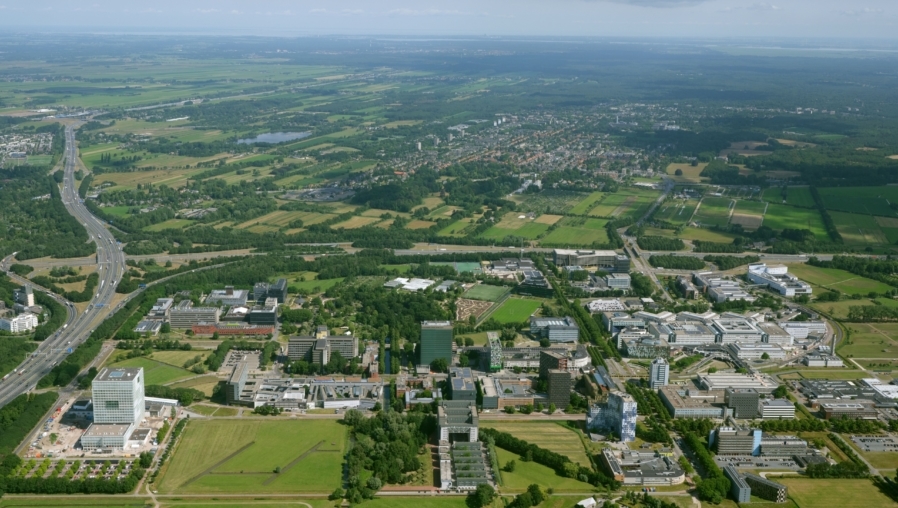
Campuses and science parks of the Netherlands are essential for growth of jobs and new business. Innovations and innovative collaborations result in solutions that accelerate societal transitions. So says the research report published on 4 December by Buck Consultants International (BCI). The report shows that the Utrecht Science Park has also grown strongly in terms of employees and remains by far the largest science park in the Netherlands with more than 31,000 employees.
‘We also see the significant growth in jobs at the Utrecht Science Park, even despite the fact that for a long time growth was hindered by lack of lab space. Meanwhile, much more space is being created at Utrecht Science Park. Also at our satellite location Utrecht Science Park Bilthoven, a lot of good space will become available after the RIVM’s relocation. The same applies to Utrecht Science Park Zeist after the relocation of TNO. It is nice to see that Utrecht Science Park remains by far the biggest science park in the Netherlands due to its growth (see page 31 of the report). We see that Utrecht Science Park also has the most employees at knowledge institutions, and this on about 1.5 square kilometres of surface area (see page 30 of the report). In addition, we also see a strong growth of employment at research & development companies at Utrecht Science Park, namely +76% from 2018 to now. This is almost 3 times higher than the average employment growth in the Utrecht Municipality. This is partly due to the growth of Merus, GenDx and Genmab. The number of companies has also grown significantly at 64% from 2018,’ said Jan Henk van der Velden, managing director of the Utrecht Science Park Foundation.
The report underlines the importance of continuing to invest in knowledge, innovation and thus in the development of science parks, such as the Utrecht Science Park, as a job engine for the city, region and country. Based on the environmental vision, the number of jobs in research & development companies (from vocational to academic level) at the Utrecht Science Park will increase by another 4,000 to 8,000 in the coming years.
See and download the research report (in Dutch)
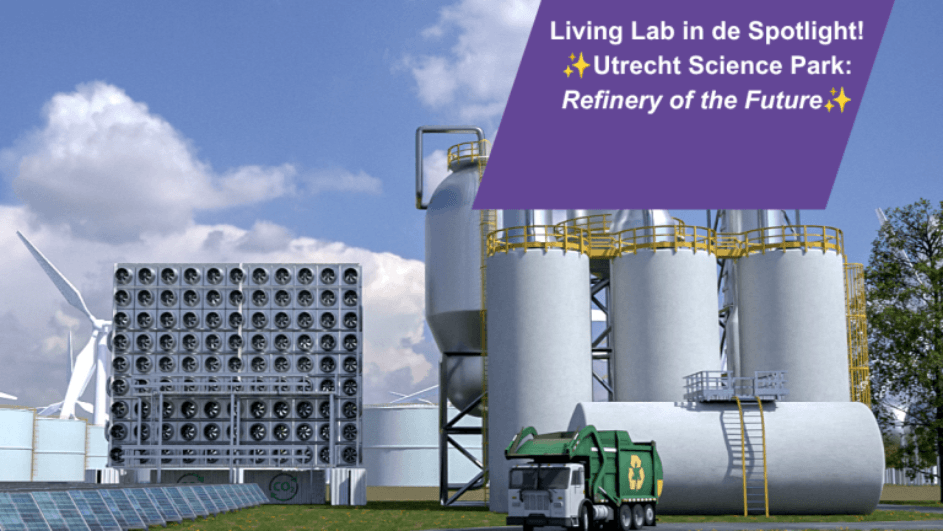
Living Lab in the Spotlight: Utrecht Science Park
Utrecht Science Park is home to several living labs focused on energy and circularity. These include Lumifield, which explores the generation and storage of solar energy, and the biogas digester, which uses organic waste as an energy source. On their own, these are already promising initiatives. Connected, they could become something much bigger: a functioning, learning model for a circular campus.
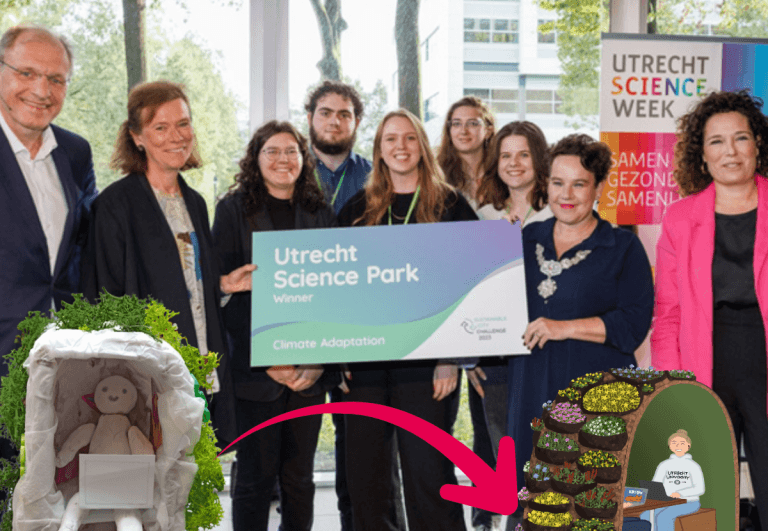
From student idea during challenge to ReGreen Hut at Dutch Design Week
On hot summer days, temperatures can rise significantly at Utrecht Science Park, while students are looking for places to study, relax and find some shade outdoors. At the same time, planting trees is not always straightforward: underground, the campus is crisscrossed by a dense network of cables and utility lines. So how can we create shade, greenery and places to relax without major changes to the ground?
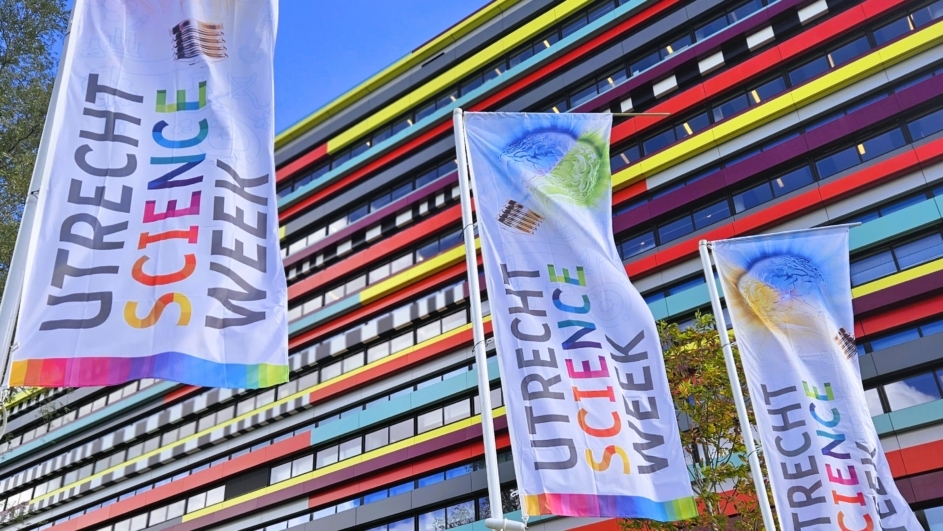
Utrecht Science Week kicks off: social and economic impact of Utrecht Science Park in the spotlight
The sixth edition of Utrecht Science Week takes place from Friday, 25 September to Sunday, 4 October. During this time, Utrecht Science Park opens its doors to the general public, showcasing how research, innovation, and collaboration lead to tangible societal and economic impact. At the same time, the week underscores the importance of sustained investment in knowledge and innovation.
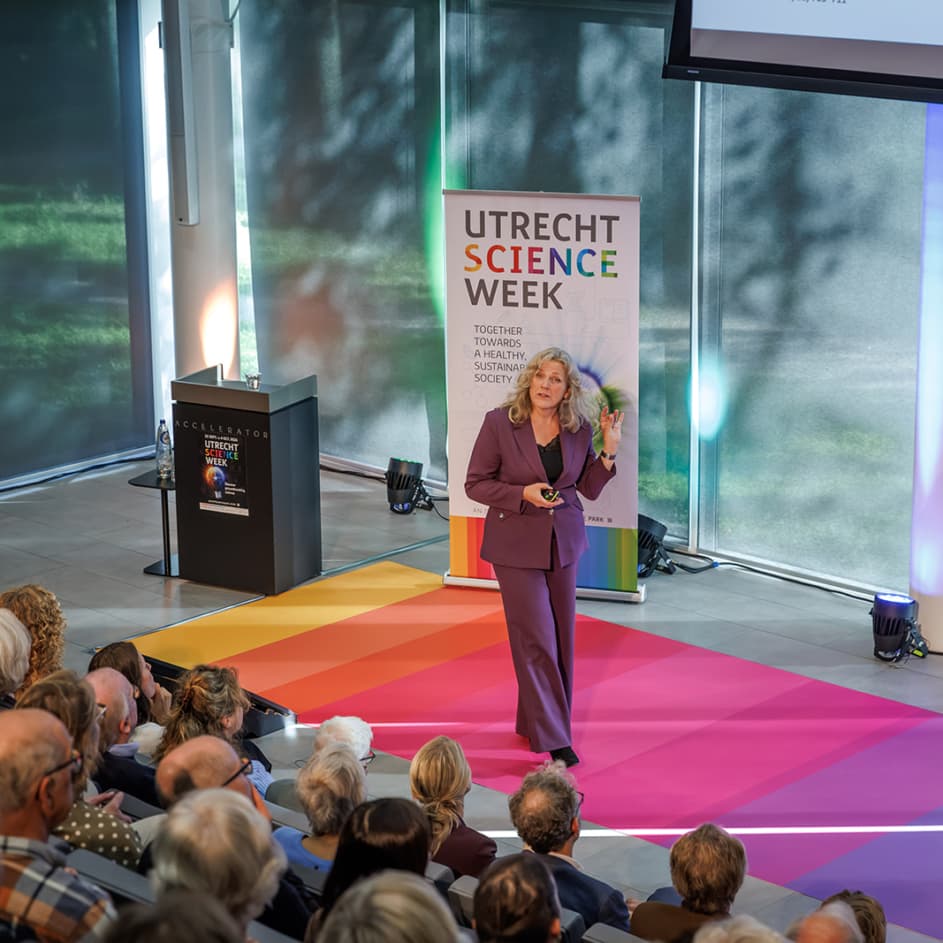
Looking back at Utrecht Science Week: research, education, and entrepreneurship in the spotlight
Utrecht Science Week 2026 has come to a close. For over a week, visitors enjoyed workshops, lectures, group discussions, and tours focused on science and innovation at Utrecht Science Park. With more than thirty program activities across over 25 locations, there were ample opportunities to experience science up close. We look back on a fantastic week that once again highlighted the essential role of collaboration, and the combination of research, education, and entrepreneurship, in addressing the societal challenges of our time.