High-tech robots and laser scanners: this laboratory is where the food of the future is being discovered.
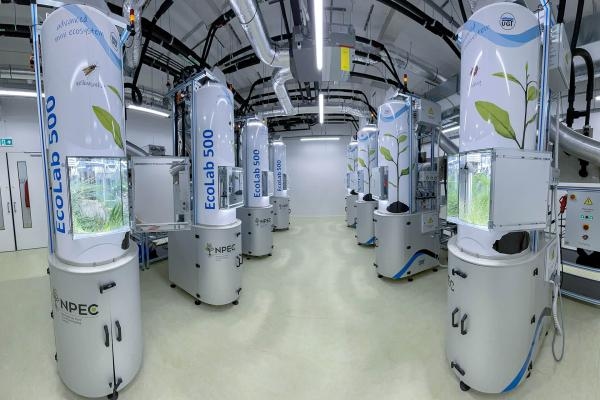
A remarkable world of high-tech robots, laser scanners, climate chambers, and other advanced equipment is hidden inside an inconspicuous, windowless building at Utrecht Science Park—a world entirely focused on the question of how to feed the global population in 2050.
The universities of Utrecht and Wageningen jointly established the lab, which has facilities in both locations, in 2023, with a clear and urgent mission. “As humanity, we have quite a serious problem,” Berendsen says. “Our numbers are growing so rapidly that the UN expects the global population to reach nearly 10 billion by 2050. Calculations show that we will need to produce twice as much food to feed everyone in the way we are used to.”
The core issue, he explains, is simple: “Without plants, we cannot survive. We eat them directly, or we turn them into feed for animals that we then eat. But the planet is not growing along with us. All land suitable for agriculture has long since been taken into use. We cannot expand.”
And then there is the nature of agriculture itself. “It is our most destructive activity. We use enormous amounts of crop protection products, for example against insects. These substances also damage nature and our own health. There is increasing evidence, for instance, of a link with Parkinson’s disease.”
The challenge
What the solution to this global challenge is, is clear. What Berendsen and his colleagues are investigating is how to achieve it: “Developing better agricultural crops. Crops that grow more efficiently, are more resilient, and therefore less dependent on large amounts of water, nutrients and chemicals. This allows us to produce more food on the same amount of land, in a better way.”
This leads to research in which plants such as potatoes, tomatoes, grains, lettuce, soybeans and around a thousand other species are analysed both inside and out, using the most advanced equipment available. What makes this possible is that over the past decade, techniques have emerged that allow the DNA of a plant to be mapped with relative ease.
The microbiologist then points to what he calls the heart of the laboratory: “Fifteen climate chambers in which we can fully control a plant’s environment: the temperature it grows at, the humidity, and the composition of the light. We can create an entire rainbow of light here.”
What he has not yet mentioned is the major complicating factor in this entire story: climate change. “We are seeing more and more heatwaves, droughts, floods and disease outbreaks. Farming is becoming increasingly difficult,” Berendsen says. “But all of that can be simulated here. We can place, for example, 500 plants with different genetic profiles in these chambers and see how they perform at 20 degrees, 30 degrees or even minus five. Or under drought conditions. It becomes a kind of survival of the fittest.”
Everything the plants do is recorded fully automatically. “Taking a photo, measuring a few centimetres of growth, weighing the plant, counting leaves, that’s the old-fashioned way. We now have a much better method.”
Research line
At regular intervals, the plants are automatically transported from one of the climate chambers to a research line filled with equipment. Using advanced camera systems, the plants’ shapes are measured in great detail. This includes 3D laser scanning, and fluorescence cameras that determine whether specific bacteria and fungi are present on the leaves and how efficiently the plant performs photosynthesis, producing its own food from light. The results are fed directly into the computer.
According to the researcher, the fact that this work is being done here is no coincidence. “The Netherlands is a unique country when it comes to plant breeding. A very large share of all vegetable seeds worldwide originates here,” he says.
“The same applies to potatoes. Wherever potatoes can grow, they do grow, all over the world. It is our most important food crop, and 60% of those potatoes are seed potatoes exported abroad, feeding an estimated 800 million people. That makes it extremely valuable to understand not only how well a potato plant grows, but also what specifically contributes to that quality.”
For that reason, research also takes place underground, focusing on plant roots. Berendsen still sometimes wakes up at night sweating, remembering the days when this meant manually placing seeds in a medium between endless glass plates. Today, however, there is a high-tech robot, the only one of its kind in the world, that takes over this painstaking work.
“He can also easily apply hundreds of different bacteria to a single plant and then observe how the plant responds in each case. Because we know the genetic background of both the bacterium and the plant, we can uncover the mechanisms that allow plants to thrive: living in symbiosis and supporting one another.”
Fungus
One such discovery involved a fungus that naturally occurs on potato plants and stimulates a larger, more finely branched root system. Researchers found that this beneficial fungus is negatively affected by a pesticide that is widely used in agriculture.
Working together with Dutch companies, Berendsen and his colleagues translate their knowledge to crops grown in the field. These companies purchase the universities’ expertise to gain a commercial advantage, either by further breeding plants into stronger varieties or by helping farmers make better-informed choices when selecting their crops.
“In the future, a grower might even take a sample from their field and plug a small device, a DNA sequencer, into their laptop,” Berendsen says. “Our models would then indicate: ‘This field is perfectly suited for a specific type of potato or for wheat.’ That is where we are heading.”
What kind of world will we be living in twenty years from now? “I hope for a much healthier one, where we rely less on pesticides, artificial fertilisers, land and water to produce our food, and where agriculture causes less damage to our living environment. This is where we are laying the foundation.”
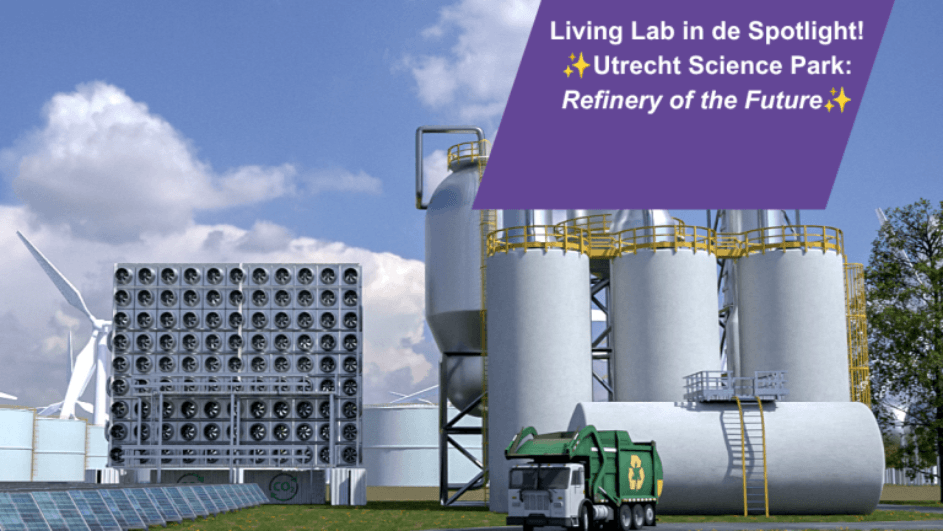
Living Lab in the Spotlight: Utrecht Science Park
Utrecht Science Park is home to several living labs focused on energy and circularity. These include Lumifield, which explores the generation and storage of solar energy, and the biogas digester, which uses organic waste as an energy source. On their own, these are already promising initiatives. Connected, they could become something much bigger: a functioning, learning model for a circular campus.
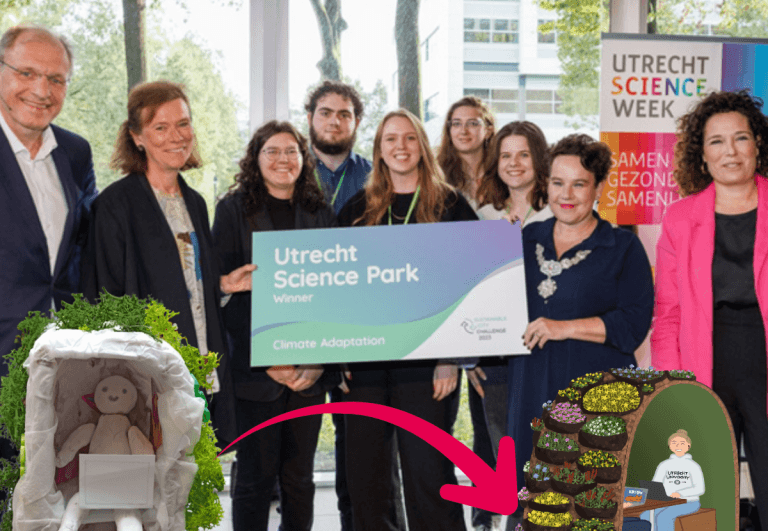
From student idea during challenge to ReGreen Hut at Dutch Design Week
On hot summer days, temperatures can rise significantly at Utrecht Science Park, while students are looking for places to study, relax and find some shade outdoors. At the same time, planting trees is not always straightforward: underground, the campus is crisscrossed by a dense network of cables and utility lines. So how can we create shade, greenery and places to relax without major changes to the ground?
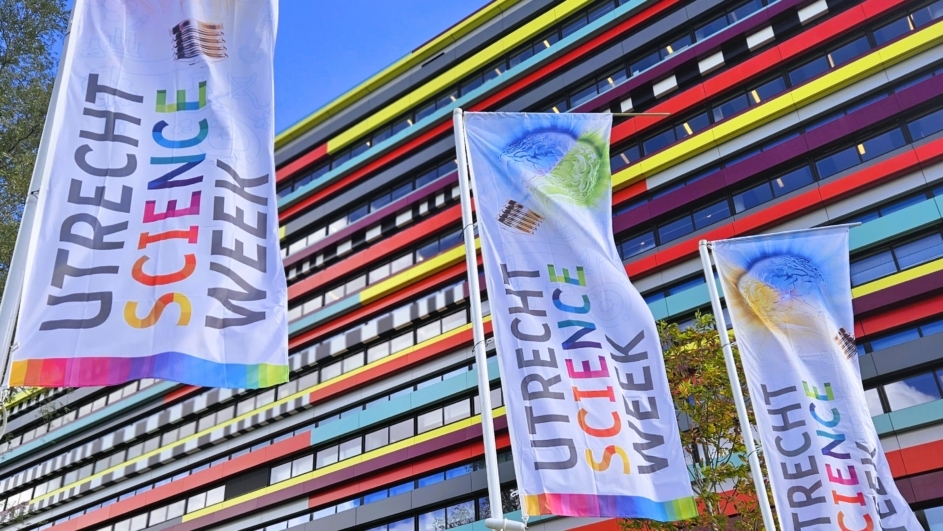
Utrecht Science Week kicks off: social and economic impact of Utrecht Science Park in the spotlight
The sixth edition of Utrecht Science Week takes place from Friday, 25 September to Sunday, 4 October. During this time, Utrecht Science Park opens its doors to the general public, showcasing how research, innovation, and collaboration lead to tangible societal and economic impact. At the same time, the week underscores the importance of sustained investment in knowledge and innovation.
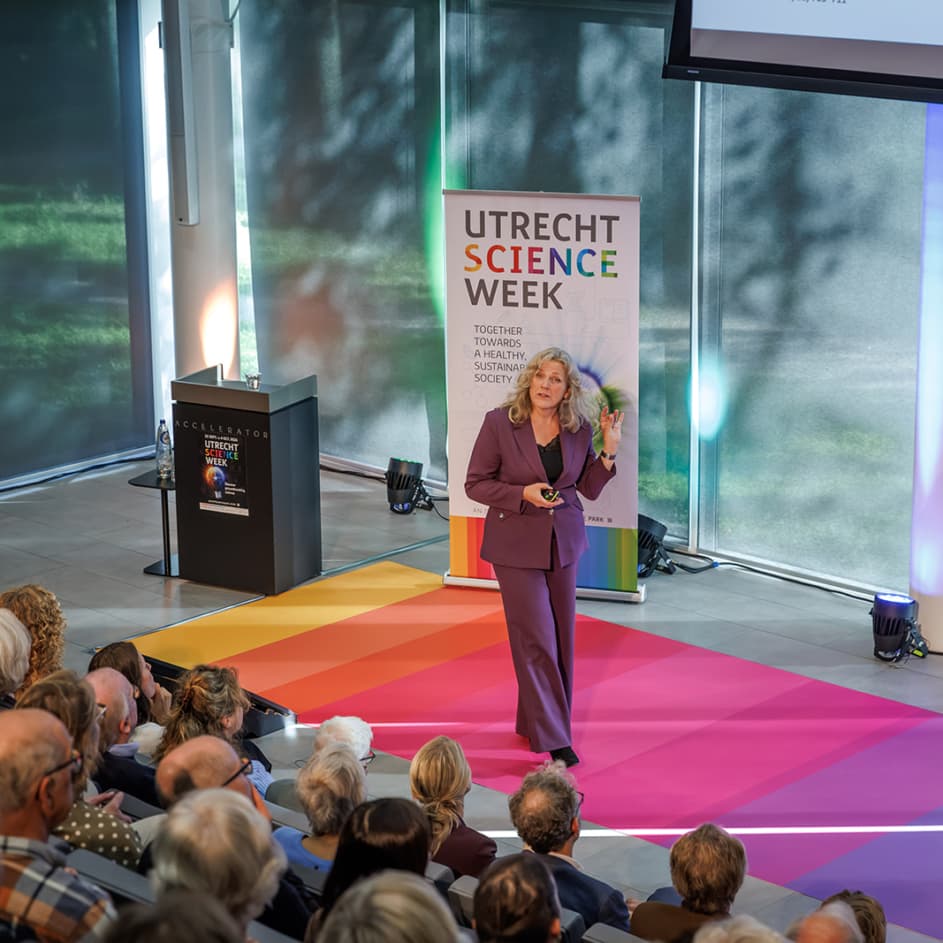
Looking back at Utrecht Science Week: research, education, and entrepreneurship in the spotlight
Utrecht Science Week 2026 has come to a close. For over a week, visitors enjoyed workshops, lectures, group discussions, and tours focused on science and innovation at Utrecht Science Park. With more than thirty program activities across over 25 locations, there were ample opportunities to experience science up close. We look back on a fantastic week that once again highlighted the essential role of collaboration, and the combination of research, education, and entrepreneurship, in addressing the societal challenges of our time.