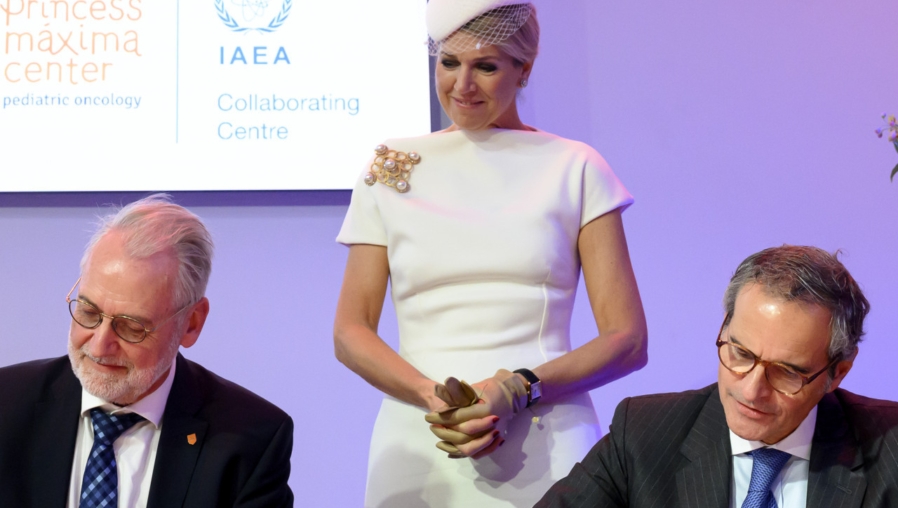
As part of the partnership, the IAEA has designated the Princess Máxima Center as an IAEA Collaborating Center for a period of four years to strengthen pediatric radiation oncology, medical physics and nutrition. Together, the Máxima Center and the IAEA will support international pediatric radiotherapy teams on enhancing their knowledge, skills and expertise through joint activities in education, training, quality improvement and research.
‘It is our mission to reduce the big disparities in radiotherapy for children around the world; knowledge and training are a key part of that’, says Rafael Mariano Grossi, Director General of the IAEA. ‘I am very pleased that paediatric radiotherapy teams will be able to take what they have learned at the Princess Máxima Center back to colleagues in their home countries, and ultimately to the children and families who count on them.’
Global disparities
International differences in radiotherapy have multiple causes. First, access to modern equipment is often limited. In addition, there is frequently insufficient training to treat children safely and effectively, with the lowest possible risk of late effects.
‘We are grateful to the IAEA for giving us the opportunity to provide these radiotherapy oncologists the training that will help them treat children in their own countries more safely and effectively. In addition, it enables us to further advance our knowledge of childhood cancer by working more closely with hospitals in these regions’, says Prof. Dr. Rob Pieters, Chief Máxima International at the Princess Máxima Center. ‘In this way, it substantially contributes to our center’s mission which is shared by pediatric oncologists worldwide: curing every child with cancer, with the best possible quality of life. Everywhere.’