Wennink plan: Life Sciences and biotechnology are important growth drivers for the earning capacity of the Netherlands
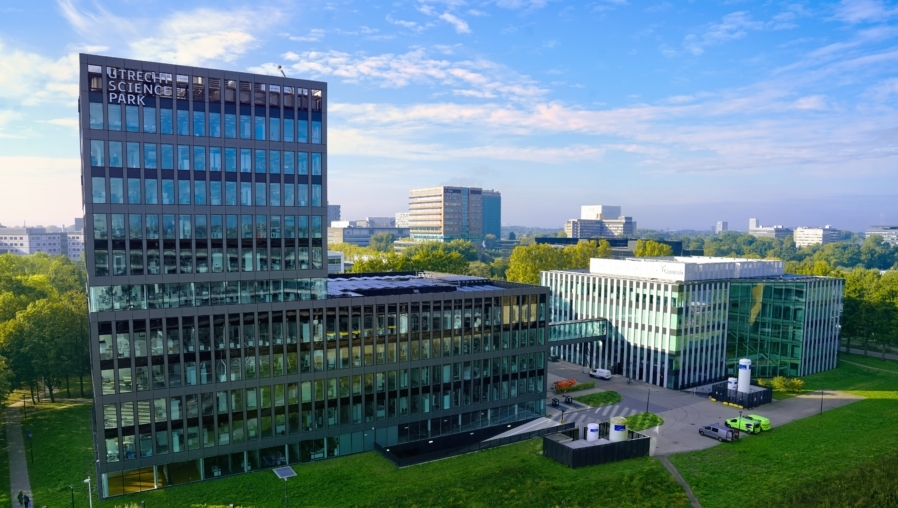
The Dutch Life Sciences and biotechnology sector can make a much larger contribution to the Netherlands’ economic strength. This is shown in a new growth strategy presented today as part of Peter Wennink’s advisory report. The report also highlights Utrecht Science Park as one of the key innovation locations and sources of progress and growth.
Importance of conditions for innovation
Based on the Wennink report, the health and biotechnology sector has developed a strategy showing that investing in new medicines, diagnostics, therapies, and medical technologies benefits the Dutch economy. It leads to sustainable growth, many high-quality jobs, and faster access to innovative treatments for patients. According to the sector, this can only succeed if the conditions for growth improve significantly. This aligns with the recommendations of Peter Wennink, who argues for investing specifically in sectors in which the Netherlands is internationally strong. An analysis by KPMG shows that the Netherlands already has a great deal to offer: strong biotech clusters, good infrastructure, and internationally recognized knowledge institutions. Yet companies still face major obstacles. A lack of financing, space, and slow procedures are holding back growth. Investing in these essential conditions will help the sector continue to scale up.
National ambitions
The research shows that targeted investments in Biotech Nexus—the national program proposed by the sector—have a significant economic multiplier effect: every euro of public investment generates on average €2.50 in private investment and nearly €2 in additional economic activity.
Biotech Nexus coordinates and allocates public funds based on transparent criteria. It is designed to bring together regional strengths, accelerate knowledge valorization, and support companies in scaling up. This would enable the Dutch biotech ecosystem to take on a leading international position.
Fewer rules, more data, faster access
The Netherlands has strong clusters, high-quality infrastructure, and internationally recognized knowledge institutions. To fully unlock the sector’s growth potential, stronger framework conditions are needed. These include access to capital and talent, shared and secure access to (bio)data, predictable and efficient procedures for permits and clinical research, faster market access for innovations, and sufficient physical space for research, scaling, and production.
The Wennink report emphasizes that investing now in digitalization, talent development, grid capacity, and innovation financing is essential—areas in which the Utrecht region is already making progress. Utrecht Science Park plays a central role. As the leading Life Sciences & Health cluster in the Netherlands, it is described in the report as a strategic hub in the national knowledge and innovation infrastructure.
Call to action for policymakers
Utrecht Science Park therefore welcomes the conclusions of the Wennink report and fully supports the sense of urgency. Jan Henk van der Velden (Executive Director, Utrecht Science Park Foundation) states: “We are pleased with the shared urgency to improve the conditions for innovation. After Draghi’s wake-up call for Europe, we hope this call to action from Wennink will now be taken up with priority by the Dutch government. As the largest science park in the country, we are ready to give a strong boost to the Netherlands’ economic strength.”
Recently, Genmab, a biotech company based at the Utrecht Science Park, announced its acquisition of neighbor Merus for nearly €7 billion. This keeps valuable knowledge within the Netherlands. If innovation conditions improve, there will be many more opportunities for startups to emerge from the strong scientific knowledge base and grow into successful companies with the Netherlands as their home base. Ton Logtenberg (CEO of Gyes, founder and former CEO of Merus) says: “Especially from Utrecht’s research & development companies, we see the need for this approach. We recognize ourselves in Wennink’s recommendations and expect that the importance of taking real action is now understood.”
‘Powerhouse of the biotech sector’
Utrecht Science Park, part of the Utrecht region’s “Heart of Health,” is a unique and valuable place where universities, hospitals, companies, and governments work closely together. This allows new ideas and scientific discoveries to be quickly translated into practical solutions for healthcare and society.
Under the theme Utrecht Life Sciences, major organizations such as Utrecht University, UMC Utrecht, HU University of Applied Sciences Utrecht, the Princess Máxima Center, the KNAW institutes Hubrecht and Westerdijk, and the RIVM collaborate intensively. Because so many hospitals and research laboratories are located in close proximity, innovations can more quickly develop into applications that benefit patients and the economy.
Significant attention is given to talent development, including through the Graduate School of Life Sciences—one of the largest in Europe. To create even more impact, it is important to strengthen support for innovation, foster more startups, and accelerate the development of new products.
Recently, Utrecht Science Park was described by Mayor Sharon Dijksma as “the golden square kilometer,” and by the Financieele Dagblad as “the powerhouse of the biotech sector.”
“Especially from Utrecht’s research and development companies, we see the necessity of this approach. We recognize ourselves in Wennink’s recommendations and expect that now the importance is understood, real action will follow.”
Ton Logtenberg (CEO Gyes, founder and former CEO Merus)
Focus areas Utrecht Science Park
The Utrecht Science Park is particularly leading in the following areas:
The success of Utrecht Science Park is also evident from major breakthroughs and strong growth in knowledge and business activity. Utrecht Science Park is particularly leading in the following areas:
- Cancer research (oncology): A strong research cluster with 2,000 researchers united in Utrecht Cancer, successful biotech companies such as Genmab, and internationally leading pediatric cancer care at the Princess Máxima Center.
- Regenerative medicine: The largest research cluster in the Netherlands. Work focuses on pioneering treatments using stem cells and advanced biomaterials, developed by institutions such as the Hubrecht Institute, Utrecht University, UMC Utrecht, and companies like Kuros and Scinus Cell Expansion.
- Infectious diseases and immunology: Utrecht Science Park integrates research, healthcare, and production. Key players include Utrecht University, UMC Utrecht, RIVM, ECRAID, and vaccine producer Bilthoven Biologicals. Together, they also contribute to preparedness for future pandemics.
- Drug development and precision therapy: There is extensive expertise in organoids (mini-organs for research), artificial intelligence, new testing methods, and animal-free research techniques. Notable companies include HUB Organoids, Gyes, and GenDx.
- Imaging technology: UMC Utrecht is a frontrunner in developing new imaging techniques for diagnostics and minimally invasive treatments. A prime example is the MR-Linac: a device developed in Utrecht in collaboration with Philips and Elekta, enabling much faster and less harmful cancer treatments.
- Digital health and AI: Utrecht Science Park develops smart technologies for diagnostics, monitoring, and healthcare organization, including initiatives such as the Health AI Lab and the Medical Control Center.
Seizing the momentum
Utrecht Science Park supports the sector’s call to seize the momentum created by the Wennink report. Because of the important role the Utrecht biotech cluster plays in the national value chain, developments in the Utrecht region have a positive impact across the entire Netherlands. By structurally strengthening the conditions for growth and better connecting regional ecosystems, the Netherlands can develop into a European frontrunner in health innovation, with major economic and societal impact.
Download and read the full Wennink advisory report here (please note: full report in Dutch).
Picture credits: Joost Melis
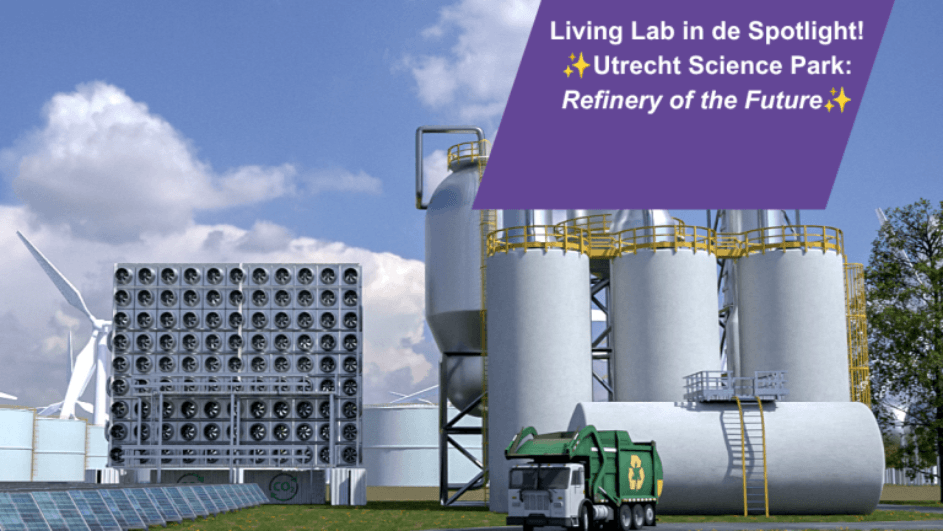
Living Lab in the Spotlight: Utrecht Science Park
Utrecht Science Park is home to several living labs focused on energy and circularity. These include Lumifield, which explores the generation and storage of solar energy, and the biogas digester, which uses organic waste as an energy source. On their own, these are already promising initiatives. Connected, they could become something much bigger: a functioning, learning model for a circular campus.
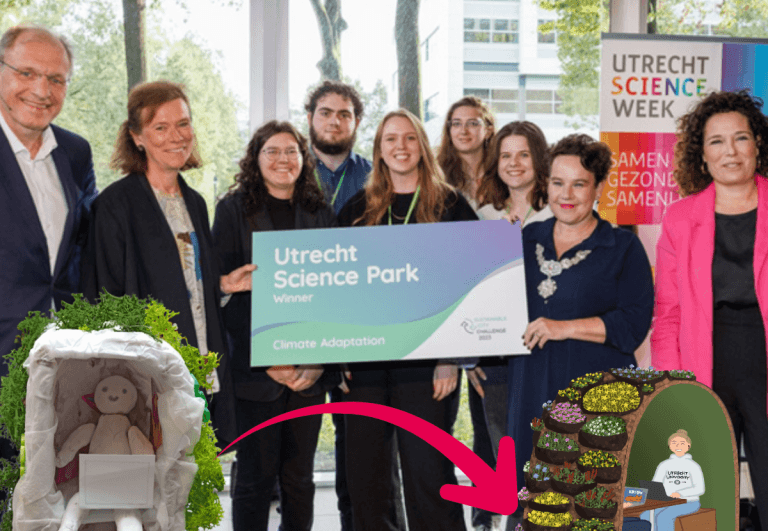
From student idea during challenge to ReGreen Hut at Dutch Design Week
On hot summer days, temperatures can rise significantly at Utrecht Science Park, while students are looking for places to study, relax and find some shade outdoors. At the same time, planting trees is not always straightforward: underground, the campus is crisscrossed by a dense network of cables and utility lines. So how can we create shade, greenery and places to relax without major changes to the ground?
Utrecht Science Week kicks off: social and economic impact of Utrecht Science Park in the spotlight
The sixth edition of Utrecht Science Week takes place from Friday, 25 September to Sunday, 4 October. During this time, Utrecht Science Park opens its doors to the general public, showcasing how research, innovation, and collaboration lead to tangible societal and economic impact. At the same time, the week underscores the importance of sustained investment in knowledge and innovation.
Looking back at Utrecht Science Week: research, education, and entrepreneurship in the spotlight
Utrecht Science Week 2026 has come to a close. For over a week, visitors enjoyed workshops, lectures, group discussions, and tours focused on science and innovation at Utrecht Science Park. With more than thirty program activities across over 25 locations, there were ample opportunities to experience science up close. We look back on a fantastic week that once again highlighted the essential role of collaboration, and the combination of research, education, and entrepreneurship, in addressing the societal challenges of our time.