Liver tumor organoids point to potential treatment
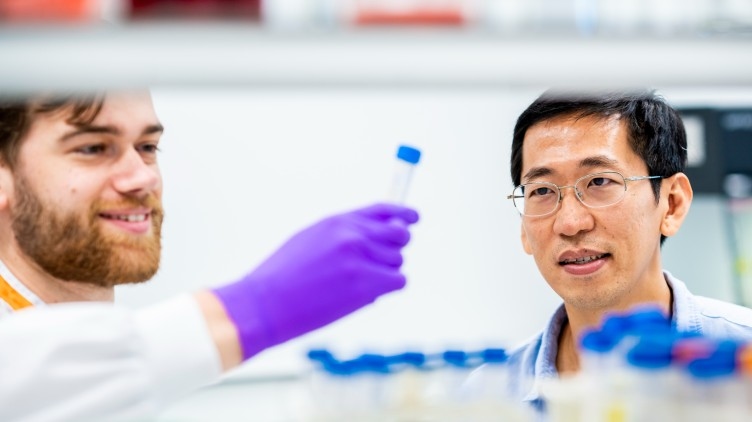
Liver organoids reveal a potentially new, targeted treatment for hepatoblastoma during drug testing. Researchers at the Princess Máxima Center grew the mini-tumors in the lab, accelerating research into new treatments for this rare form of liver cancer. Partly thanks to this research, preparations for a first international clinical trial with a targeted drug have begun.
Every year, six to eight children in the Netherlands are diagnosed with a malignant liver tumor. Treatment consists of chemotherapy and surgery, and often includes a liver transplant. This major surgery means that children have to take medication throughout their lives that suppresses their immune system. In addition, the chances of survival in the high-risk variant are far from optimal. Finding new treatments is therefore of great importance.
Culturing mini tumors
Organoids play an increasing role in pediatric oncology research. These mini tumors not only offer insights into tumor origin and growth, but also facilitate drug testing. Thomas Kluiver, a PhD student, and Yuyan Lu, a postdoctoral researcher in the Peng group, have dedicated the past four years in investigating these tumor organoids using various sequencing techniques. They also tested different drugs on these organoids. They found that a group of small molecules, termed HDAC inhibitors, are particularly effective against this form of liver cancer.
Today, the results of the research, which was made possible by KiKa, Oncode Accelerator and the Princess Máxima Center Foundation (Kus van Kiki), were published in Nature Communications. These findings are featured alongside a complementary study from the Nusse group at Stanford University from the United States.
Understanding tumor diversity
A hepatoblastoma consists of different types of tumor cells: embryonal and fetal cells. To grow an organoid from a biopsy of a child, the right conditions must be found for both types of cells. Kluiver: ‘Now that we have found these conditions, we can grow infinite amounts of research material from a small piece of tumor tissue. We used RNA analysis to identify two types of tumor cells, which differ in cellular features.’ These RNA analyses provided large amounts of data and insights. Postdoctoral researcher Stephanie Schubert also played an important role in analyzing this data.
The team also identified specific biomarkers for these two types of tumor cells. These landmarks allowed the researchers to easily distinguish the two types of tumor cells and determine their composition in tumor tissues from children. These biomarkers are currently included in the protocol of the Children’s Oncology Laboratory at the Máxima Center. Their possible clinical application is being further explored internationally, in collaboration with prof. dr. Ronald de Krijger, pathologist at the Máxima Center, who also serves as the chair of the European central pathology review panel for the Paediatric Hepatic International Tumour Trial (PHITT).
Drug screening
The researchers then used these organoids to identify potential new treatments for children. They did this together with the drug screening facility at the Máxima Center. Lu explains: ‘We tested over 200 drugs on eleven different organoid models. After all, not every tumor is the same. We saw that HDAC inhibitor drugs most effectively killed both types of tumor cells. We also saw that embryonal and fetal tumor cells were sensitive to FGFR and EGFR inhibitors respectively. As a result, we now know that the EGF/FGF signaling associated with these drugs plays a role in the development of the tumor cells. We can in turn use this new information in further research.’
From lab to clinic
The Princess Máxima Center is a hospital where research is integrated with clinics. This study is an example of how discoveries made in the lab can lead to changes in treatment. Dr. Weng Chuan Peng, research group leader, and Dr. József Zsiros, pediatric oncologist specialized in liver tumors, are part of the Childhood Liver Tumors Strategy Group (SIOPEL). A study group, led by Zsiros, is working on a clinical trial that builds upon the results from this study. Zsiros explains: ’The study is currently in the late stages of preparation, and we aim to add the drug we found to the existing chemotherapy treatment. We want to investigate whether the response and survival of children with high-risk liver tumors improves.’
Peng adds: ’By working closely together with the common goal of achieving clinical improvements, we hope to make a difference for children with liver cancer. We frequently share our findings with clinical researchers through SIOPEL. This collaborative approach makes us a recognized player on the international stage.’
Interview: Thomas Hoogeboom on the future of Mobility & Health
Healthcare in the Netherlands is at a turning point. The new Societal Impact Platform Mobility & Health aims to connect knowledge and expertise across research disciplines, organizations and societal partners. We spoke to Thomas Hoogeboom, Professor of Physiotherapy Sciences and initiator of the platform, about the importance of mobility for health, the value of collaboration and what to expect from the kick-off during Utrecht Science Week.

How UtrechtInc. helps startups grow
From a promising idea to a startup: getting there takes more than a good idea. UtrechtInc is a startup incubator that supports students, researchers and entrepreneurs in the Utrecht region during the early stages of their startup. Through validation programmes, personal guidance and a network of experts and investors, UtrechtInc helps founders develop and test their ideas.

The new sports season at Olympos has kicked off again
The holidays are over, and the sports season has kicked off again! With packed schedules and tight deadlines, it is tempting to just keep working. Before you know it, you’ve spent hours in front of your screen or in the lab without taking a real break. Especially when things are busy, physical activity can help you unwind and gain new energy and inspiration.
Opening Utrecht Science Week with keynote by Juliette Legler on the hidden influence of environmental chemicals
On Friday, September 25, the annual science festival ‘Utrecht Science Week’ kicks off once again at Utrecht Science Park. We are pleased to announce that this year, Prof. Dr. Ir. Juliette Legler will deliver the Utrecht Science Lecture. Juliette Legler is Professor of Toxicology at the Faculty of Veterinary Medicine at Utrecht University and leads the ‘One Health Toxicology’ group at the Institute for Risk Assessment Sciences (IRAS).