Health starts in the community, not in the hospital
A person’s health is shaped by more than access to medical care. Factors such as income, housing, stress, social environment, and access to essential services all play an important role. That is why researchers, healthcare professionals, students, and residents are working together to reduce health inequalities and create healthier communities.
Significant health disparities continue to exist between different neighborhoods and population groups in the Netherlands. People facing financial hardship, housing insecurity, or limited access to resources often experience poorer health outcomes. Addressing these inequalities requires more than high-quality healthcare alone.
At UMC Utrecht and Utrecht University, researchers are exploring how health inequalities arise and which approaches can help create more equal opportunities for good health. Collaboration with residents and community partners is central to this work. By engaging with people rather than speaking about them, researchers and professionals gain a deeper understanding of the challenges individuals face in their daily lives.
One example of this approach is the collaboration with Eugenie Mac-nack, an expert by experience in the field of poverty and health. Drawing on her own experiences as a resident of Overvecht, she contributes valuable insights to research, education, and healthcare practice.
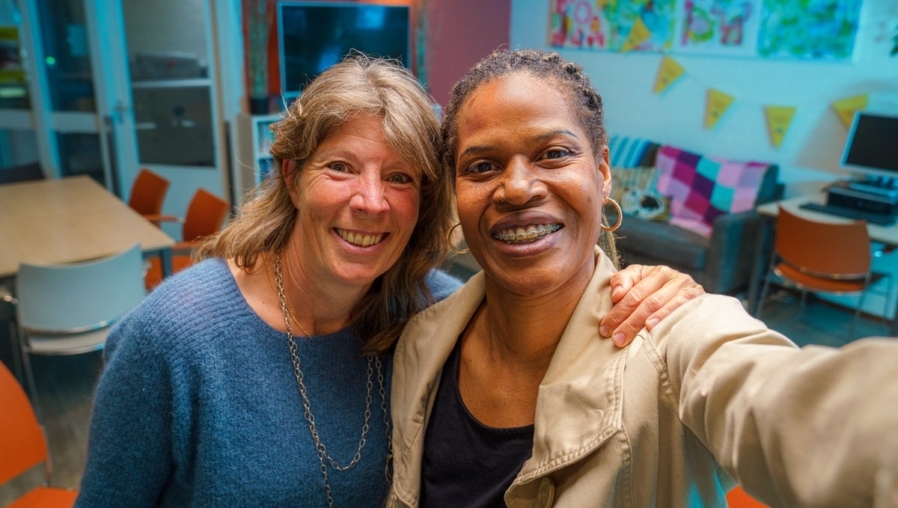
In conversation with Mariëlle Jambroes, Physician in Public Health and Head of the Public Health Department at UMC Utrecht, Eugenie shares how living conditions can affect health and well-being. Their discussion highlights the importance of looking beyond healthcare alone and considering the broader circumstances in which people live.
Healthcare education is increasingly focusing on the social and environmental factors that influence health. Students and future healthcare professionals are encouraged to engage with communities beyond the hospital setting and to better understand how issues such as financial security, housing, and chronic stress affect people’s everyday lives.
This broader perspective helps future professionals develop the skills to listen more effectively, ask different questions, and provide care that better reflects the realities of their patients.
Working Together for Equal Health Opportunities
Reducing health inequalities requires collaboration across healthcare, education, research, local government, and communities. By bringing together different perspectives and experiences, sustainable solutions can be developed to support equal opportunities for health for everyone.
These themes are explored in Difference Makers (Verschilmakers), a video series created by Utrecht University and UMC Utrecht. In each episode, researchers, professionals, and experts by experience discuss societal challenges that have a direct impact on people’s daily lives.
Interested in learning more? Watch the Difference Makers episode featuring Eugenie Mac-nack and Mariëlle Jambroes to discover how community-based collaboration can contribute to a healthier and more equitable society.