Four HU health & wellbeing projects receive RAAK public grant

From diverse areas of expertise, united under the banner Together Healthy, HU University of Applied Sciences Utrecht is committed to reducing health and well-being gaps between people in the region and increasing their self-reliance. As many as four of these projects have now received a RAAK public grant.
With RAAK-public, the SIA governing board funds research by universities of applied sciences into practical questions from the public sector. Research that provides practically applicable solutions to these questions. For the second RAAK-public round in 2024, universities of applied sciences had submitted 52 applications. HU University of Applied Sciences Utrecht received the green light for no less than four projects; the most of any university.
Preventing trauma in the emergency room
The emergency room is a unique working environment where healthcare professionals are on call 24/7 for acute and life-threatening situations. This means a high workload and emotional strain. But it is not only a stressful environment for professionals; patients too often find themselves in a vulnerable and stressful situation. This is especially the case with patients who are also psychologically disturbed. How do you prevent this situation from becoming traumatising for professionals and patients?
Trauma-Informed Care (TIC) focuses on the timely recognition and management of trauma in patients as well as healthcare professionals. In the emergency department, however, the application of TIC is still in its infancy. In this project, HU, together with partners and based on research, is developing a TIC programme for the emergency room.
Reliably measuring motor development
Pediatric physiotherapists supervise many babies where there are concerns about motor development. Currently, however, there is no suitable system for observing motor development, even though it is of great importance: Well-developed motor skills are the basis for other developmental domains as well as a prerequisite for a physically active lifestyle later in life.
Using technology to measure and analyse movement problems could be a valuable addition for paediatric physiotherapists. Project BAMBAM is working on that technology. The starting point is an existing smartsuit, a ‘smart’ romper, with sensor technology and AI. This will be developed further, in collaboration with paediatric physiotherapists, parents and experts. The system should eventually be able to provide valid and reliable measurements in babies’ homes.
Smart brace for a straight back
In every high school class there is on average one child with idiopathic scoliosis: a curvature of the spine. This curvature can increase during the adolescent growth spurt, and – without treatment – lead to a change in the shape of the chest. To prevent this, these children often wear a scoliosis brace during the growth spurt years. But how tight should this brace be worn? Tight works best, but too tight and it causes annoying pressure spots, wounds or even unwanted deformities.
By making the brace ‘intelligent’ with advanced force and pressure sensors, the researchers in this project will gain insight into how much pressure the brace exerts on the body, what pressure is needed for optimal correction and with what force at what time of day the brace is best worn. In this way, the growth of the back is adjusted as best as possible, while allowing more freedom of movement with greater wearing comfort.
Working together against debt
Many forensic clients have complex debts linked to other problems: work, housing, health…. This disrupts lives, hinders resocialisation and increases the risk of relapse into crime. To tackle debt early and in conjunction with other problems, systematic cooperation between chain partners is important. This requires understanding the role of involved organisations – such as prison, probation, municipal aftercare and debt relief. Who does what and how can cooperation be strengthened? That is what a consortium led by Utrecht University of Applied Sciences is going to research. Ultimately, the researchers want to provide concrete guidelines (guidelines, tools) to strengthen cooperation around forensic clients with debts.
Contribute to solving issues
Evelien Kooiman-Dijkstra, programme manager RAAK-public: ‘The assigned projects show how many pressing questions there are in the public sector. How wonderful it is that applied research from universities of applied sciences can contribute to solving these social issues!’
For an overview of all honoured projects, visit the website of Regieorgaan SIA.
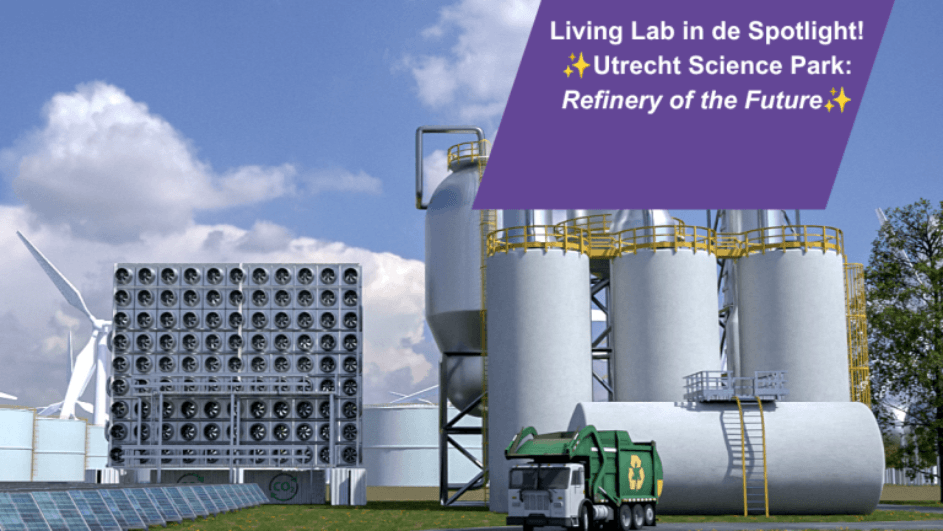
Living Lab in the Spotlight: Utrecht Science Park
Utrecht Science Park is home to several living labs focused on energy and circularity. These include Lumifield, which explores the generation and storage of solar energy, and the biogas digester, which uses organic waste as an energy source. On their own, these are already promising initiatives. Connected, they could become something much bigger: a functioning, learning model for a circular campus.
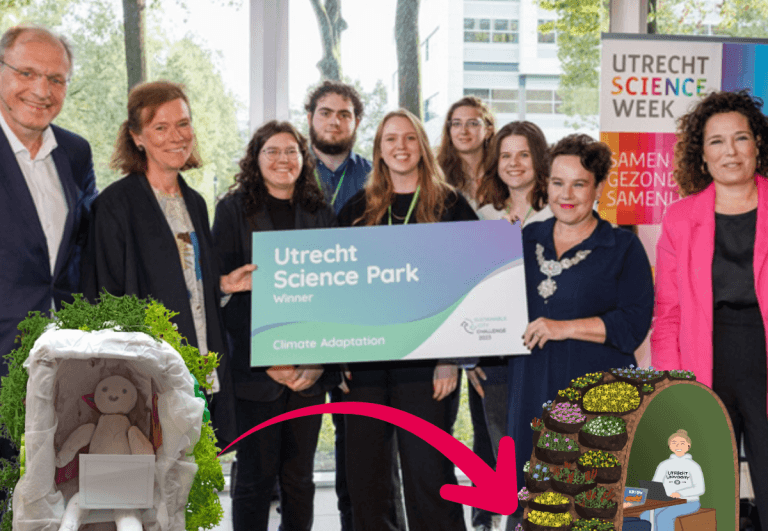
From student idea during challenge to ReGreen Hut at Dutch Design Week
On hot summer days, temperatures can rise significantly at Utrecht Science Park, while students are looking for places to study, relax and find some shade outdoors. At the same time, planting trees is not always straightforward: underground, the campus is crisscrossed by a dense network of cables and utility lines. So how can we create shade, greenery and places to relax without major changes to the ground?
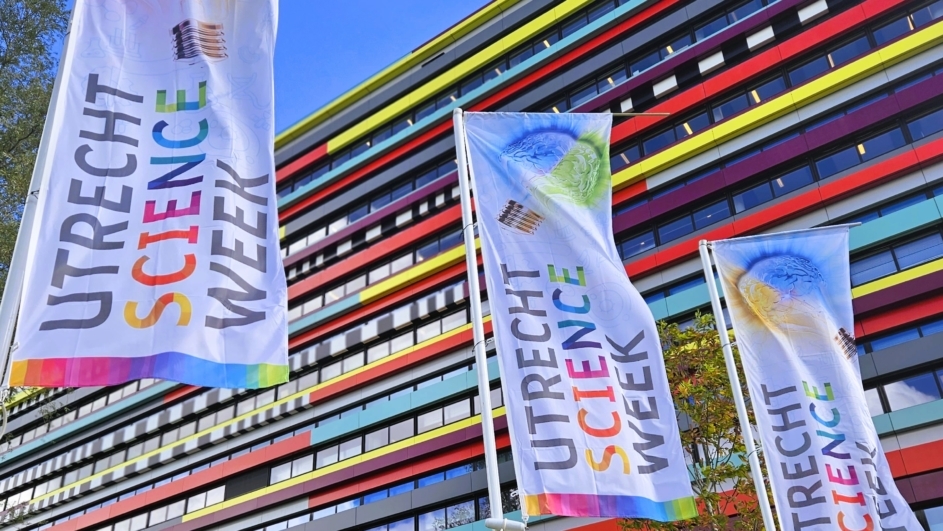
Utrecht Science Week kicks off: social and economic impact of Utrecht Science Park in the spotlight
The sixth edition of Utrecht Science Week takes place from Friday, 25 September to Sunday, 4 October. During this time, Utrecht Science Park opens its doors to the general public, showcasing how research, innovation, and collaboration lead to tangible societal and economic impact. At the same time, the week underscores the importance of sustained investment in knowledge and innovation.
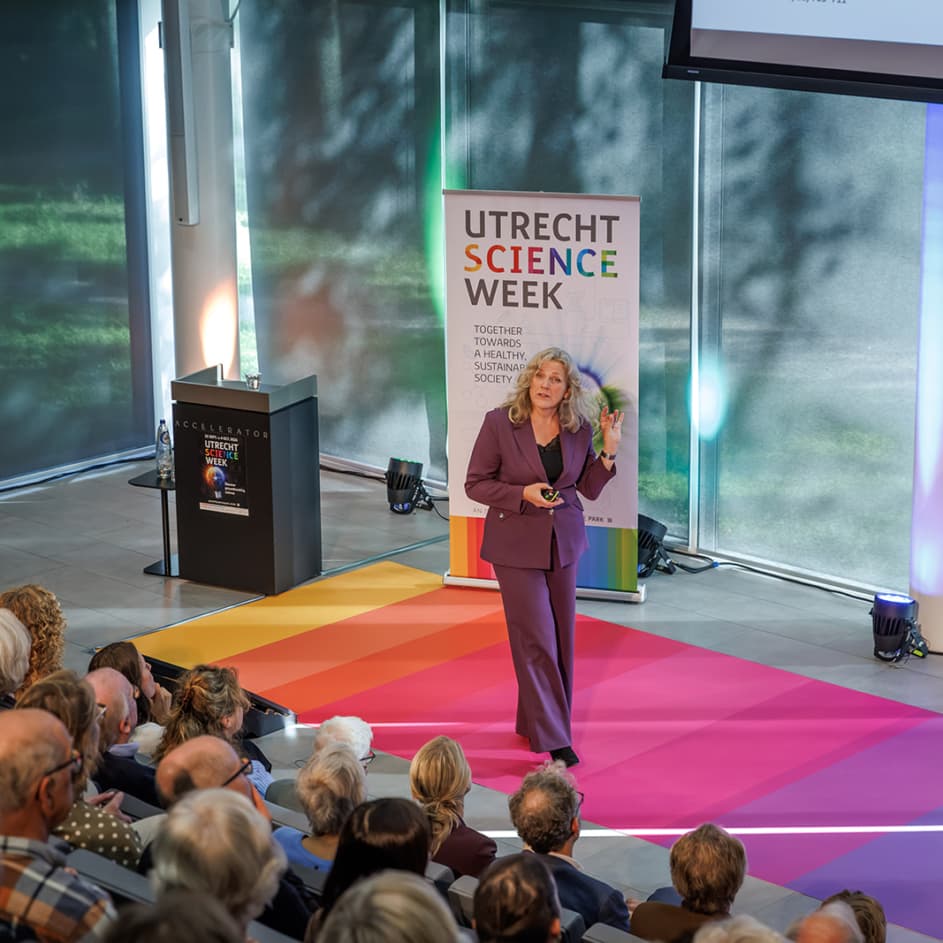
Looking back at Utrecht Science Week: research, education, and entrepreneurship in the spotlight
Utrecht Science Week 2026 has come to a close. For over a week, visitors enjoyed workshops, lectures, group discussions, and tours focused on science and innovation at Utrecht Science Park. With more than thirty program activities across over 25 locations, there were ample opportunities to experience science up close. We look back on a fantastic week that once again highlighted the essential role of collaboration, and the combination of research, education, and entrepreneurship, in addressing the societal challenges of our time.