AMT Medical raises €25 million for bypass procedure without open-Heart surgery
AMT Medical, a medtech company based in Ede and Utrecht, has announced the closing of a €25 million funding round. The round was led by Bender Analytical Holding, with participation from Invest-NL, the European Innovation Council (EIC), and existing investors. This milestone accelerates AMT’s mission to make open-heart bypass surgery obsolete through its groundbreaking ELANA® Heart Bypass System.
A revolution in cardiac surgery: key innovations
The ELANA® Heart Bypass System enables surgeons to perform a highly advanced form of coronary artery bypass grafting (CABG) using arterial rather than venous grafts. This is done through small incisions in the chest, while the heart continues to beat, and without the use of a heart-lung machine. As a result, the risk of stroke and other complications is significantly reduced, and patients recover much faster. This represents a major shift from traditional methods, which require opening the chest, stopping the heart, and involve lengthy recovery times.
The technique uses a specialized clip and an excimer laser to connect blood vessels, eliminating the need for manual suturing. This enables fast, precise, and reliable vessel connections with fewer complications.
Moreover, the system cuts costs by over 50% when used in combination with surgical robots— thanks to shorter operating room times, reduced hospital stays, fewer complications, and a faster learning curve for surgeons compared to traditional bypass surgery.
Next steps
With CE marking expected by 2026 and clinical trials in the U.S. on the horizon, this funding will support:
- Completion of our European first-in-human trial (results late 2025)
- Expansion into robotic-assisted keyhole surgery, partnering with industry leaders
- A future where 1 million patients annually benefit from safer, faster cardiac care
Rutger Tulleken, CEO of AMT Medical, said: “This financing validates our vision to obsolete open-heart bypass. By enabling same-day discharge procedures, we’re not just improving outcomes—we’re rewriting the future of cardiovascular care.”
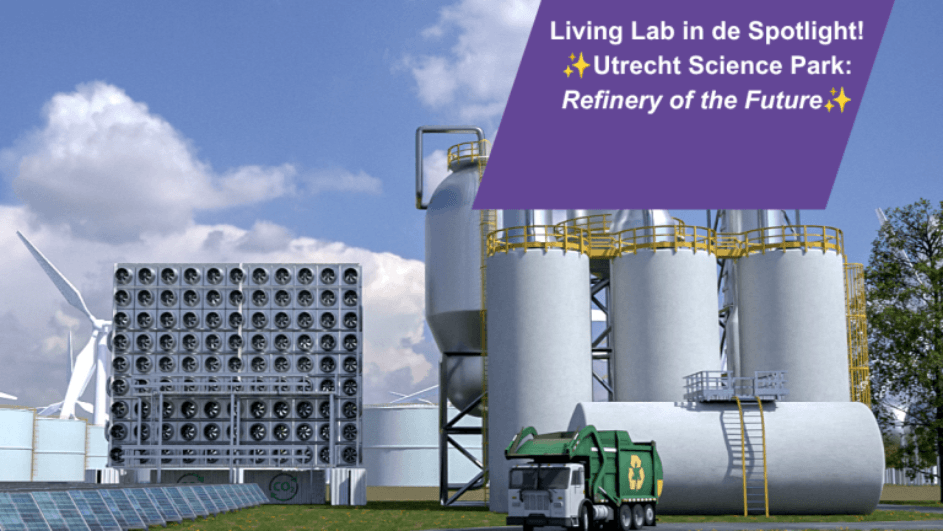
Living Lab in the Spotlight: Utrecht Science Park
Utrecht Science Park is home to several living labs focused on energy and circularity. These include Lumifield, which explores the generation and storage of solar energy, and the biogas digester, which uses organic waste as an energy source. On their own, these are already promising initiatives. Connected, they could become something much bigger: a functioning, learning model for a circular campus.
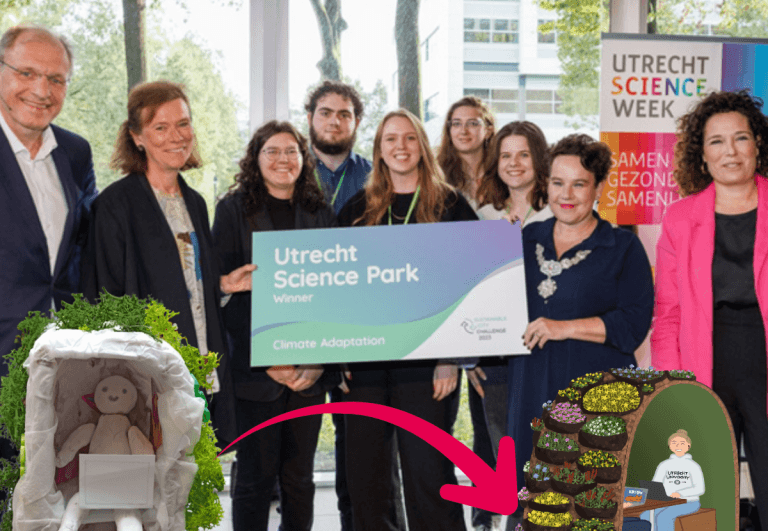
From student idea during challenge to ReGreen Hut at Dutch Design Week
On hot summer days, temperatures can rise significantly at Utrecht Science Park, while students are looking for places to study, relax and find some shade outdoors. At the same time, planting trees is not always straightforward: underground, the campus is crisscrossed by a dense network of cables and utility lines. So how can we create shade, greenery and places to relax without major changes to the ground?
Utrecht Science Week kicks off: social and economic impact of Utrecht Science Park in the spotlight
The sixth edition of Utrecht Science Week takes place from Friday, 25 September to Sunday, 4 October. During this time, Utrecht Science Park opens its doors to the general public, showcasing how research, innovation, and collaboration lead to tangible societal and economic impact. At the same time, the week underscores the importance of sustained investment in knowledge and innovation.
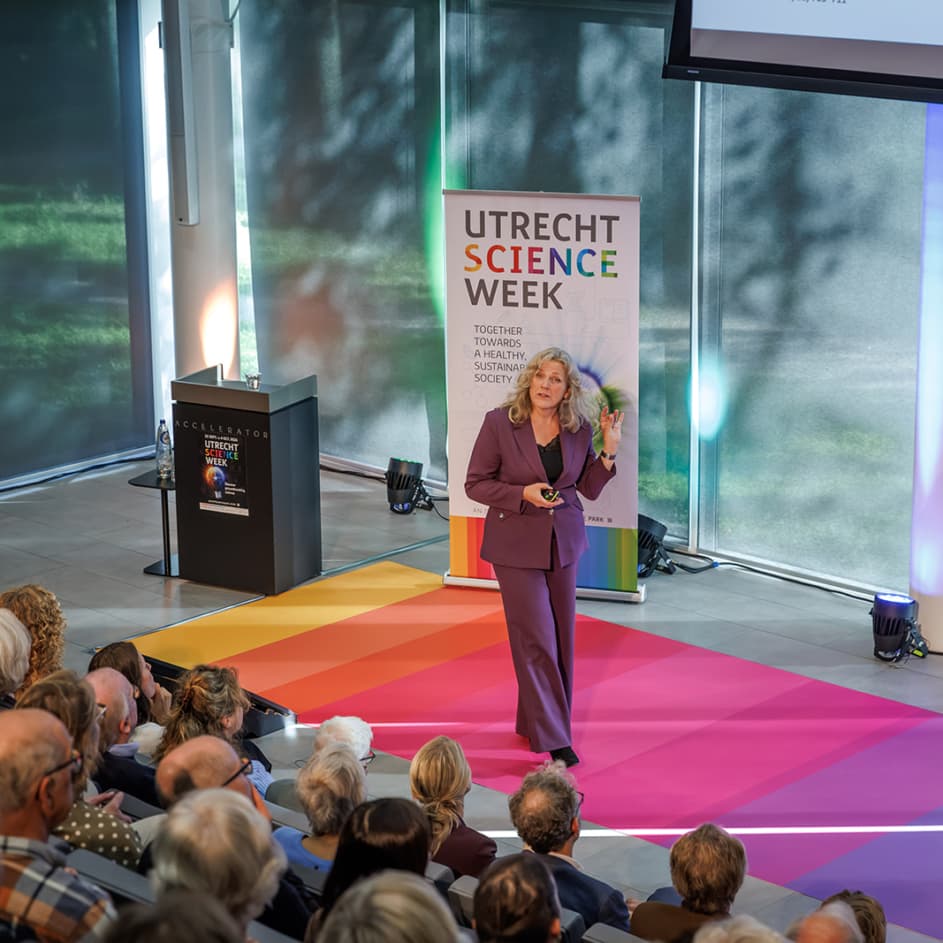
Looking back at Utrecht Science Week: research, education, and entrepreneurship in the spotlight
Utrecht Science Week 2026 has come to a close. For over a week, visitors enjoyed workshops, lectures, group discussions, and tours focused on science and innovation at Utrecht Science Park. With more than thirty program activities across over 25 locations, there were ample opportunities to experience science up close. We look back on a fantastic week that once again highlighted the essential role of collaboration, and the combination of research, education, and entrepreneurship, in addressing the societal challenges of our time.