Vilnius-Utrecht Center opens as a hub for emerging research leaders in Advanced Disease Modeling
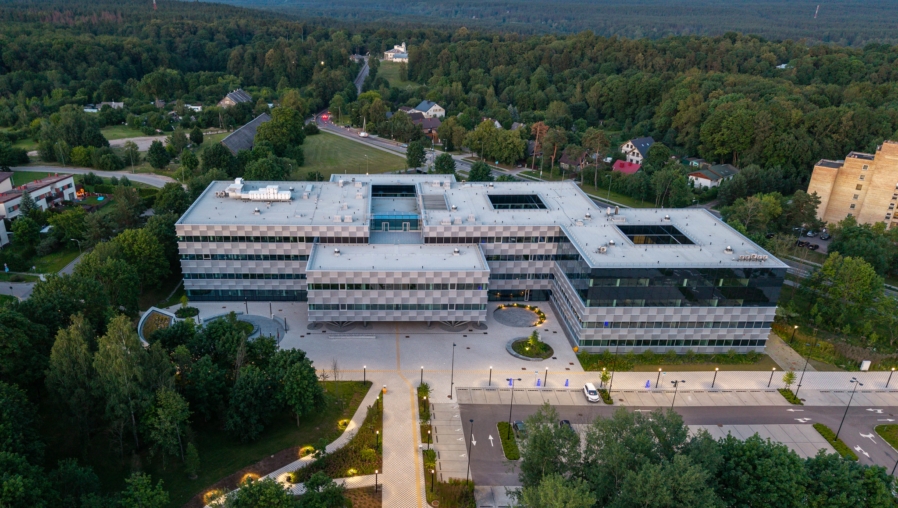
A new international research hub has officially opened its doors: the Vilnius–Utrecht Center for Advanced Disease Modeling. This strategic initiative unites Vilnius University in Lithuania (in close partnership with Vilnius University Hospital Santaros Klinikos), UMC Utrecht, and Utrecht University . Its mission is to build an internationally competitive translational research environment that accelerates discovery, diagnostic innovation, and personalized medicine.
Modern medicine faces increasingly complex challenges, from cancer and neurodegenerative diseases to immune disorders, circulatory health and rare diseases. Developing innovative solutions requires collaboration across borders, disciplines, and technologies. The Vilnius-Utrecht Center for Advanced Disease Modeling (CADM) brings together the complementary strengths of two leading biomedical ecosystems: the newly established state-of-the-art complex of the Vilnius University’s Medical Science Center, and the internationally recognized Life Sciences expertise of UMC Utrecht and Utrecht University.
“This center is designed as a catalyst for new ideas,” says Professor Roos Masereeuw, Vice-Dean Research at the Faculty of Science of Utrecht University. “By combining cutting-edge technologies with an open, collaborative culture, we aim to empower researchers to push boundaries and turn scientific insights into tangible benefits for patients and society.”
A vision for impact
The center aims to become a jointly built European reference point for clinically relevant disease modeling, grounded in scientific excellence and innovation. The center will integrate advanced in vitro, ex vivo, and in silico technologies. This includes organoid biology, iPSC, spatial and single-cell omics, 3D bioprinting, and AI-driven analytics. Together, these approaches form a seamless translational pipeline linking experimental models to clinical implementation.
“We are creating an environment where ambitious scientists can thrive,” adds Professor Paul Coffer, Vice-Dean Life Sciences at Utrecht University. “If you have a bold vision for advanced disease modeling, this is your chance to make it happen.”
Opportunities
The center is now inviting Principal Investigators to establish independent research groups within this international hub. Successful candidates will receive a start-up package to build their team, access to state-of-the-art facilities in both Vilnius and Utrecht, support for relocation to Vilnius and integration, opportunities for joint projects, research visits to Utrecht, and co-supervision.
Strategic positioning
By bridging the Baltic region and the Netherlands, the center occupies a unique position at the intersection of fundamental biosciences, clinical research, and computational innovation. Its integrated ecosystem-spanning biobanking, clinical datasets, imaging platforms, and digital pathology- offers researchers the tools and networks to deliver impactful translational research. The recruitment of four international Principal Investigators will anchor the center’s scientific capacity and establish it as a training hub for future leaders. Together, the diverse components enable the center to function as a translational bridge between research and innovation, and clinical implementation, supported by a comprehensive, cross-border scientific ecosystem.
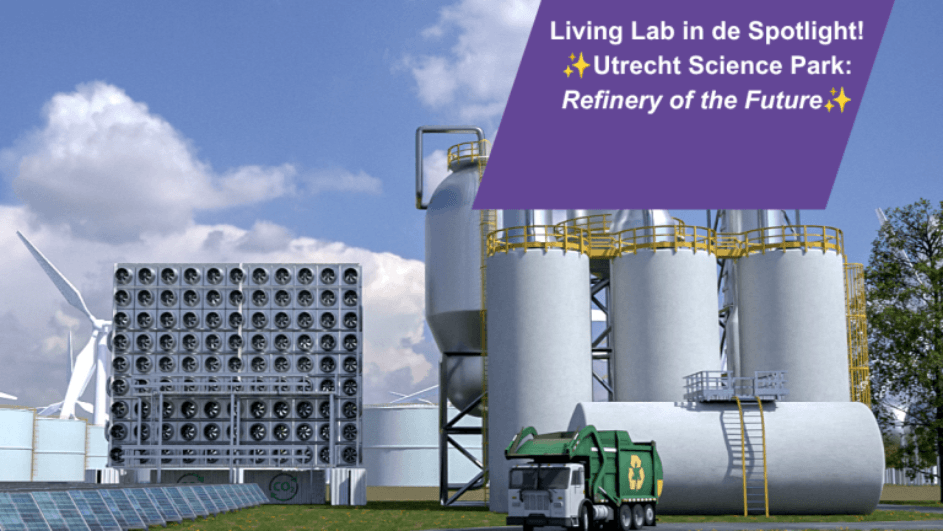
Living Lab in the Spotlight: Utrecht Science Park
Utrecht Science Park is home to several living labs focused on energy and circularity. These include Lumifield, which explores the generation and storage of solar energy, and the biogas digester, which uses organic waste as an energy source. On their own, these are already promising initiatives. Connected, they could become something much bigger: a functioning, learning model for a circular campus.
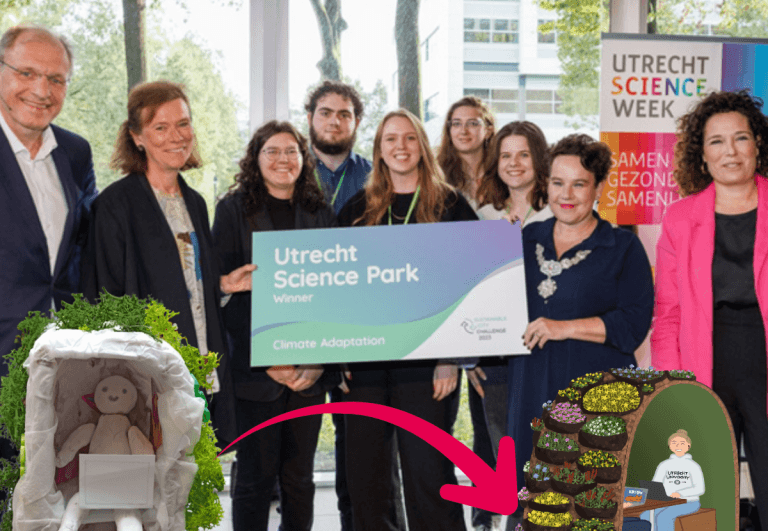
From student idea during challenge to ReGreen Hut at Dutch Design Week
On hot summer days, temperatures can rise significantly at Utrecht Science Park, while students are looking for places to study, relax and find some shade outdoors. At the same time, planting trees is not always straightforward: underground, the campus is crisscrossed by a dense network of cables and utility lines. So how can we create shade, greenery and places to relax without major changes to the ground?
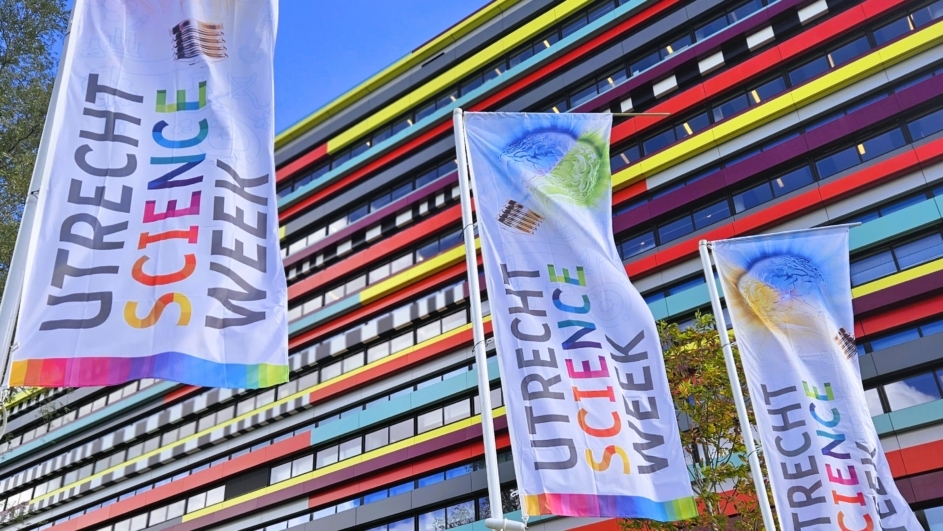
Utrecht Science Week kicks off: social and economic impact of Utrecht Science Park in the spotlight
The sixth edition of Utrecht Science Week takes place from Friday, 25 September to Sunday, 4 October. During this time, Utrecht Science Park opens its doors to the general public, showcasing how research, innovation, and collaboration lead to tangible societal and economic impact. At the same time, the week underscores the importance of sustained investment in knowledge and innovation.
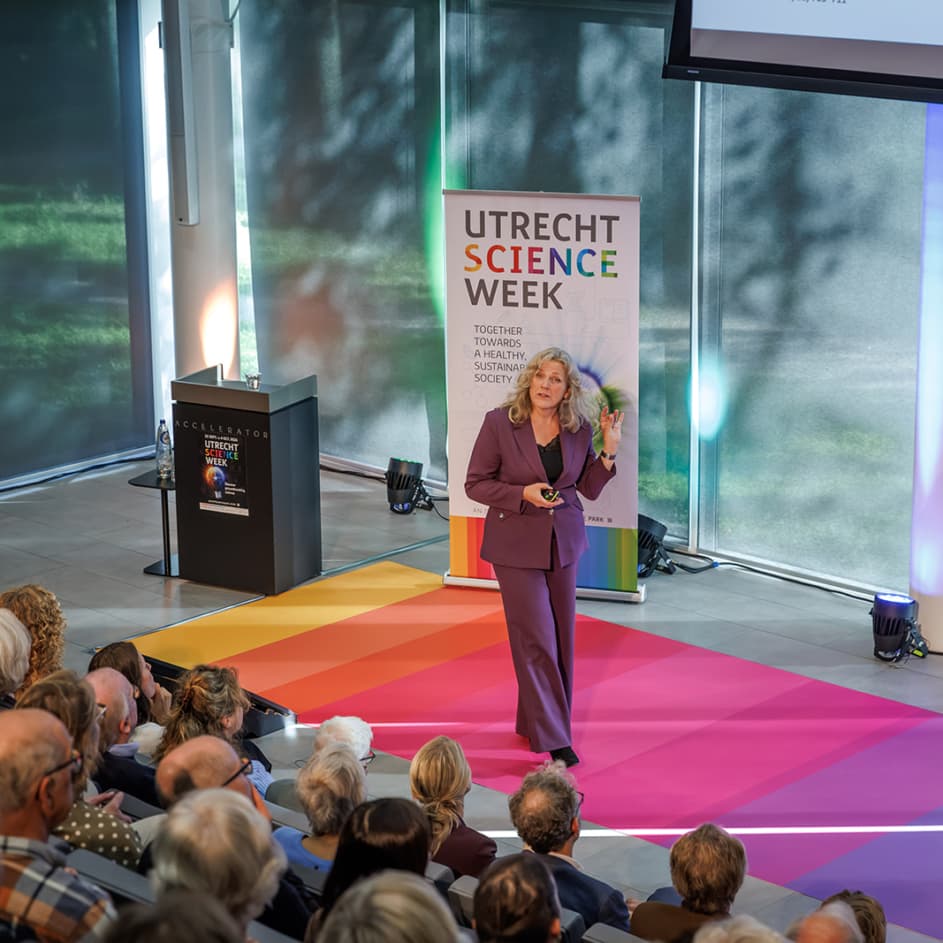
Looking back at Utrecht Science Week: research, education, and entrepreneurship in the spotlight
Utrecht Science Week 2026 has come to a close. For over a week, visitors enjoyed workshops, lectures, group discussions, and tours focused on science and innovation at Utrecht Science Park. With more than thirty program activities across over 25 locations, there were ample opportunities to experience science up close. We look back on a fantastic week that once again highlighted the essential role of collaboration, and the combination of research, education, and entrepreneurship, in addressing the societal challenges of our time.