AI and the mission of the Princess Máxima Center
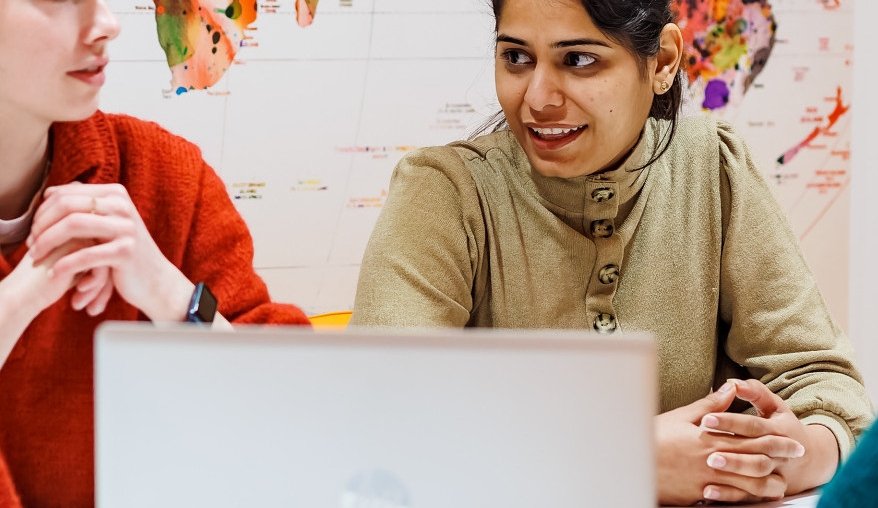
Artificial intelligence (AI) offers the Princess Máxima Center opportunities to achieve its mission faster. To take advantage of these opportunities now and in the future, we are collaborating with specialists in the AI field. In this way, knowledge, experience and data are combined to cure more children with cancer, with optimal quality of life.
Specific possibilities within AI make it possible to develop techniques that can perform certain tasks faster. These time savings can affect the treatment and diagnosis of children with cancer. Researchers, doctors and data specialists at the Máxima are investigating where opportunities lie within AI for children with cancer and how to ensure that these opportunities are utilized. The Máxima’s mission and data integrity are guiding principles.
Three examples, all in developmental stages, show how at Máxima AI is being used to take steps toward the mission.
AI pinpoints type of brain tumor during surgery
As of 2024, AI technology helps determine the type of brain tumor already during surgery.Through this new technology, the neurosurgeon with knowledge of the tumor type can adjust the operation plan already during surgery.Normally, it takes a week to determine the tumor type. Dr. Bastiaan Tops, head of the Pediatric Oncology Laboratory, linked the need from the operating room to the expertise of researchers at UMC Utrecht who developed a new “deep-learning algorithm.Further research is being conducted to deploy the technique even more widely and structurally.Thus, the algorithm remains in development.In a next version, more tumor types will be added to make the diagnosis even more precise. Work is also being done on algorithms specifically for solid tumors and leukemias. KiKa is helping to make this research possible.
Customized treatment suggestion in minutes
By bringing together AI language models and specific algorithms in a new tool, scientific literature can be analyzed and selected very quickly. By combining this with anonymized characteristics of a child, such as genetic characteristics of the tumor and response to previous treatments, tailored treatment suggestions can be provided quickly based on the latest scientific findings.Normally, such a literature search takes two to three days.Uri Ilan, a pediatric oncologist and part of Máxima’s digital innovation center, is working with the help of Google to develop AI tool Capricorn.This tool, now in testing phase, will help pediatric oncologists at the International leukemia tumor board determine treatment plans for children with leukemia who do not respond to standard therapy.Ultimately, the tool could potentially help pediatric oncologists from around the world seeking advice on possible treatments to determine the best-fit treatment for children with leukemia.This project is a result of the Google AI Hackathon organized for Princess Máxima Center Foundation in 2024.The goal of this hackathon was to discover digital solutions to improve healthcare and purposeful learning.
AI for improved care for children with kidney tumor
To improve the care of children with kidney tumors in the future, the use of AI is being investigated in several clinical projects. Prof. Dr. Marry van den Heuvel-Eibrink, pediatric oncologist and research group leader at Máxima, is coordinating this research.For example, using AI (machine learning), the computer learns to recognize different cell types in Wilms tumors.This will allow microscopic images to be analyzed automatically in the future, saving time and reducing errors.Pediatric pathologist Prof. Dr. Ronald de Krijger plans to use this tool, along with clinical data, to avoid international differences in assessment and automate classification.By adding molecular data later, new correlations may be discovered.This may lead to personalized treatments, which once validated, will help predict treatment outcomes.This research is made possible by the Hanarth Fund.
In the radiotherapy department, Dr. Geert Janssens, radiotherapist at Máxima Hospital, and Dr. Matteo Maspero, assistant professor of computer imaging and clinical physicist in training at UMC Utrecht, are investigating how AI can help to plot radiation fields more quickly, accurately and reliably after Wilms tumor surgery. In addition, research group leader Prof. Dr. Marc Wijnen and Dr. Lideke van der Steeg, both pediatric surgeons, are working with Dr. Annemieke Littooij, a radiologist at UMC Utrecht, on AI projects for radiology-guided surgery. This may ensure that children with kidney tumors will receive better and more precise surgery in the future.
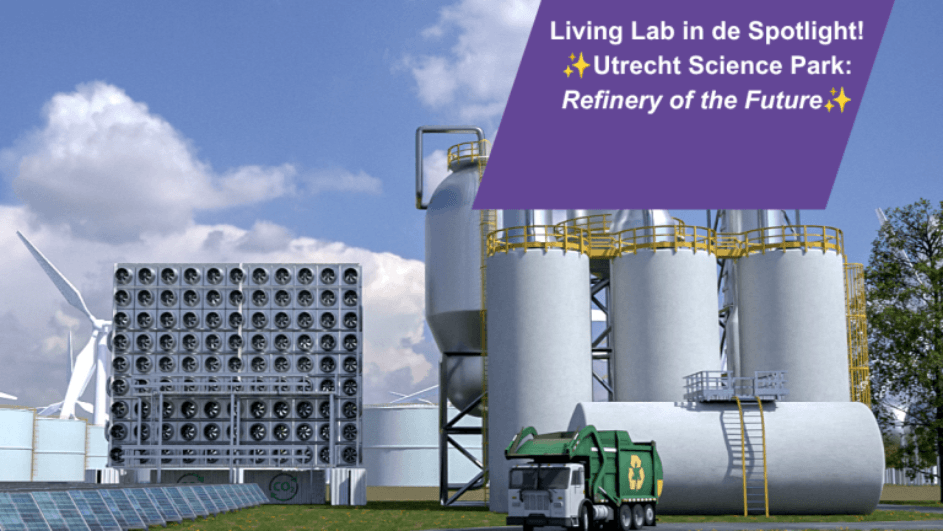
Living Lab in the Spotlight: Utrecht Science Park
Utrecht Science Park is home to several living labs focused on energy and circularity. These include Lumifield, which explores the generation and storage of solar energy, and the biogas digester, which uses organic waste as an energy source. On their own, these are already promising initiatives. Connected, they could become something much bigger: a functioning, learning model for a circular campus.
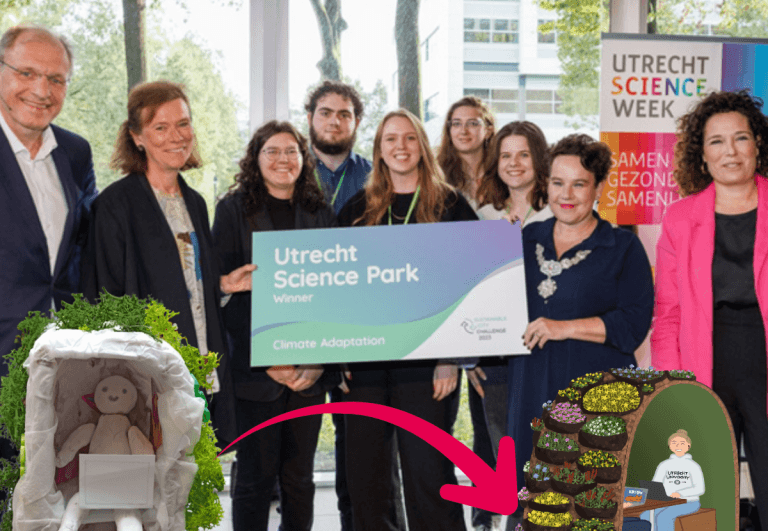
From student idea during challenge to ReGreen Hut at Dutch Design Week
On hot summer days, temperatures can rise significantly at Utrecht Science Park, while students are looking for places to study, relax and find some shade outdoors. At the same time, planting trees is not always straightforward: underground, the campus is crisscrossed by a dense network of cables and utility lines. So how can we create shade, greenery and places to relax without major changes to the ground?
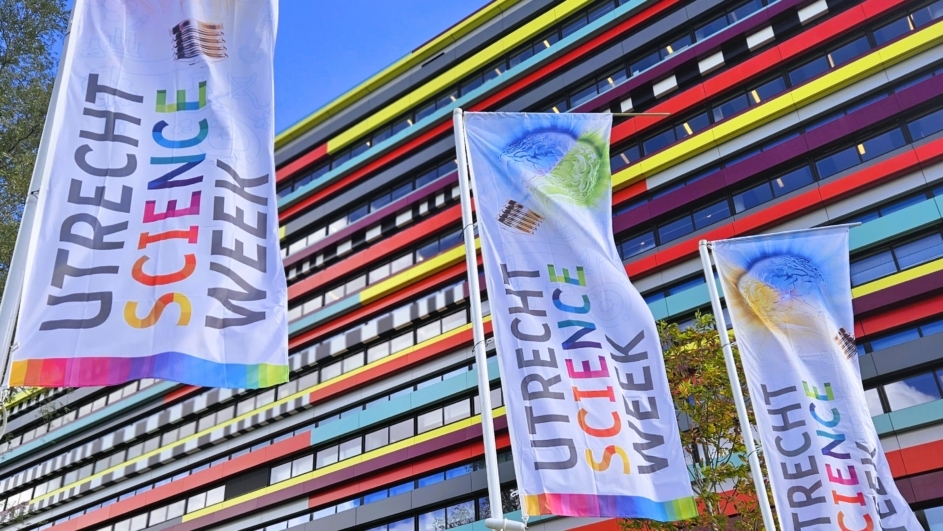
Utrecht Science Week kicks off: social and economic impact of Utrecht Science Park in the spotlight
The sixth edition of Utrecht Science Week takes place from Friday, 25 September to Sunday, 4 October. During this time, Utrecht Science Park opens its doors to the general public, showcasing how research, innovation, and collaboration lead to tangible societal and economic impact. At the same time, the week underscores the importance of sustained investment in knowledge and innovation.
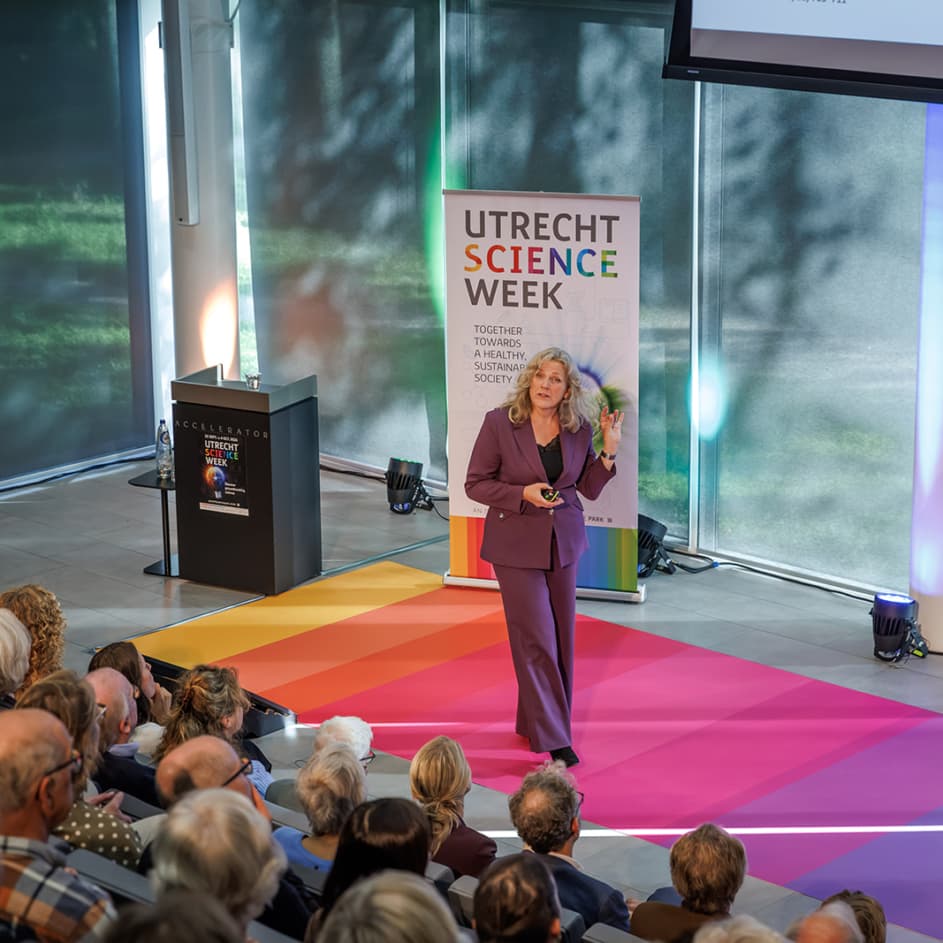
Looking back at Utrecht Science Week: research, education, and entrepreneurship in the spotlight
Utrecht Science Week 2026 has come to a close. For over a week, visitors enjoyed workshops, lectures, group discussions, and tours focused on science and innovation at Utrecht Science Park. With more than thirty program activities across over 25 locations, there were ample opportunities to experience science up close. We look back on a fantastic week that once again highlighted the essential role of collaboration, and the combination of research, education, and entrepreneurship, in addressing the societal challenges of our time.