His Majesty the King visits large-scale exercise at the Major Incident Hospital at Utrecht Science Park: prepared together for major emergencies
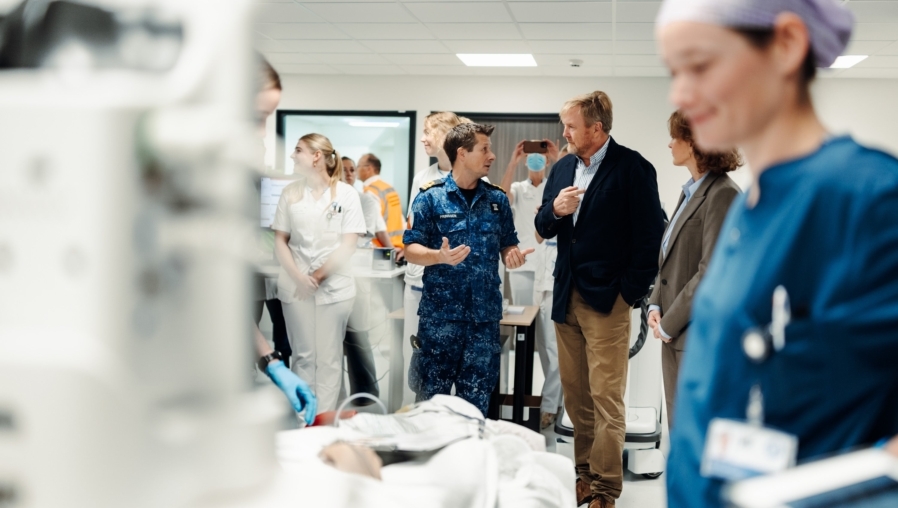
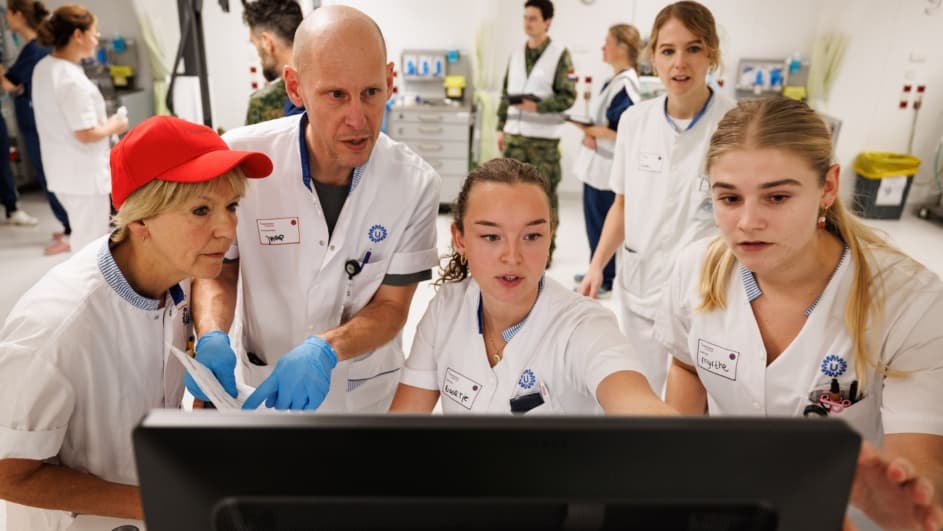
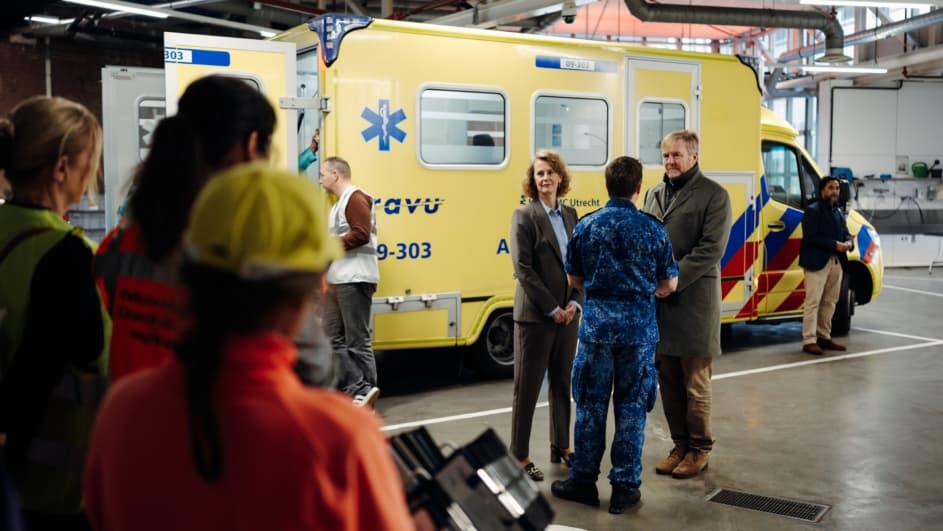
On Saturday, October 31, a large-scale exercise took place at the Major Incident Hospital at the Utrecht Science Park. During the exercise, dubbed “Dubbelspoor” (Dual Track), the Major Incident Hospital had to respond to two major incidents almost simultaneously. In Amersfoort, a train carrying thirty injured Dutch military personnel arrived. At nearly the same time, a coach plowed into a crowd during a Halloween celebration. His Majesty the King also visited both locations, marking the 35th anniversary of the Major Incident Hospital.
Medical Resilience During Exercise ‘Dubbelspoor’
Should the Netherlands become involved in a large-scale conflict, a significant number of wounded personnel could return to the country in a short period. Caring for these patients requires a joint effort from both military and civilian healthcare sectors. The Major Incident Hospital (Calamiteitenhospitaal) serves as a facility for the wounded, functioning as part of the national healthcare chain. But what happens when two major incidents occur simultaneously?
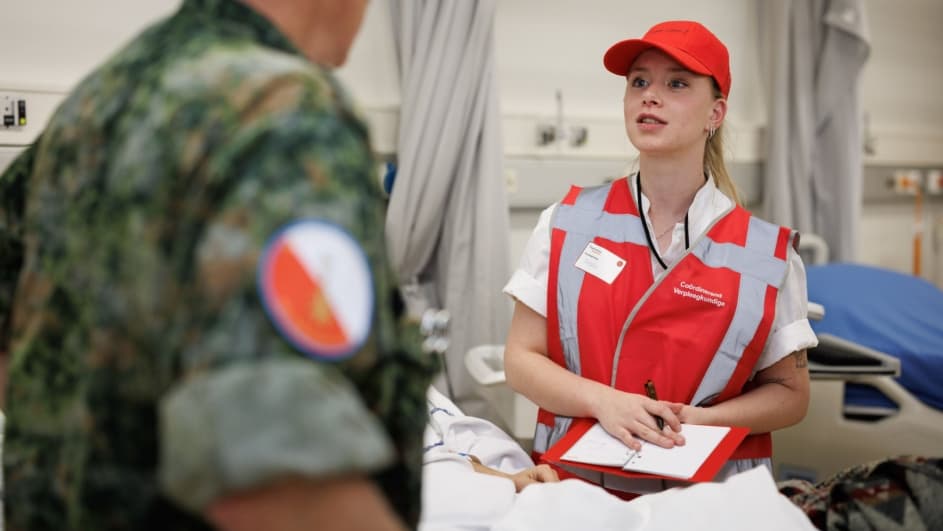
At the Major Incident Hospital, staff were busy preparing for the arrival of 30 wounded service members, transported to Amersfoort by train. Suddenly, a report comes in: a bus has driven into a crowd at a festival, resulting in dozens of casualties. The staff must pivot quickly—the facility needs to be opened to accommodate both civilians and military personnel. This year’s exercise was aptly named ‘Dubbelspoor’, reflecting the two distinct scenarios and locations: the ‘De Vlasakkers’ military training ground in Amersfoort and the Major Incident Hospital. Healthcare professionals, military personnel, and first responders from the Defence Support Command (DOSCO), UMC Utrecht, various other Defence units, and a range of civilian emergency services all contributed to the exercise.
Royal Visit Marks 35th Anniversary
A highlight of the exercise was a visit by His Majesty the King. He toured both locations to observe the collaboration between the Ministry of Defence and the regular healthcare system. The visit coincided with the 35th anniversary of the Major Incident Hospital. “For 35 years, the collaboration between the civilian and military healthcare sectors has taken its most concrete form right here in Utrecht,” says Colonel Rik Bergman, Commander of the Central Military Hospital. “We can be proud of the fact that, for 35 years, we have brought together the best people from both organizations to work side by side here.”
“It was global events that led to the creation of the Major Incident Hospital, and—much like today—these events have repeatedly demonstrated its ongoing relevance,” says Lukas van Spengler, a member of the Major Incident Hospital’s management team. “For instance, it was the Gulf War that accelerated the facility’s commissioning. While that specific threat eventually faded, new challenges always emerged—think of the Bijlmer disaster, the SARS outbreak, a wave of terrorist attacks across Europe, and now, of course, the war on our own continent.”
Two worlds, one hospital
The collaboration between the Ministry of Defence and UMC Utrecht is highly tangible here. “At UMC Utrecht, we’ve long held the view that ‘together is always better,’” says Mirjam de Jong, medical manager and member of the Major Incident Hospital’s management team. “One of the things we learn from the Ministry of Defence is their clear command-and-control structure. In civilian healthcare, we tend to be more flexible and accustomed to improvising—but in the event of a large-scale incident, that can pose a risk. That is why, at the Major Incident Hospital, we adopt the clear division of tasks and the precise, structured leadership that are embedded in the DNA of the Ministry of Defence.” For the Ministry of Defence, the Major Incident Hospital—alongside the Central Military Hospital (CMH)—fulfills what is known as a ‘Role 4’ medical capability, Lukas explains. “This means that military personnel wounded abroad are initially received at the Major Incident Hospital. Depending on their condition, they are then transferred to the Central Military Hospital (CMH), UMC Utrecht, or elsewhere for further treatment and recovery—even when large numbers arrive at once.”
Choosing Utrecht
The decision to locate the Major Incident Hospital in Utrecht was strategic at the time, and it remains so today. “Everything required for a facility like this comes together here,” says Lukas. “The Ministry of Defence with its Central Military Hospital, the toxicological expertise of the National Poisons Information Center, and the Level 1 trauma center at UMC Utrecht.” Mirjam notes that UMC Utrecht’s extensive experience in receiving and treating severely injured patients is vital for the Ministry of Defence. “The added value lies not only in specific medical techniques, but also in the collaboration across many healthcare disciplines, as well as the continuous development, testing, and improvement of care.”
When it suddenly hit close to home
Both Mirjam and Lukas cite the activation of the facility during the tram attack on March 18, 2019, as the most profound event in the history of the Major Incident Hospital. “By far,” Lukas adds. “So little was known, and there were so many rumors.” “We learned that during an actual emergency, emotions play a much larger role,” says Mirjam. “Could the shooter be among the victims? Furthermore, this happened in our own city—a situation that caused personal concern for us as colleagues. Were our children safe at daycare? It is highly likely that such emotions affect one’s ability to function, and that is something that must be taken into account.”
Of a completely different nature—yet equally impressive—is the intensive preparation and actual care provided to patients with infectious diseases, with every measure focused on the safety of both staff and patients. “In 2014, we admitted a patient with Ebola: a Nigerian soldier serving with the UN peacekeeping mission in Liberia. It drew significant media attention, including television coverage. A few years later, in 2019, we treated a doctor from ‘Artsen Zonder Grenzen’ (Médecins Sans Frontières) who had Lassa fever; she spent two and a half weeks in strict isolation within the Major Incident Hospital.”
For a surgeon familiar with the Major Incident Hospital as it existed in 1991, the most striking change would be the significant evolution in collaboration, says Mirjam. “The emphasis has shifted from individual performance to teamwork. High-quality care depends on how well the team functions.” And that team extends well beyond just the healthcare professionals, Mirjam stresses. “It is the colleagues working in areas like logistics, IT, and facility services who ensure that the Major Incident Hospital is truly ready to provide care at any given moment.”
Always prepared, never standing still
The Major Incident Hospital plays a vital role in maintaining the resilience of the healthcare system, says Lukas—particularly when it comes to managing large influxes of patients. Policymakers from across Europe and beyond come to see how we have organized this in the Netherlands. “People are especially intrigued by the concept: a fully equipped hospital with a very small permanent staff. Ensuring that it can be up and running within 30 minutes at any time is a massive logistical undertaking—one that also has to be managed cost-effectively.” The Major Incident Hospital has devised various clever processes to fulfill its mission. For instance, all medications and medical supplies are transferred to UMC Utrecht before their expiration dates, ensuring they can still be put to use. “This way, nothing goes to waste,” says Lieutenant Commander (LTZ1) Joris Prinssen, manager of the Major Incident Hospital. “And consider all the medical equipment we have here—it is identical to the equipment used at UMC Utrecht, allowing it to be integrated into their regular rotation. This enables us to be prudent with our limited healthcare resources and capacity, while remaining fully prepared for emergencies.”
Although the beds often remain empty, the Major Incident Hospital is frequently a hub of activity. “In recent years, we have increasingly opened up our facilities for training and education—for both the armed forces and civilian healthcare providers,” says Mirjam. “This ranges from specialized resuscitation training to multidisciplinary responses to major incidents. Participants learn not only medical procedures but also how to make decisions under pressure, collaborate effectively, and handle unexpected developments. Furthermore, there is significant potential to further expand these training opportunities.”
Just as global geopolitical developments were a primary driver in the creation of the Major Incident Hospital, the facility continues to adapt to the changing world around it. “We are well-equipped to deliver care rapidly,” Mirjam explains, “but can we sustain that care if a crisis persists—especially when the regular healthcare system is already under immense strain? This is something we are increasingly considering. Moreover, the large-scale, long-term care of military personnel presents different requirements compared to a short-term emergency.” “We must be prepared not only for the initial hours of a disaster, but also for what follows.”
A unique hospital in the world
When a disaster or crisis strikes, every minute counts. The Major Incident Hospital is the only hospital in the world fully equipped to receive hundreds of casualties on short notice. Located within the UMC Utrecht, this facility is a collaborative effort between the Ministry of Defence, the Ministry of Health, Welfare and Sport, and the UMC Utrecht. It features 200 beds, categorized into a crash room, low-care, medium-care, and intensive-care units. It also includes operating rooms, an X-ray department, and isolation units for patients with infectious diseases.
Within half an hour, the otherwise vacant hospital can be made ready to receive victims of disasters and other emergencies, or individuals repatriated from abroad—serving both military personnel and civilians. An automated calling system alerts medical and other staff to provide acute care: first reaching those already on duty at the UMC Utrecht, and, if necessary, calling in colleagues from home.
Want to learn more about the Major Incident Hospital? Click here.