Oncological research for animals and humans
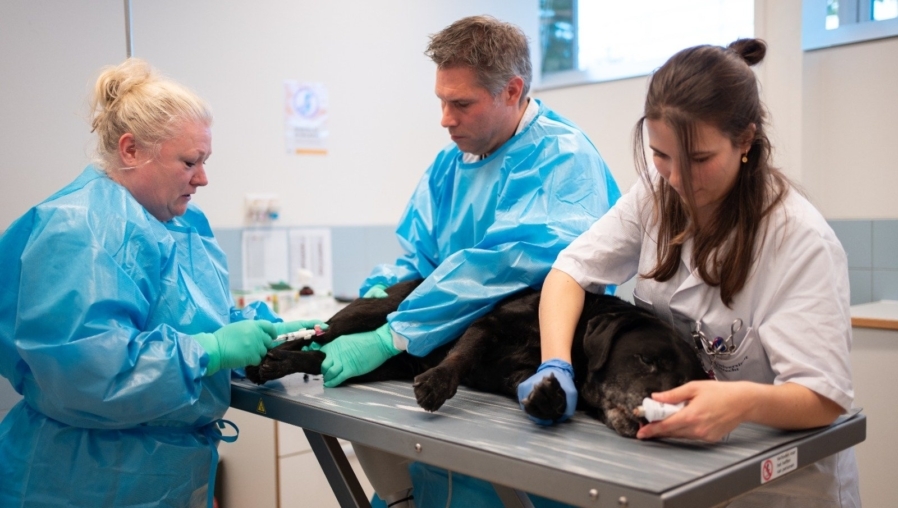
Journalist Eric Reijnen followed the treatment of Pluck, a dog undergoing chemotherapy at the University Veterinary Hospital. The story shows how factors such as the dog’s age, health and temperament, as well as the owner’s personal circumstances, are taken into account when treating cancer. Based on these considerations, vets work with the owner to draw up a suitable treatment plan.
Reijnen also spoke to Maurice Zandvliet and Sara Galac about the research being carried out at the Faculty of Veterinary Medicine. Research into cancer in dogs not only contributes to better treatments for dogs, but can also provide insights for human medicine.
The treatment of cancer in dogs is similar in many ways to that in humans. Surgery, radiotherapy and chemotherapy are also the mainstays of treatment in animals. However, according to Zandvliet, the idea that a dog is simply a small human is incorrect. “At a molecular level, the same tumour can be structured very differently in a dog than in a human. So you cannot automatically adopt a drug from human oncology.”
That does not alter the fact that knowledge about cancer treatments in humans is applied to animals. And the reverse is also true. For example, bone cancer is relatively rare in children, but much more common in dogs. “Ten to fifty times more common. So if you want to develop a new therapy, it is much easier to test it on dogs.” Certain types of melanoma (skin cancer) and hormone-producing tumours are also much more common in dogs than in humans. This makes dogs a valuable natural model for research into these types of cancer in humans.
Causes of cancer
Research is also being carried out into the causes of cancer in pets. Environmental factors such as air pollution, PFAS, microplastics, endocrine disruptors and other chemicals are thought to play a role in this. Galac is therefore working with European partners to establish a large biobank in which tumour tissue, blood and DNA from dogs will be stored. The researchers hope that this will enable them to identify new links in the long term.
Symptoms
Early detection increases the chances of successful treatment for many forms of cancer, including in pets. But how do you, as an owner, know if something might be wrong?
It starts with keeping a close eye on your pet, say Zandvliet and Galac. Check regularly for any new lumps or swellings, for example whilst stroking or brushing them. Not every lump is malignant, but a rapidly growing or changing swelling is always a reason to visit the vet.
Unexplained weight loss can also be a warning sign, particularly if your dog or cat is still eating well. Cancer cells consume a lot of energy, which can cause an animal to lose weight without any obvious cause.
Other symptoms that warrant attention include, for example, wounds that do not heal, shortness of breath or a persistent cough, and drinking and urinating frequently. Some tumours cause an increase in hormone production, which can lead to very specific symptoms, such as heavy breathing, a rapid heartbeat, excessive appetite or hair loss.
None of these symptoms automatically means that an animal has cancer. There may also be many other conditions behind them. “But if you catch it early, you can do more for many forms of cancer than if the disease is only detected at a late stage,” said Zandvliet in the newspaper.
Regular check-ups at the vet, particularly for older dogs and cats, can also help to detect abnormalities before they cause any obvious symptoms. Some tumours are, in fact, discovered by chance during a physical examination or an ultrasound scan.