Spar and SSH have short-term plans for Utrecht Science Park residents
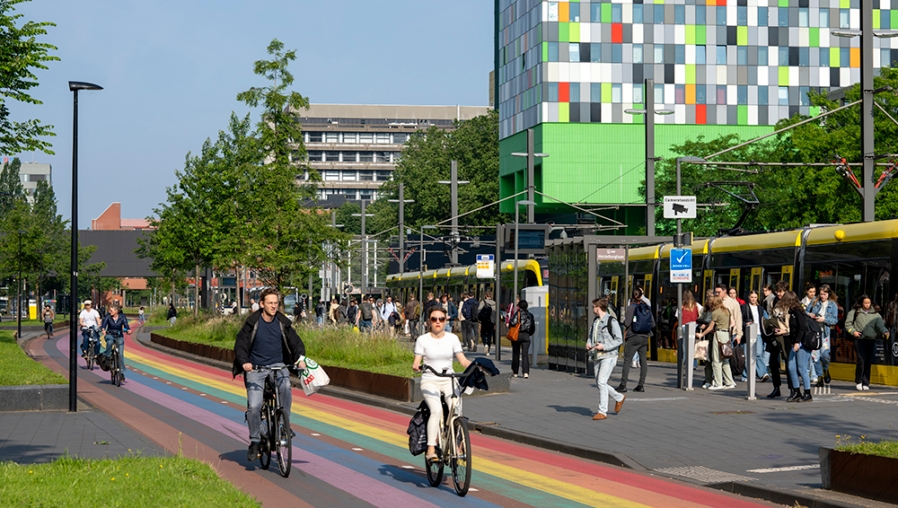
On Tuesday, June 10, the municipal council was updated during an information session at the office of the Utrecht Science Park Foundation about the current state of livability at the Utrecht Science Park.
During the session, the results of a survey among student residents were presented, along with plans from parties such as the supermarket, SSH (Student Housing Foundation), and Utrecht University regarding this theme.
Representatives from eight different parties were informed not only by administrators but also by student residents. In recent years, there has been considerable discussion about livability at the Utrecht Science Park. In 2024, the municipal council described it as a “problem neighborhood with an above-average number of residents struggling with mental health issues,” based on a health monitor. “The council’s conclusions about mental health were incorrect. They based them on a study by the RIVM conducted just after the COVID-19 period, which showed that many young people experienced loneliness and that university and college students were even more affected than their peers. Since only students live at the Utrecht Science Park, it is logical that the average in this district was much higher than in areas with a mixed-age population,” explained Jan Henk van der Velden, director of the Utrecht Science Park Foundation, in a recent interview with DUB.
However, according to Van der Velden, that doesn’t mean that livability and facilities can’t be improved. Student residents have joined forces with the Utrecht Science Park partners through the Student Council, which has four working groups aiming to achieve improvements in the short term. SSH, in collaboration with student residents, distributed a survey to assess what could be improved at the Utrecht Science Park.
Ting Ting Breemhaar, a resident, BoKS board member, and Student Council member, presented the survey results during the session. On average, residents gave their living experience at Utrecht Science Park a 6.2 out of 10. They noted the absence of a full-fledged supermarket, a common meeting space, and hospitality venues with longer opening hours. The supermarket (Spar University) and SSH responded during the presentation with relatively short-term action plans.
Martijn ten Berge, owner of Spar University and also present at the session, was glad to share his perspective. He expressed regret that much had been said about the supermarket over time, but not directly to him. He explained the challenges of running a profitable supermarket at the Utrecht Science Park. Around 95% of revenue comes from the “to-go” crowd—students and professionals grabbing snacks during the day. Only a small portion of the clientele are residents, especially since 35% of residents are absent on weekends. “You’d need about 12,000 residents to run a profitable supermarket,” he told DUB.
“We’re working on expanding our floor space by 100 square meters to allow for a broader assortment. Some products are already being discounted. Additionally, we’re running a pilot from September to December, offering residents a 20% discount on all products after 6 p.m. and on weekends.”
Next year, the new student housing complex High Five will accommodate an additional 1,000 students. Rob Donninger, director of SSH, also attended the presentation. He stated that the new building will pay special attention to enhancing the livability of the area. High Five will include a hospitality venue with a terrace and a common meeting space, which will also be accessible to residents of other complexes in the Utrecht Science Park. A liaison is already exploring the possibility of a pilot project for a shared community space on behalf of the Utrecht Science Park partners.
“I’m happy that steps are being taken to improve livability at the Utrecht Science Park,” Ting Ting told DUB. “It’s clear that students want a nearby supermarket. But I also understand Spar’s perspective. Still, it’s a bit of a chicken-and-egg problem. If prices were lower, more students would shop there. What I really miss is a kind of shopping center where people can meet. In recent years, the number of stores has only declined, such as the closure of Primera. You could also pick up packages there. Many students miss that kind of package service. I hear that packages are left in hallways and often disappear.” Solutions for package delivery points are being explored in cooperation with Utrecht University and SSH.
Anton Pijpers, President of the Executive Board of Utrecht University, emphasized that with the growing number of residents, the support base for additional facilities also increases. With High Five, there will soon be nearly 4,000 residents, and in the long term even 8,000, based on the area development vision.
Last week, the municipality of Utrecht announced that a cooperation agreement with Utrecht University was signed on June 20 to move forward with development plans: A new phase for the Utrecht Science Park, with more space for living, working, studying, and connecting. All involved parties, including student residents, have expressed their ambition to raise the livability rating from a 6.2 to a 7.5 in the coming years and to continue cooperating well on this complex issue. The reintroduction of the Student Council and all the short-term actions already underway are good first steps.
Sources: DUB, Utrecht Nieuws
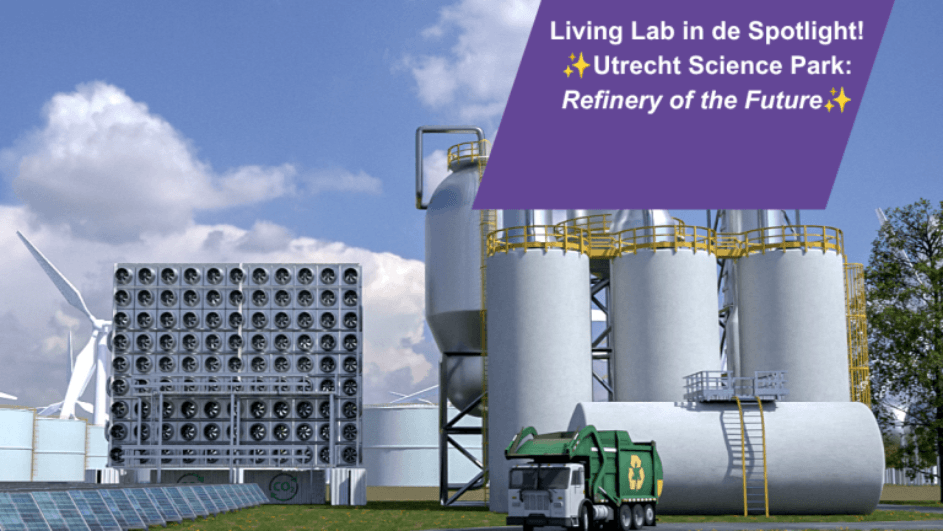
Living Lab in the Spotlight: Utrecht Science Park
Utrecht Science Park is home to several living labs focused on energy and circularity. These include Lumifield, which explores the generation and storage of solar energy, and the biogas digester, which uses organic waste as an energy source. On their own, these are already promising initiatives. Connected, they could become something much bigger: a functioning, learning model for a circular campus.
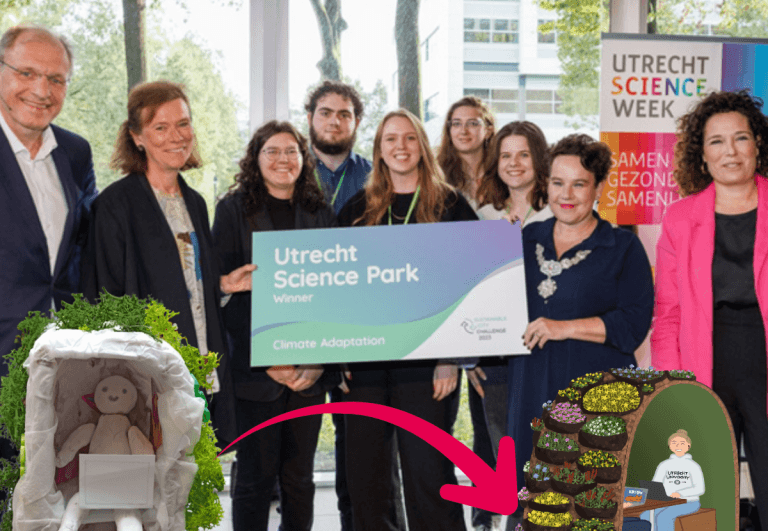
From student idea during challenge to ReGreen Hut at Dutch Design Week
On hot summer days, temperatures can rise significantly at Utrecht Science Park, while students are looking for places to study, relax and find some shade outdoors. At the same time, planting trees is not always straightforward: underground, the campus is crisscrossed by a dense network of cables and utility lines. So how can we create shade, greenery and places to relax without major changes to the ground?
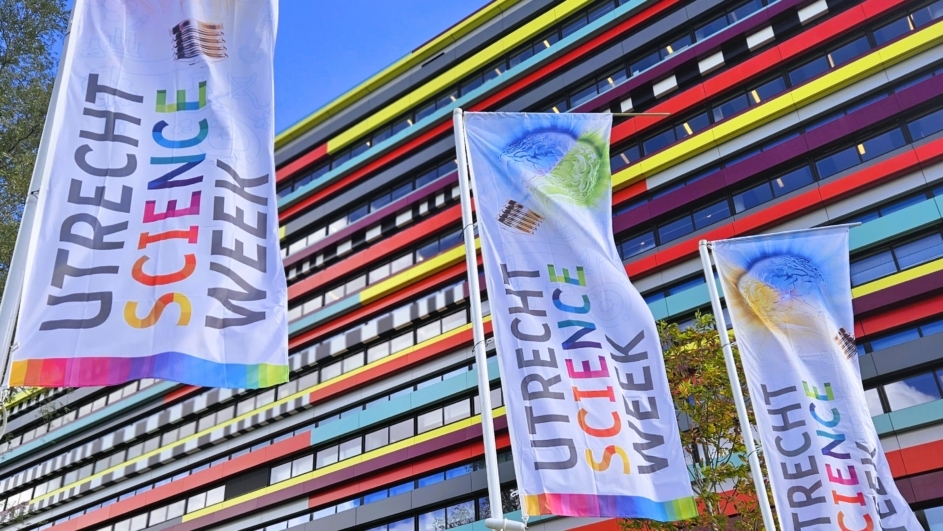
Utrecht Science Week kicks off: social and economic impact of Utrecht Science Park in the spotlight
The sixth edition of Utrecht Science Week takes place from Friday, 25 September to Sunday, 4 October. During this time, Utrecht Science Park opens its doors to the general public, showcasing how research, innovation, and collaboration lead to tangible societal and economic impact. At the same time, the week underscores the importance of sustained investment in knowledge and innovation.
Looking back at Utrecht Science Week: research, education, and entrepreneurship in the spotlight
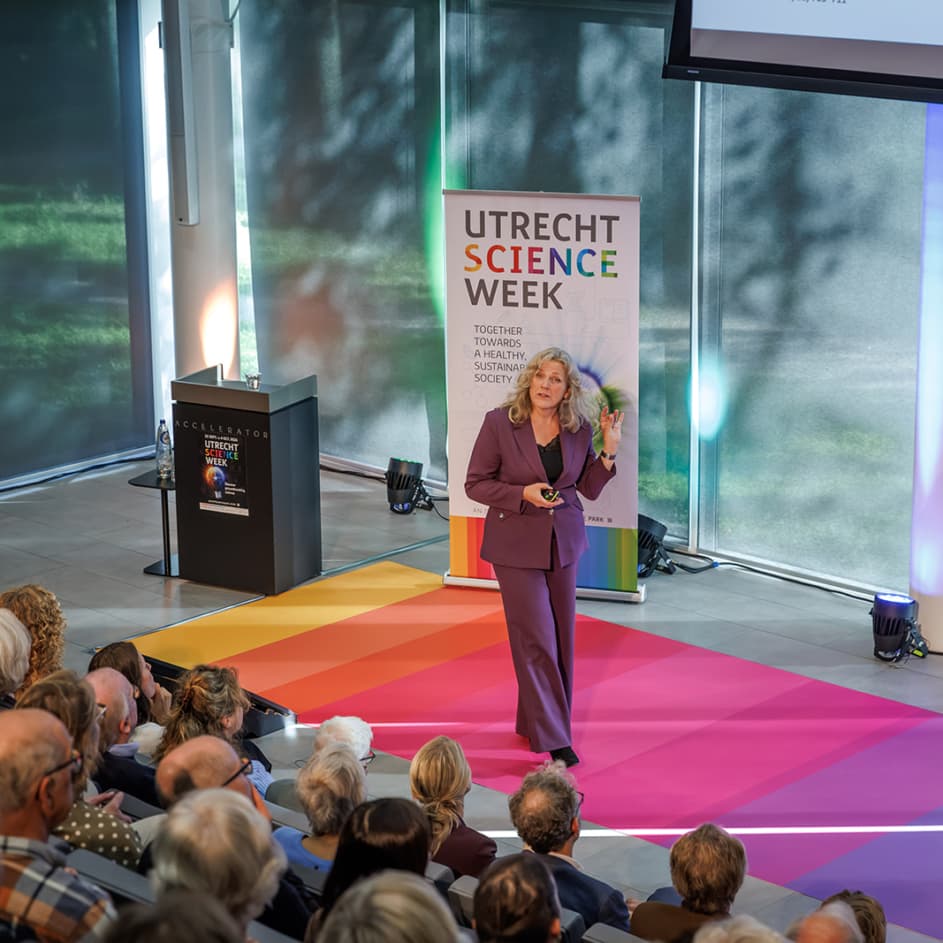
Utrecht Science Week 2026 has come to a close. For over a week, visitors enjoyed workshops, lectures, group discussions, and tours focused on science and innovation at Utrecht Science Park. With more than thirty program activities across over 25 locations, there were ample opportunities to experience science up close. We look back on a fantastic week that once again highlighted the essential role of collaboration, and the combination of research, education, and entrepreneurship, in addressing the societal challenges of our time.