New European project supports young survivors

Date:
Nieuw Europees project ondersteunt jonge overlevers van kanker

PanCare4AYA is a European project uniting 29 partners from 14 countries to improve aftercare, guidelines, and tools that enhance the long-term quality of life for adolescents and young adults who have survived cancer.

A major new European initiative, PanCare4AYA, has launched earlier this year to improve the lives of adolescents and young adults (AYA) who have survived cancer. While survival rates have increased thanks to better treatments, many young survivors still face long-term health challenges. The PanCare4AYA project aims to ensure that every AYA cancer survivor receives the long-term care they need to live a healthy and fulfilling life.

PanCare4AYA is a large-scale EU-funded project that brings together 29 partners from 14 countries across Europe. The Princess Máxima Center, internationally recognized for its expertise in childhood and young adult cancer care, plays a central role in this effort to improve quality of life after cancer. It is led by Prof. Dr. Leontien Kremer, pediatrician and research group leader specialized in late effects after childhood cancer, and Dr. Heleen van der Pal, internist at the LATER outpatient clinic at the Máxima, where survivors of childhood cancer are monitored for long-term follow-up.

European guideline

The project will develop a Europe-wide guideline for follow-up care and screening tailored to the unique needs of AYA cancer survivors. It will also create easy-to-understand brochures and digital tools to help survivors and healthcare professionals apply these guidelines in practice.

A key part of the project is the AYA Cancer Survivor Screen program, which will be studied in 11 countries with 1,000 participants. This program includes personalized care plans, peer support networks, and training for healthcare providers. Researchers will study how the program affects survivors’ mental health, quality of life, and access to care. The program’s outcomes will form the basis to further improve care and follow-up for this unique patient group.

Bridging the gap

PanCare4AYA builds on the success of earlier projects focused on childhood cancer survivors and aims to bridge the gap between childhood and adult survivorship care. ‘The needs of AYA cancer survivors are different and often unmet,’ says Professor Kremer. ‘By connecting childhood and AYA cancer communities, we can learn from each other and improve care for cancer survivors aged 0 to 39.’

This important initiative reinforces the Máxima Center’s commitment to improving survivorship care and quality of life for young people affected by cancer across Europe.

Funded by the European Union. Views and opinions expressed are however those of the author(s) only and do not necessarily reflect those of the European Union or the European Health and Digital Executive Agency (HADEA). Neither the European Union nor the granting authority can be held responsible for them.
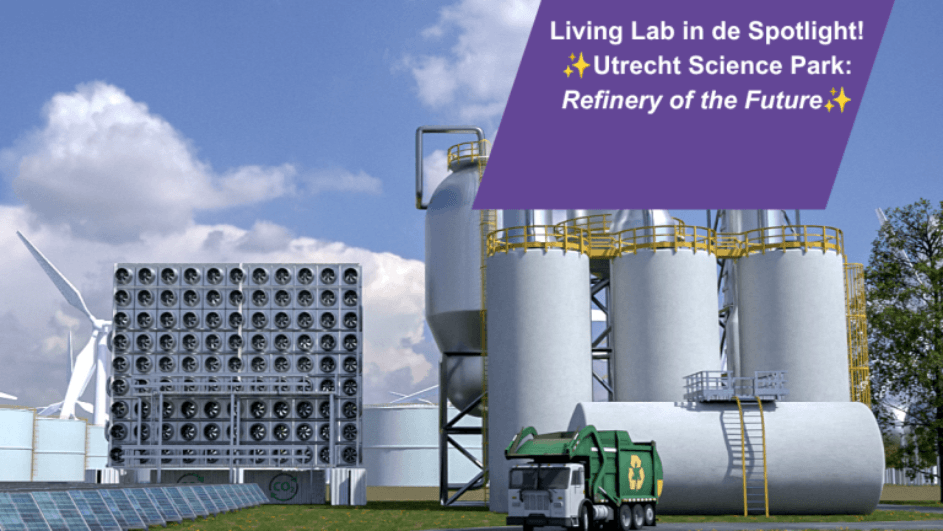
Living Lab in the Spotlight: Utrecht Science Park

Utrecht Science Park is home to several living labs focused on energy and circularity. These include Lumifield, which explores the generation and storage of solar energy, and the biogas digester, which uses organic waste as an energy source. On their own, these are already promising initiatives. Connected, they could become something much bigger: a functioning, learning model for a circular campus.

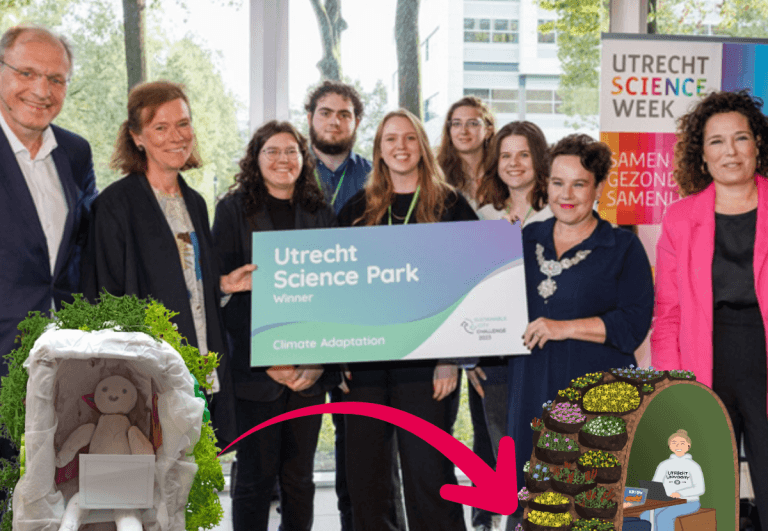
From student idea during challenge to ReGreen Hut at Dutch Design Week

On hot summer days, temperatures can rise significantly at Utrecht Science Park, while students are looking for places to study, relax and find some shade outdoors. At the same time, planting trees is not always straightforward: underground, the campus is crisscrossed by a dense network of cables and utility lines. So how can we create shade, greenery and places to relax without major changes to the ground?

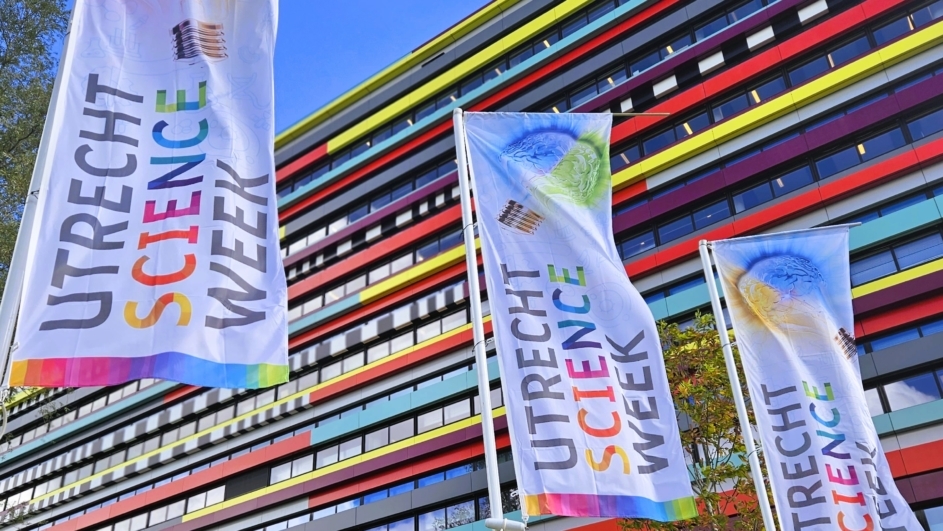
Utrecht Science Week 2026 - vlaggen

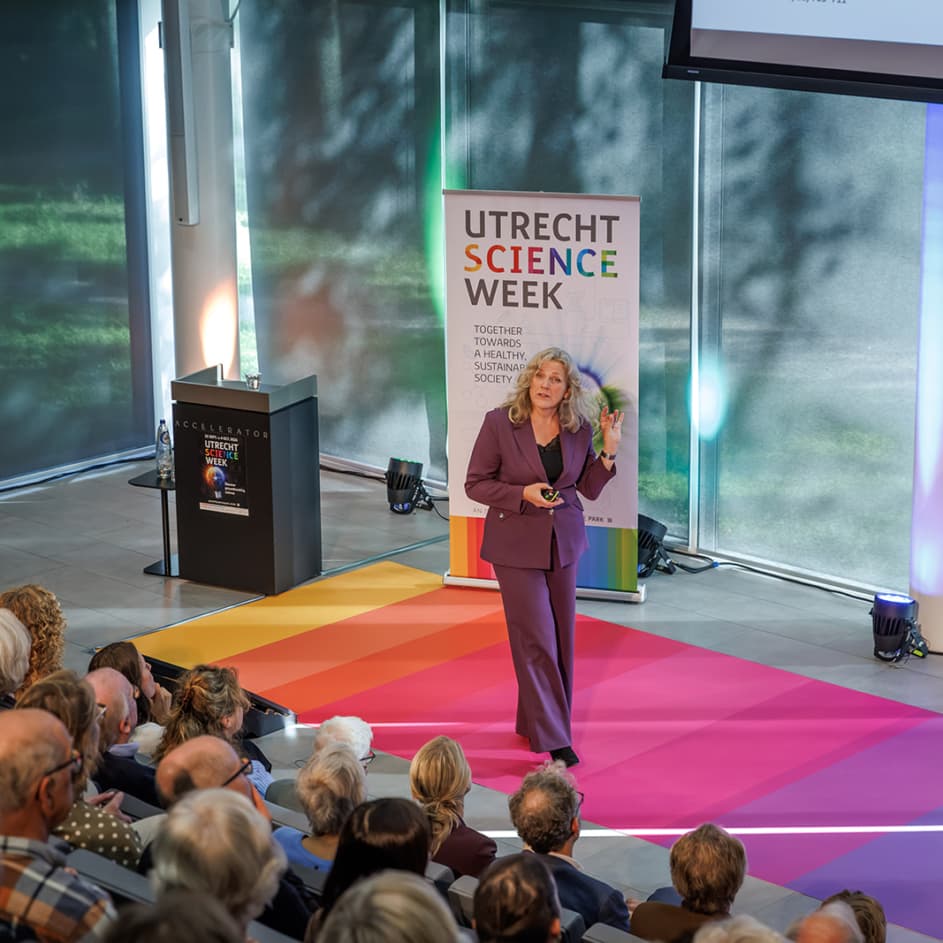
Utrecht Science Week kicks off: social and economic impact of Utrecht Science Park in the spotlight

The sixth edition of Utrecht Science Week takes place from Friday, 25 September to Sunday, 4 October. During this time, Utrecht Science Park opens its doors to the general public, showcasing how research, innovation, and collaboration lead to tangible societal and economic impact. At the same time, the week underscores the importance of sustained investment in knowledge and innovation.

Looking back at Utrecht Science Week: research, education, and entrepreneurship in the spotlight

Utrecht Science Week 2026 has come to a close. For over a week, visitors enjoyed workshops, lectures, group discussions, and tours focused on science and innovation at Utrecht Science Park. With more than thirty program activities across over 25 locations, there were ample opportunities to experience science up close. We look back on a fantastic week that once again highlighted the essential role of collaboration, and the combination of research, education, and entrepreneurship, in addressing the societal challenges of our time.