Restoring biodiversity at the educational farm De Tolakker
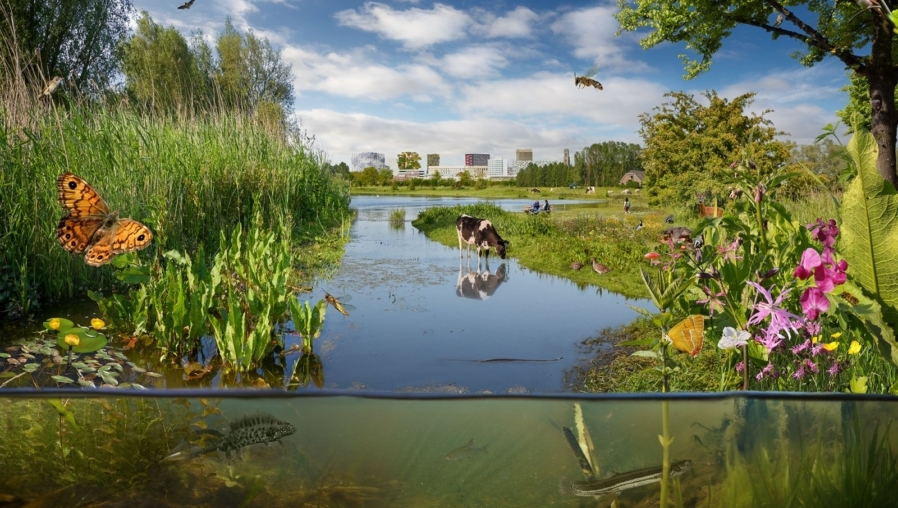
Utrecht University wants to restore and reinforce the biodiversity at the Utrecht Science Park (USP). Prior to the 60s there were European badgers, barred grass snakes and northern lapwings in the area. But when roads and buildings were built, these populations retreated declined. A dedicated team of employees and students are working on extending invitations to the indigenous plants and animals into returning to their original habitats. Meadows rich with herbs, ridges filled with flowers, and hedgerows. After all, the farm is managing 40 percent of the total surface area of the USP.
The USP, with 350 acres, is about as big as downtown Utrecht and the Lombok district combined. The decrease in biodiversity in the past half century has been a phenomenon in many nature reserves in the Netherlands. More than 35,000 types of plants and animals are endangered worldwide nowadays. Especially since biodiversity is crucial to protect the climate, against flooding and to food security. To turn the tide, the university wants to decrease their biodiversity footprint, increase the biodiversity in their own environment and enlarge the support for biodiversity by integrating their obtained knowledge in education and sharing research to society.
Monitoring biodiversity and guide species
Petros Constantinides and Jorn Vernooij are looking at a map of the educational farm De Tolakker and surrounding areas of the USP. Constantinides, PhD student at the faculty of Geosciences is listening attentively to Vernooij; farmer and supervisor of the educational farm the Tolakker. Vernooij talks about the different soil types, which crops are sowed in which fields, organic farming and ongoing innovations. Constantinides: “In my PhD research I’m developing a system in which biodiversity measurements can be monitored. I’m looking at field research, the use of technical tools such as cameras and the role of citizen science. I would like to apply this system at De Tolakker in the coming years and after that within the Utrechtse Heuvelrug. I’ll mainly be monitoring species groups: insects, plants and birds, specifically the 20 guide species. If these plant and animal species have nestled themselves in the area permanently again, we’ll know that the habitat would be suitable for a big group of different, less specific species, and that the biodiversity has increased.

Ecological wildlife corridor
To restore and strengthen the biodiversity we shouldn’t just improve the green on the campus, but also strongly connect with the three nature reserves that border the USP (Sandwijk in the north, Oostbroek in the east and Amelisweerd in the south). Many different species live here that we’d like to see again in the USP. We’re constructing two ecological wildlife corridors; one from east to west (20 meters wide and 2,2 kilometers long) and one from north to south (30 meters wide and 1,6 kilometers long). The zones that are being constructed along the edges of the meadows widen the surface area to the suitable habitats and would make migrations between territories easier accessible. Constantinides will monitor the species in- and outside these zones and keep track of which species prefer which habitats.

Salad buffet for the cows
Nine out of the twenty icon species are already residing in the USP, proven during the so-called Bioblitz. Almost 200 people travelled around for a month to map as many plants, animals and fungi. This is great news!
Vernooij confirms the presence of specific icon species: “I’m frequently encountering tracks of roe deer and European badgers, two species that we’d like to attract more. Last year there was a barn owl brooding underneath the roof of the shed. I’m very curious what influences this has for the ecological wildlife corridors. For that matter I’m encouraging the arrival of these species enormously. I think that within De Tolakker we’re already doing a lot of things well like the ways we experiment the cultivation of biological herb mixtures and the cultivation of our own high-protein concentrates. This is how we provide our cows a ‘salad buffet’: aside from different grass species, a mix of chicory, parsley, carum, alsike clover and salad burnet. I still think that we can work even better together with nature than we already are.”
New way of looking at things
In the office where the two speak to each other, a photo of the cover of this Vetscience is displayed: an artistic, almost utopian display of how the USP could look like in 2035. This photo is displayed in many different office spaces on the USP where people work on biodiversity, from the board of directors, policy departments and researchers to green management and the farm. Will this ever become reality? Vernooij: “We’re seeing the positive effects on the soil after being organic with the dairy section for almost 25 years. That is why we take such care of our fields. If the soil isn’t doing well, it directly influences the quality of the food for the animals. It all starts with the soil.” Constantinides: “I think it’s amazing that Jorn is looking at it from this perspective. It’s my dream to start a biodynamic farm one day where humans, animals and nature are in balance. I think that we’ve lost sight of that a bit. Everything has grown in size and become commercial whereas we’ve set animals and nature aside for a while. It starts with viewing it from a different perspective which causes a change in behaviour where you’d improve the world together. In the end we’d like to have portrayed the image we’ve shown in the photo. If you take care of nature well, nature will take care of you.”
Free Bicycle Light Repairs Mark Launch of National Cycling Visibility Campaign in Utrecht
The national bicycle lighting campaign ‘AAN in het donker’ (Lights On in the Dark) will be launched on 29 October on Leuvenlaan at Utrecht Science Park. Between 5:00 p.m. and 7:30 p.m., cyclists can have their lights checked and repaired free of charge. André van Schie, Member of the Provincial Executive, will be there to talk to Utrecht residents about the importance of proper bicycle lighting.
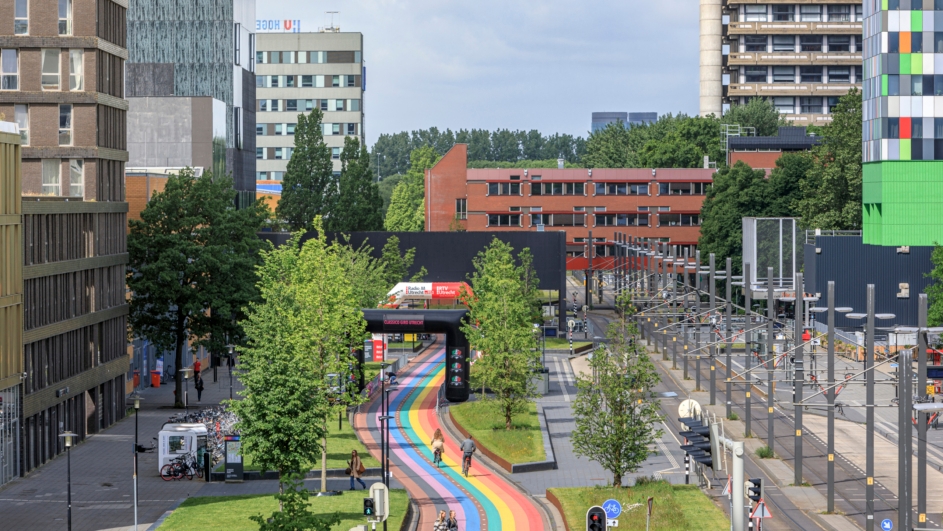
Utrecht University and UMC Utrecht awarded with twelve NWO Vidi-grants
The Dutch Research Council (NWO) has awarded Vidi grants to 109 researchers. Twelve leading researchers at Utrecht University and UMC Utrecht will each receive a Vidi grant of up to €850,000. NWO awards Vidi grants annually, enabling recipients to develop an innovative line of research over the next five years and further expand their research teams.
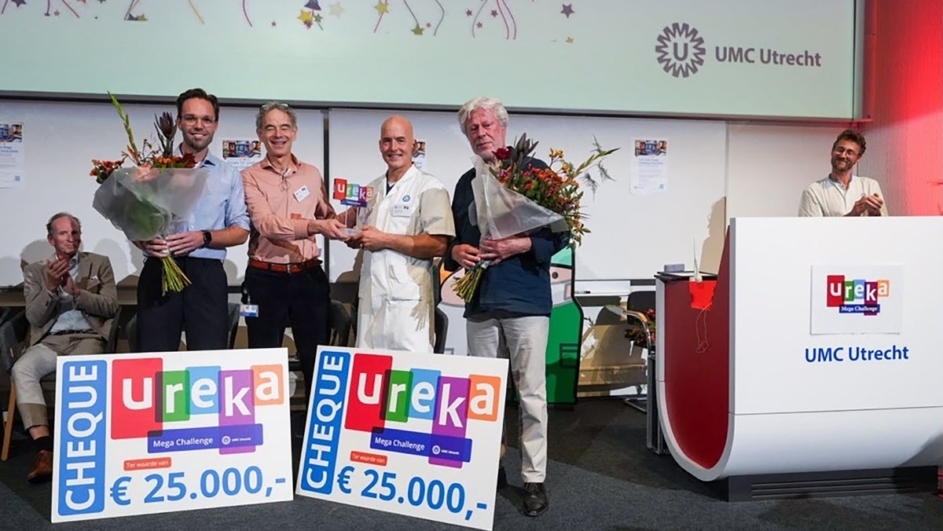
ReVoice restores one’s own voice after voice loss
People who lose their voice, for example after surgery for head and neck cancer, want to be able to speak again with a voice that sounds like their own. ReVoice aims to provide this, with the help of AI. With this innovation, head and neck surgeon Weibel Braunius, innovation manager Mart Schoondermark, and patient Boudewijn Faber won the Ureka Mega Challenge 2026 from UMC Utrecht.
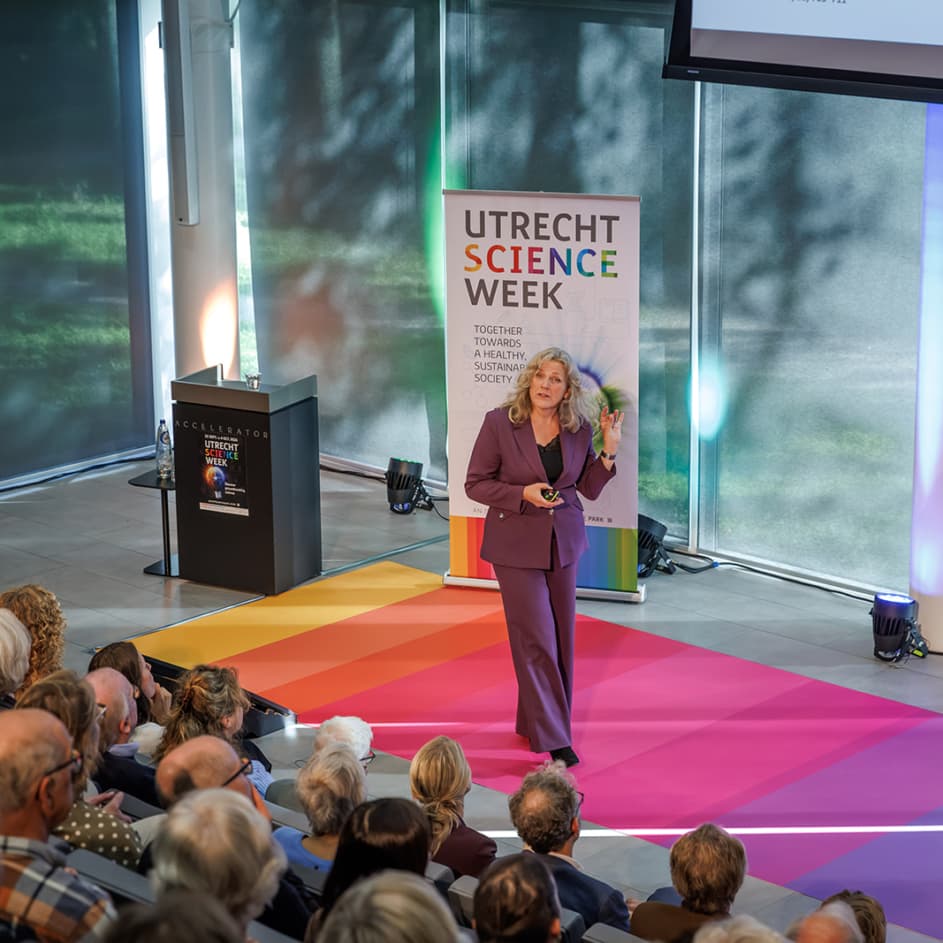
Looking back at Utrecht Science Week: research, education, and entrepreneurship in the spotlight
Utrecht Science Week 2026 has come to a close. For over a week, visitors enjoyed workshops, lectures, group discussions, and tours focused on science and innovation at Utrecht Science Park. With more than thirty program activities across over 25 locations, there were ample opportunities to experience science up close. We look back on a fantastic week that once again highlighted the essential role of collaboration, and the combination of research, education, and entrepreneurship, in addressing the societal challenges of our time.