Open Innovation Lab IMAGINE launched

Treating patients with cancer faster and more effectively using the latest minimally invasive techniques. And at the same time relieve the continuing pressure on the healthcare industry. That’s what IMAGINE is striving for. The NWO, public and private partners are investing a total of 54 million euros in this world-leading innovation lab for image-guided interventions. This will significantly improve the life and care of people with cancer.
Medical imaging and image-based interventions are playing an increasingly important role in the treatment of cancer patients. With the MR-Linac, for example, radiotherapy can be much more targeted and fewer sessions are needed to treat prostate cancer patients. Previously, people with limited-risk prostate cancer, for example, had to be irradiated 20 times, while the standard treatment now consists of five sessions with the MR-Linac.
The MR-Linac is a successful example of an image-guided innovation that UMC Utrecht, together with Elekta and Philips, has realized and brought to patients. Meanwhile, the MR-Linac has flown out to clinics around the world to treat patients in a more focused, faster and less stressful way.
To accelerate the realization of medtech inventions such as these but also to make them more compatible with and introduced into everyday hospital practice, the open innovation lab IMAGINE for image-guided interventions is being launched. Here, companies, research and educational institutions come together to work jointly on image-guided innovations such as the MR-Linac. This combines the latest mathematical, AI and data technologies with image-guided techniques and interventions.
Less stressful
Image-guided treatment is a method by which patients can be treated in a more targeted and less invasive manner. In fact, imaging equipment (such as MRI, CT, X-ray and ultrasound) is used to map tumors very precisely during the intervention.
These types of techniques allow doctors to better see what they are treating, making cancer treatments more precise and efficient. As a result, patients also experience fewer side effects because surrounding healthy tissue is spared. Furthermore, image-guided treatments are often less stressful for patients than surgery, for example.
Nico van den Berg, professor of computational imaging at UMC Utrecht: “Medical technology is never finished, it can always be improved. A revolution is currently taking place in AI, mathematical modeling and smart sensors. By incorporating these into image-guided interventions, we can provide even more effective care with less manual intervention required from care staff; thus reducing the burden on care staff. Within IMAGINE, we are seeking cooperation for this with new knowledge partners who can help us with their own specialties, such as the Center for Mathematics & Informatics (CWI) and Eindhoven University of Technology.”
Side by side
The participating public and private parties will work side by side in the open innovation lab IMAGINE. There, mathematicians, AI developers, image scientists, methodologists, innovation experts, engineers and physicians will share their expertise, resources and ideas with medtech companies to invent the latest imaging and image-guided technologies.
Because all this takes place in a hospital setting, patients and patient data are nearby. As a result, innovative image-guided treatments can be safely and quickly researched and deployed in people with cancer (with patient consent, of course). The participating hospitals, in addition to UMC Utrecht, are the Antoni van Leeuwenhoek Hospital, Radboud UMC and Catharina Hospital.
Several colleges are also participating in IMAGINE in order to provide more focused training for the healthcare professional of the future. This not only involves radiolaborators or other healthcare personnel, but also, for example, engineers and other technicians needed to devise or improve equipment and software, for example. The laboratory technician program at Fontys University of Applied Sciences and the HBO-V program at The Hague University of Applied Sciences are participating in IMAGINE. And from Hogeschool Utrecht, two professorships specializing in practice-based research around AI and Life Sciences and Smart Systems are participating.
Maarten van Kouwen, innovation officer at UMC Utrecht: “In the hospital, we see the challenges related to keeping healthcare humanized but also the opportunities that lie in AI and image-guided interventions. By inviting companies and other institutes into an open innovation lab in the middle of a hospital environment, we can ensure focused collaboration to address the biggest problems and opportunities and carry them out to other hospitals and regions.”
Open innovation is a relatively new concept for healthcare and this will be guided from the department of innovation sciences at Utrecht University. The participating companies are Philips, Elekta, KALCIO Healthcare and Tesla Dynamic Coils. They are contributing substantially to this initiative both financially and through resources.
Pressure off the healthcare kettle
With IMAGINE, the partners hope to make an important contribution to relieving current pressures in the healthcare system.
Image-guided treatments are minimally invasive, or even completely non-invasive, thus requiring much less of the operating rooms and intensive care unit required for conventional surgical treatments. Treatments take place on an outpatient basis, so a day admission or a short visit is sufficient for patients.
This is obviously nicer for the patient, but also ensures that more people can be better served in less time. Result: fewer long wait times.
Healthcare professionals, such as nurses, experience less pressure at the same time, as fewer patients need to be admitted. All this also significantly reduces healthcare costs.
Getting started
Soon the partners and the NWO (Netherlands Organization for Scientific Research) will sign their cooperation agreement. Together, the NWO and the partners will invest a total of about 54 million euros (spread over ten years) in IMAGINE.
Several research projects within IMAGINE are already underway. The partners are not yet working together in one location, but preparations for that are already being made. Philips already has a physical presence in UMC Utrecht.
Maarten: “The IMAGINE proposal came about through intensive collaboration with all partners, and preparations are in full swing. This intensified collaboration has already led to new insights and plans. We are enormously looking forward to building on this over the next ten years, thanks to the additional stimulus from the NWO.”
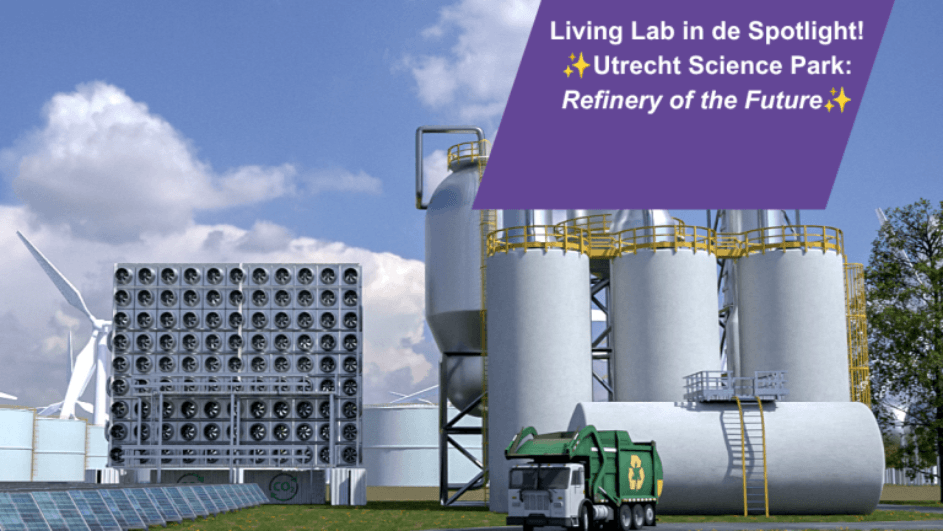
Living Lab in the Spotlight: Utrecht Science Park
Utrecht Science Park is home to several living labs focused on energy and circularity. These include Lumifield, which explores the generation and storage of solar energy, and the biogas digester, which uses organic waste as an energy source. On their own, these are already promising initiatives. Connected, they could become something much bigger: a functioning, learning model for a circular campus.
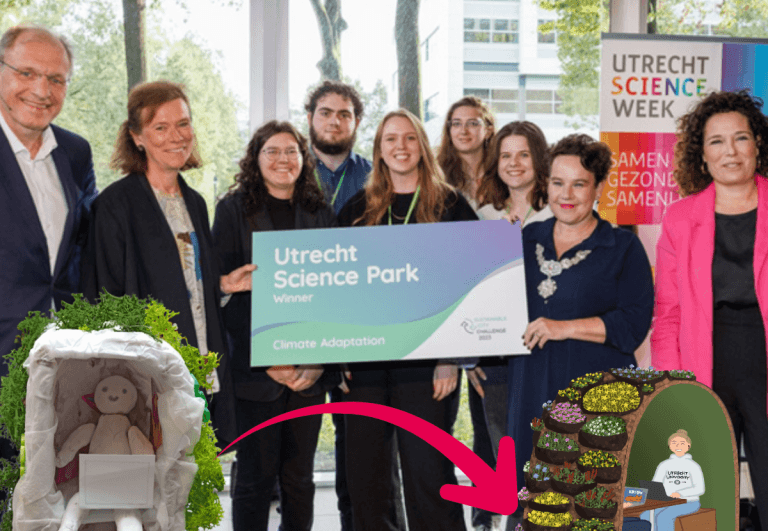
From student idea during challenge to ReGreen Hut at Dutch Design Week
On hot summer days, temperatures can rise significantly at Utrecht Science Park, while students are looking for places to study, relax and find some shade outdoors. At the same time, planting trees is not always straightforward: underground, the campus is crisscrossed by a dense network of cables and utility lines. So how can we create shade, greenery and places to relax without major changes to the ground?
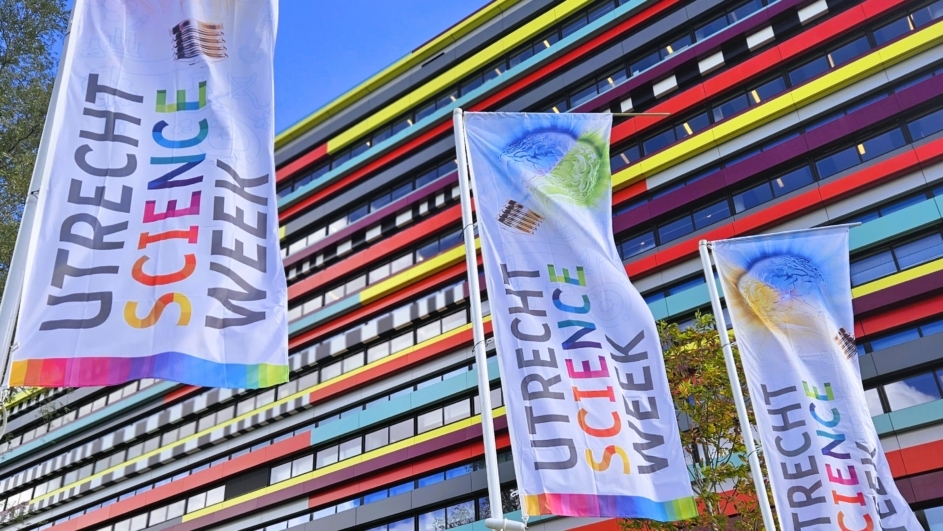
Utrecht Science Week kicks off: social and economic impact of Utrecht Science Park in the spotlight
The sixth edition of Utrecht Science Week takes place from Friday, 25 September to Sunday, 4 October. During this time, Utrecht Science Park opens its doors to the general public, showcasing how research, innovation, and collaboration lead to tangible societal and economic impact. At the same time, the week underscores the importance of sustained investment in knowledge and innovation.
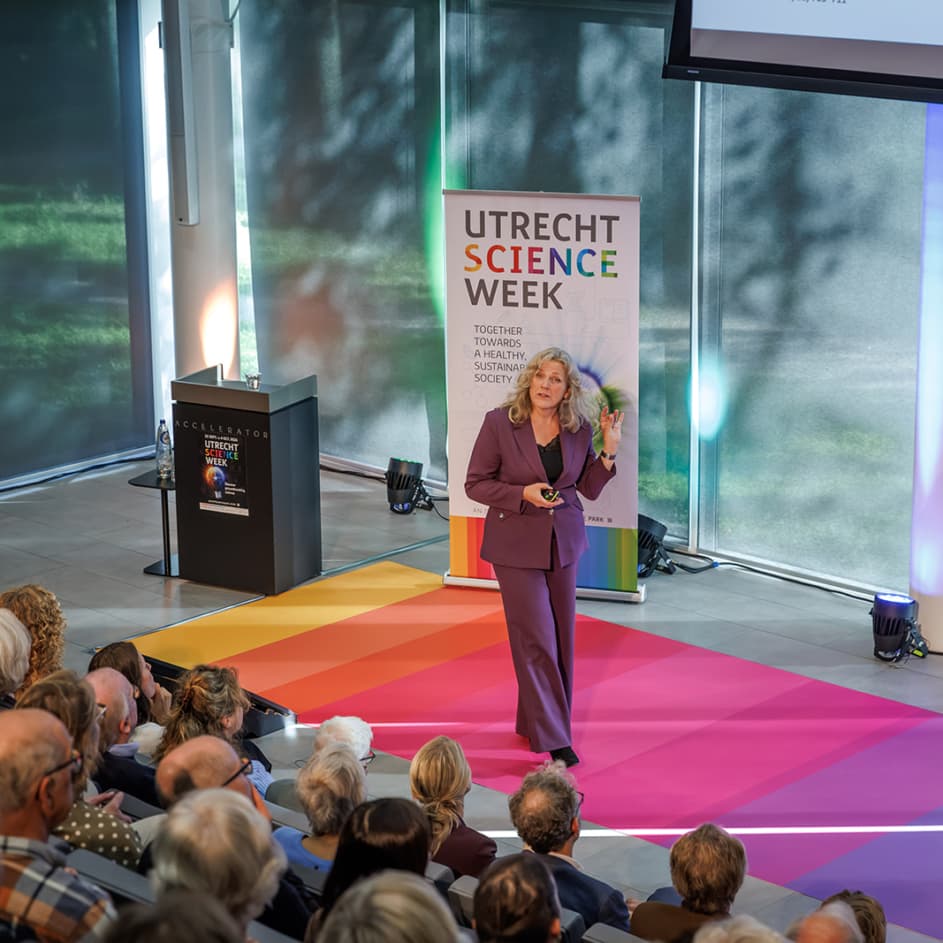
Looking back at Utrecht Science Week: research, education, and entrepreneurship in the spotlight
Utrecht Science Week 2026 has come to a close. For over a week, visitors enjoyed workshops, lectures, group discussions, and tours focused on science and innovation at Utrecht Science Park. With more than thirty program activities across over 25 locations, there were ample opportunities to experience science up close. We look back on a fantastic week that once again highlighted the essential role of collaboration, and the combination of research, education, and entrepreneurship, in addressing the societal challenges of our time.