Measuring together for a healthy living environment
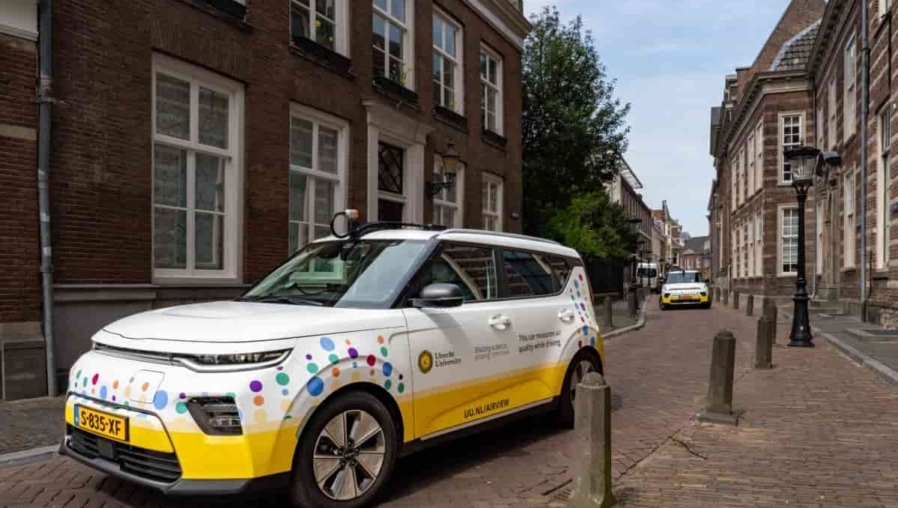
You probably don’t realize it, but every day almost every European breathes unhealthy air. That has an impact.“Air pollution is one of the biggest causes of disease in the Netherlands and about as big a risk factor as obesity and low exercise combined,” says Professor Roel Vermeulen.His team is involved in mapping air pollution.“We map concentrations of soot, nitrogen dioxide and (ultra)particulate matter, among other things.What we are most concerned about are the ultrafine particles.Those particles can penetrate deep into the lungs and bloodstream and increase the risk of respiratory, cardiovascular, cancer and brain diseases.”
“To map air pollution, we use models, among other things. We do this because fixed measuring stations can only measure in a few places,” said Jules Kerckhoffs, a researcher on Vermeulen’s team. “The National Air Quality Monitoring Network, which is managed by RIVM, measures the concentrations of certain substances in the air at about 100 locations in the Netherlands. To properly map the air quality at all locations, we deploy mathematical models. We use data sets, such as population density and traffic characteristics. But specific and local characteristics of a road, district or city also cause differences in air quality. That’s where our mobile measurement data comes in.”
Let it flow
Since 2019, the research team has had two measuring cars. In cooperation with various partners, such as area developers, GGDs, companies, as well as residents, they are mapping the air quality in cities.“In the cars we have built in modern measuring equipment, with which we measure nitrogen dioxide, soot ánd ultrafine dust while driving every second.”
These measurements allow the researchers to compare different street types.This shows, for example, that variations in road traffic speeds affect air quality.The influence of roadside trees was also examined in Rotterdam.
What turned out? Streets without roadside trees were found to be less polluted than streets with roadside trees. Most polluted were streets with trees in the middle of the road. Kerckhoffs explains: “Trees absorb virtually no air pollution, but (especially in summer) actually provide less ventilation and thus less spread of pollution. So the air pollution was held in these streets, under the trees. So, despite the fact that greenery and trees are very important in the city, we need to look carefully at where and how we put them.”
Wood-smoke in the neighborhood
There are also topics that researchers are investigating at the neighborhood level, such as wood smoke.Wood smoke contributes to particulate matter in the air, a contribution that can be as high as that from industry and road traffic.However, there are still questions about the health effects. Kerckhoffs: “With local measurements, in specific neighborhoods, we can better identify the contribution of wood stoves to total air pollution.This is because the measuring car distinguishes between soot from traffic and soot from biomass (wood).”
At the city level, the research team is looking at larger sources of air pollution, such as industry or airports.“In Amsterdam and Copenhagen, we showed that there is a significant increase in ultrafine particles in particular around airports,” Kerckhoffs points out. “It turned out that even in the center of these cities the contribution can still be found.”
In cooperation with citizens and the municipality of Son en Breugel, the researchers will map the influence of Eindhoven Airport. “This airport will close for several months in early 2027. It offers us an excellent opportunity to do an intervention study. In 2025 we are going to take measurements at various locations in Son en Breugel. We will repeat those measurements in 2027, when there is no air traffic.”

Participants in the Exposome Panel Study, among others, will be sent this sensor to measure air quality around their homes.
Citizens play a crucial role
The research team has also launched a large citizen science project: the Exposome Panel Study. Nearly 500 Dutch citizens participate by measuring air quality in and around their homes using fine dust sensors for two weeks each year. Additionally, they keep a diary and fill out a questionnaire. Vermeulen is impressed by the high level of engagement among participants. “It provides a wealth of data and enhances our measurements.”
Vermeulen and Kerckhoffs aim to further promote their mobile Air View car and citizen science project. “Air quality in European cities has improved in recent years but still falls short of World Health Organization recommendations. Together with policymakers, companies, and citizens, we want to reduce the negative effects of air pollution and create a healthier living environment.”
Continue reading?
- Exposome research: Air View Car
- English article in The Guardian: Revealed: almost everyone in Europe breathes toxic air
Interview: Thomas Hoogeboom on the future of Mobility & Health
Healthcare in the Netherlands is at a turning point. The new Societal Impact Platform Mobility & Health aims to connect knowledge and expertise across research disciplines, organizations and societal partners. We spoke to Thomas Hoogeboom, Professor of Physiotherapy Sciences and initiator of the platform, about the importance of mobility for health, the value of collaboration and what to expect from the kick-off during Utrecht Science Week.
How UtrechtInc. helps startups grow
From a promising idea to a startup: getting there takes more than a good idea. UtrechtInc is a startup incubator that supports students, researchers and entrepreneurs in the Utrecht region during the early stages of their startup. Through validation programmes, personal guidance and a network of experts and investors, UtrechtInc helps founders develop and test their ideas.
The new sports season at Olympos has kicked off again
The holidays are over, and the sports season has kicked off again! With packed schedules and tight deadlines, it is tempting to just keep working. Before you know it, you’ve spent hours in front of your screen or in the lab without taking a real break. Especially when things are busy, physical activity can help you unwind and gain new energy and inspiration.
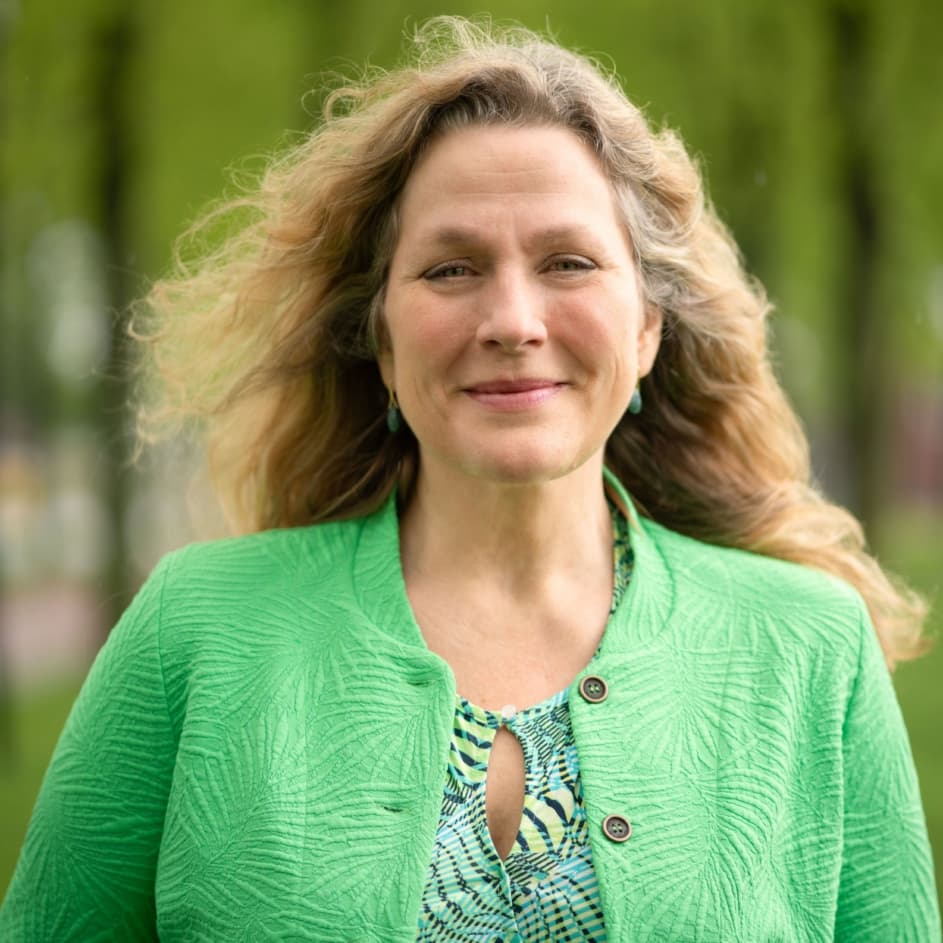
Opening Utrecht Science Week with keynote by Juliette Legler on the hidden influence of environmental chemicals
On Friday, September 25, the annual science festival ‘Utrecht Science Week’ kicks off once again at Utrecht Science Park. We are pleased to announce that this year, Prof. Dr. Ir. Juliette Legler will deliver the Utrecht Science Lecture. Juliette Legler is Professor of Toxicology at the Faculty of Veterinary Medicine at Utrecht University and leads the ‘One Health Toxicology’ group at the Institute for Risk Assessment Sciences (IRAS).