Expanding opportunities for brain tumor research worldwide
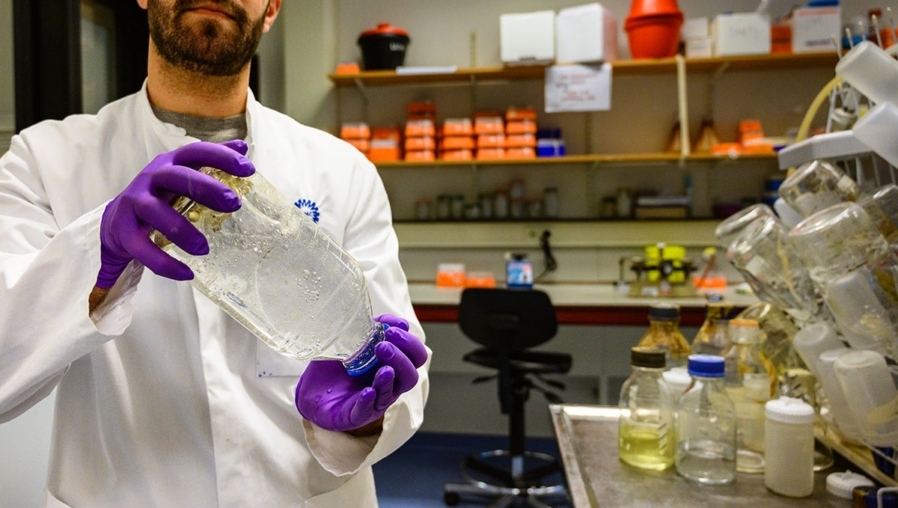
Researchers worldwide now have access to the procedure of growing organoids from fetal brain tissue, which is developed at the Princess Máxima Center. The organoids can be used to model any type of brain tumor in the lab. This allows scientists to generate novel experimental models to study many, often rare brain tumor subtypes. Researchers thus hope to accelerate research into the origin and treatment of brain tumors in children.
Scientists use various models to investigate the biology of healthy tissue and diseases in the laboratory. For example, cell lines, laboratory animals and, for several years now, 3D mini-organs (organoids). These organoids have certain characteristics and are so complex that scientists can accurately mimic an organ’s functions in the laboratory. They are therefore used for research purposes, including understanding how cancer can start in a healthy brain, drug sensitivity testing and finding leads for new drugs.
Last year, research group leaders Dr. Benedetta Artegiani, Prof. Dr. Hans Clevers and Dr. Delilah Hendriks shared their revolutionary work to grow 3D mini-organs from human fetal brain tissue in the laboratory. Today in Nature Protocols, Artegiani, Hendriks and their colleagues share the method for growing these brain organoids, termed FeBOs, and then adapting them to model a specific type of brain tumor.
DNA alteration
There are many different types of brain tumors in children, many more than in adults. All of these types are rare, so there is little tumor tissue available to use for research. In the protocol published today, the researchers share how CRISPR/Cas9 technology can be used to modify the DNA of some cells within the starting organoid. Thus, if the DNA profile of the tumor type is known, an organoid of a particular type of brain cancer can be generated from this so-called FeBO.
Anna Pagliaro is a PhD student in the Artegiani & Hendriks group and one of the three first authors of the study. She says: ‘ One of the strengths of the developed model is that we can investigate how a tumor cell behaves in a healthy environment. This realistic environment makes it possible to investigate, for example, the accelerated growth and behavior of invasion of tumor cells in healthy tissue.’
The modified organoids can also be used to test the sensitivity to various drugs. Francesco Andreatta, PhD student and co-first author: ‘By testing different drugs on the organoids and examining cell viability, we can determine how the cancer cells respond, and which drugs are potential leads for treatment.’ ‘We can also see if certain drugs change the behavior of the organoids. For example, their speed of growth or a change in how the cells are arranged in the organoid,’ adds PhD student Roxy Finger and co-first author of the study.
In addition, the organoids will also provide important information about the development of brain cancer. At the molecular level, they can offer insight into the change from a healthy cell to a cancerous cell. By sharing the culture protocols with the scientific community, Artegiani and Hendriks hope to help other researchers accelerate their research into new treatments and the origin of brain tumors.
This publication was made possible in part by Oncode Accelerator. The Oncode Accelerator Project receives funding from the Dutch National Growth Fund (NGF).
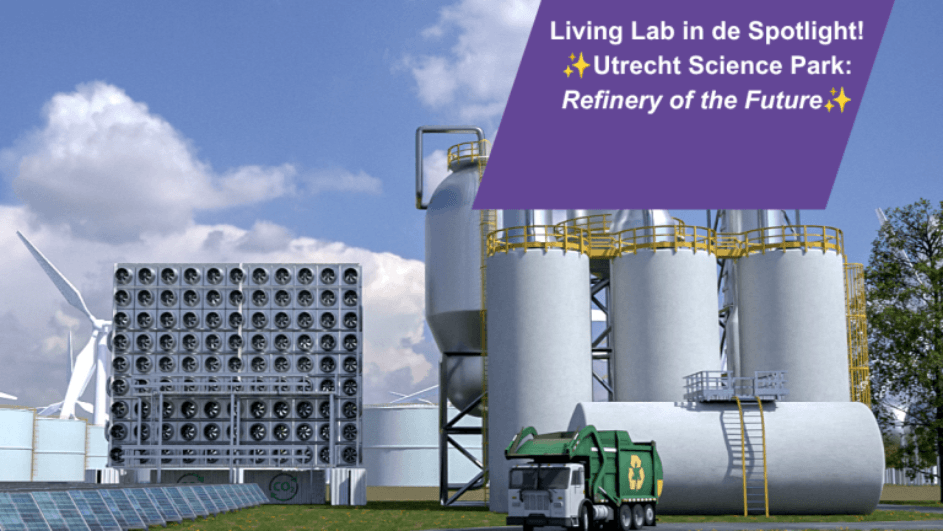
Living Lab in the Spotlight: Utrecht Science Park
Utrecht Science Park is home to several living labs focused on energy and circularity. These include Lumifield, which explores the generation and storage of solar energy, and the biogas digester, which uses organic waste as an energy source. On their own, these are already promising initiatives. Connected, they could become something much bigger: a functioning, learning model for a circular campus.
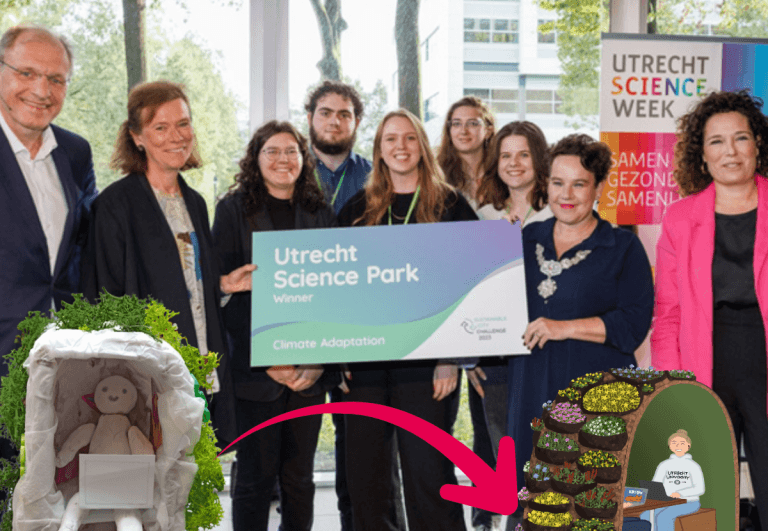
From student idea during challenge to ReGreen Hut at Dutch Design Week
On hot summer days, temperatures can rise significantly at Utrecht Science Park, while students are looking for places to study, relax and find some shade outdoors. At the same time, planting trees is not always straightforward: underground, the campus is crisscrossed by a dense network of cables and utility lines. So how can we create shade, greenery and places to relax without major changes to the ground?
Utrecht Science Week kicks off: social and economic impact of Utrecht Science Park in the spotlight
The sixth edition of Utrecht Science Week takes place from Friday, 25 September to Sunday, 4 October. During this time, Utrecht Science Park opens its doors to the general public, showcasing how research, innovation, and collaboration lead to tangible societal and economic impact. At the same time, the week underscores the importance of sustained investment in knowledge and innovation.
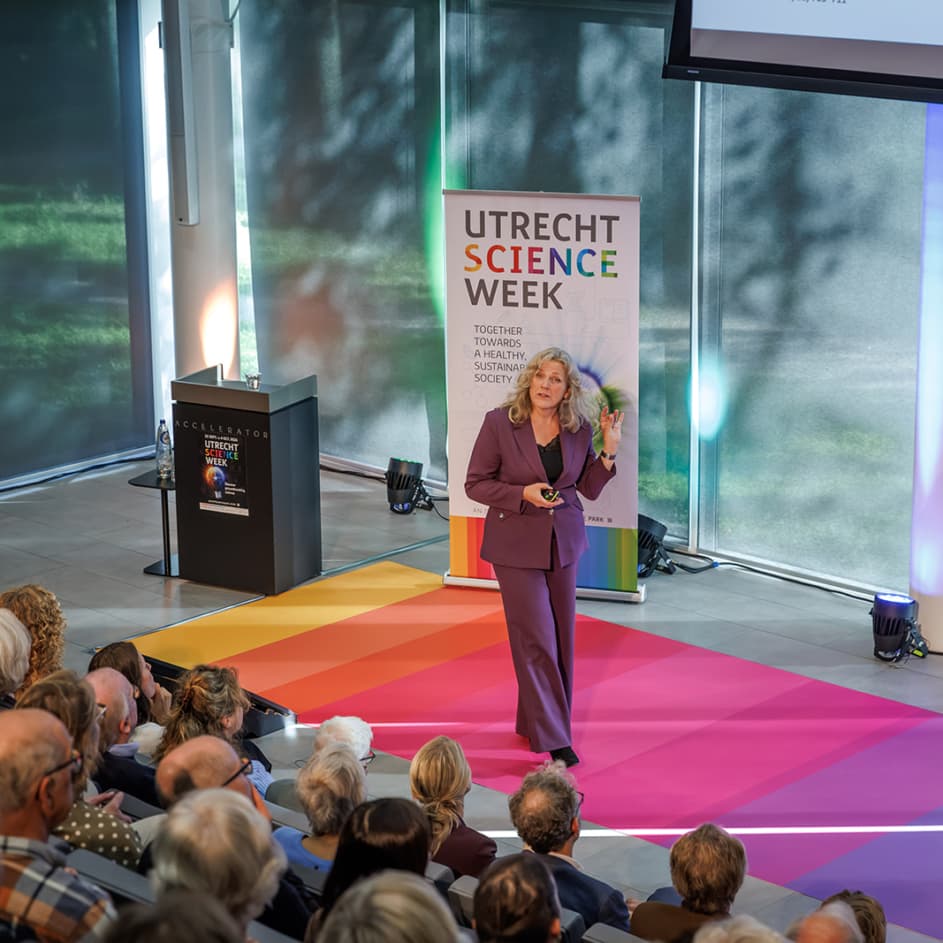
Looking back at Utrecht Science Week: research, education, and entrepreneurship in the spotlight
Utrecht Science Week 2026 has come to a close. For over a week, visitors enjoyed workshops, lectures, group discussions, and tours focused on science and innovation at Utrecht Science Park. With more than thirty program activities across over 25 locations, there were ample opportunities to experience science up close. We look back on a fantastic week that once again highlighted the essential role of collaboration, and the combination of research, education, and entrepreneurship, in addressing the societal challenges of our time.