Expanding global study babies with leukemia
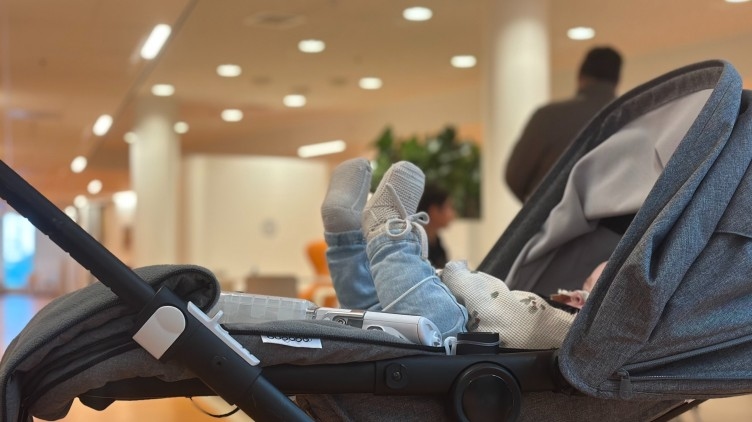
Japan and five European countries have joined a global phase three clinical trial. This study will further investigate the effectiveness of immunotherapy with blinatumomab in a large group of infants with aggressive leukemia. The trial and data center at the Princess Máxima Center is coordinating the Interfant-21 study. Ultimately, some 200 pediatric oncology centers from 28 countries are participating.
In 2023, the Interfant study group led by researchers from the Máxima Center demonstrated that immunotherapy with blinatumomab is safe, effective and leads to a greatly improved prognosis for babies with acute lymphoblastic leukemia (ALL) and a KMT2A rearrangement in DNA. In addition to an improved survival rate – from 66% to 93% – these children had fewer side effects from treatment. The Interfant-21 study is a follow-up to this, examining the effect of immunotherapy with blinatumomab in a larger group of children – 160 versus 30.
Dr. Janine Stutterheim is a pediatric oncologist at Máxima and specialized in ALL. She coordinates the medical-scientific part of the study. ‘In this study, as in the first study, the babies receive five chemophases and an additional treatment phase with blinatumomab. In addition, in this study, if the child had a good response to the first phase, a chemophase is replaced with a phase with blinatumomab. In fact, in the first study, we saw that blinatumomab is effective and has fewer side effects. This helps to recover from the chemotherapy phases that are also very important for cure.
Worldwide
This aggressive form of leukemia is rare in the 0-to-1 age group. In order for enough children to participate in the study, a large number of participating centers are needed. Currently, the study is open in 69 hospitals in 18 countries, including Argentina, Australia, Sweden and Spain. Japan recently joined with 20 centers. The first Japanese baby is now being treated within the study.
Stutterheim expects the required 160 children to participate in the study by the end of 2026. It will then be at least four years before the results are known. ‘If babies also prove to benefit from blinatumomab in this larger study, it will become the standard treatment for these children. We hope that the drug in this application will then be reimbursed by health insurance companies. In the Netherlands, but also in the other participating countries.
Coordination as sponsor
The trial and data center of the Máxima Center coordinates the study and thus fulfills the role as sponsor. The logistics surrounding this large study are coordinated by trial managers Peggy Scholte and Lieke van den Wildenberg. Van den Wildenberg explains: ‘There is one national coordinating center in each country. Their responsibilities include funding, ethical approval and opening the study in the other hospitals in that country. The latter also includes, for example, the contracts with these hospitals and the training of staff.’ Scholte adds: ‘As sponsor, we also provide the necessary documents for this, check that everything is going well and make sure that the drugs get to the right place. Our colleagues from data management built a database for the study, so that every center enters the data in the same way.’
Funding for the practical issues related to the study comes to hospitals in four countries partly through ATTRACT, a collaboration between KWF and three European sister funds.
Sub-studies
In addition to the clinical research into better treatment for babies with ALL, there are four more sub-studies associated with Interfant-21.
Several research groups of the Máxima are involved in these. For example, the Huitema group is investigating the effect of dosage of different types of medication in the PATIO study. And the Nierkens group is looking at the child’s immune system before and during the blinatumomab phases and whether monitoring this can play a role in predicting how the child responds to therapy.
The possible neuro-cognitive consequences of leukemia treatment at infancy are being investigated by the Partanen group. In addition to neuropsychological tests, such as puzzles and memory exercises, so-called Patient Reported Outcomes Measures (PROMs) play an important role. PROMs are crucial to understanding how children and parents feel and function. The questionnaires that parents complete for this study were prepared with the support of experts from the PROM facility at the Máxima Centers. Hospitals from 20 countries are participating in this substudy.
Stutterheim is looking forward to the results of the study: ‘This is a wonderful example of how different aspects surrounding better healing and quality of life are interwoven in a clinical study. Thanks to the concentration of children and specialists within the field of pediatric oncology, I hope that as a research hospital we will be able to improve the quality of life with this study.’
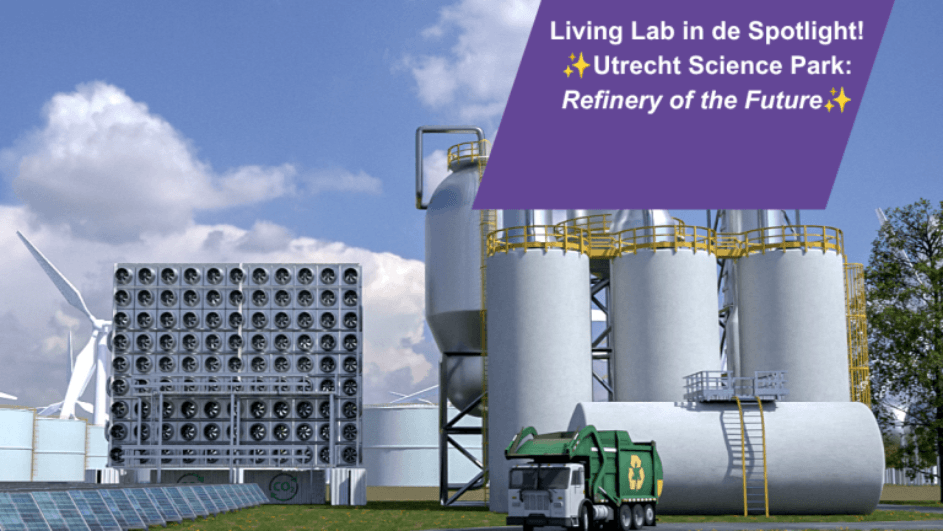
Living Lab in the Spotlight: Utrecht Science Park
Utrecht Science Park is home to several living labs focused on energy and circularity. These include Lumifield, which explores the generation and storage of solar energy, and the biogas digester, which uses organic waste as an energy source. On their own, these are already promising initiatives. Connected, they could become something much bigger: a functioning, learning model for a circular campus.
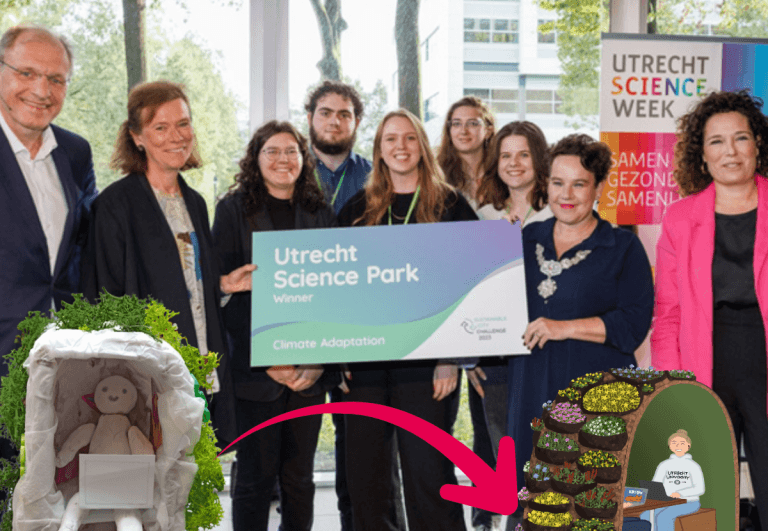
From student idea during challenge to ReGreen Hut at Dutch Design Week
On hot summer days, temperatures can rise significantly at Utrecht Science Park, while students are looking for places to study, relax and find some shade outdoors. At the same time, planting trees is not always straightforward: underground, the campus is crisscrossed by a dense network of cables and utility lines. So how can we create shade, greenery and places to relax without major changes to the ground?
Utrecht Science Week kicks off: social and economic impact of Utrecht Science Park in the spotlight
The sixth edition of Utrecht Science Week takes place from Friday, 25 September to Sunday, 4 October. During this time, Utrecht Science Park opens its doors to the general public, showcasing how research, innovation, and collaboration lead to tangible societal and economic impact. At the same time, the week underscores the importance of sustained investment in knowledge and innovation.
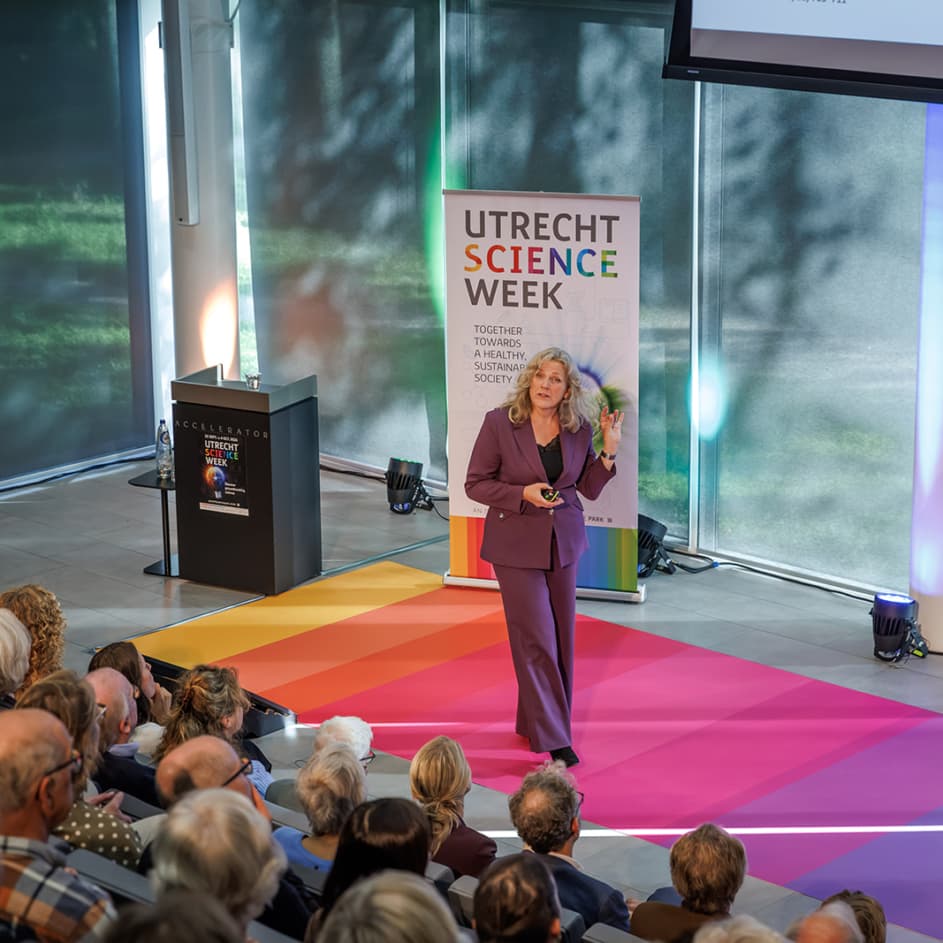
Looking back at Utrecht Science Week: research, education, and entrepreneurship in the spotlight
Utrecht Science Week 2026 has come to a close. For over a week, visitors enjoyed workshops, lectures, group discussions, and tours focused on science and innovation at Utrecht Science Park. With more than thirty program activities across over 25 locations, there were ample opportunities to experience science up close. We look back on a fantastic week that once again highlighted the essential role of collaboration, and the combination of research, education, and entrepreneurship, in addressing the societal challenges of our time.