Big changes in DNA help cause childhood cancer
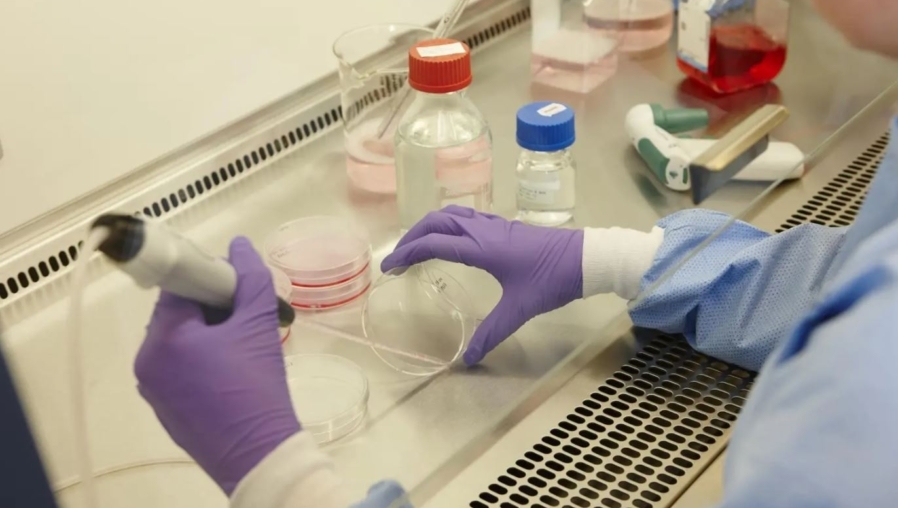
Big DNA rearrangements are found across different forms of childhood cancer, a new study has found. Scientists in the Kemmeren group at the Princess Máxima Center believe these structural changes play a large role in how cancer develops in children.
The researchers expect that their findings could help pick out children with faster growing forms of the disease, and eventually lead to more effective treatments for children with cancer. Jayne Hehir-Kwa, associate group leader of the Kemmeren group: ‘A lot more research is needed to translate our findings to the clinic, but it’s really exciting to open up this whole new area of genomics research in childhood cancer.’
Big, structural faults in the DNA are a hallmark of many forms of childhood cancer. For example, in some tumors two genes have fused together, or sections of DNA code are scrambled or mistakenly repeated many times. Such so-called structural variants can help in diagnosing the exact form of cancer. They can also inform a child’s prognosis, with more complex structural variants being linked to a higher risk form of cancer . But only some of these faults were known, for a limited number of childhood cancer types.
Surprising role
Scientists in the Kemmeren group at the Princess Máxima Center analyzed the entire DNA of 120 tumors from children with one of five different forms of cancer, including neuroblastoma and Wilms’ tumor. They looked at tumor samples from the Máxima’s Biobank, where tissue from children treated at the Máxima is stored for use in research. Using a technique called whole genome sequencing, the scientists found that nearly half of the tumors contained complex changes to the DNA. Their research was recently published in the journal Cell Genomics.
‘I was surprised that structural changes to the DNA played such a large role’, says Hehir-Kwa. ‘It suggests these complex genomic changes are important in the origin of childhood tumors.’
In 42 of 56 tumors with a complex structural fault, the fault affected a gene known to drive the growth of that particular form of cancer. Importantly, children whose tumors had such complex driver gene faults were twice as likely to die from their disease, or see their cancer grow or come back after treatment. This underlines the scientists’ idea that complex genomic variants could be an important clue to the prognosis of children with a solid tumor.
Promising new area of research
Hehir-Kwa: ‘We plan to work with our clinical colleagues in the Máxima to follow up with data on the treatment and outcome in children whose tumors contained complex structural variations. This could in future lead to new tools in diagnosing and picking out children with a high risk form of cancer. We also believe that complex structural variations could be valuable new targets for precision medicine. A lot more research is needed to translate our findings to the clinic, but it’s really exciting to open up this whole new area of genomics research in childhood cancer.’
Ianthe van Belzen worked on the study as part of her PhD research in the Kemmeren group. She now works as a postdoctoral fellow at the European Bioinformatics Institute in the United Kingdom. She says: ‘Our study is the first to look at complex structural variations in the genome of multiple childhood tumors. This was possible thanks to the Máxima’s central biobank, where tumor samples of children treated at the Máxima are stored. I’m looking forward to further explore the role of complex structural variations in the next step of my career.’
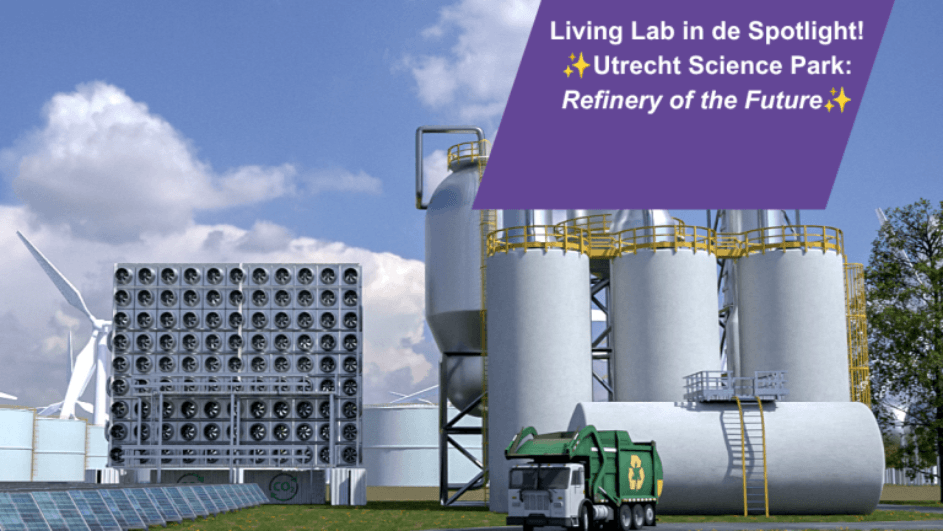
Living Lab in the Spotlight: Utrecht Science Park
Utrecht Science Park is home to several living labs focused on energy and circularity. These include Lumifield, which explores the generation and storage of solar energy, and the biogas digester, which uses organic waste as an energy source. On their own, these are already promising initiatives. Connected, they could become something much bigger: a functioning, learning model for a circular campus.
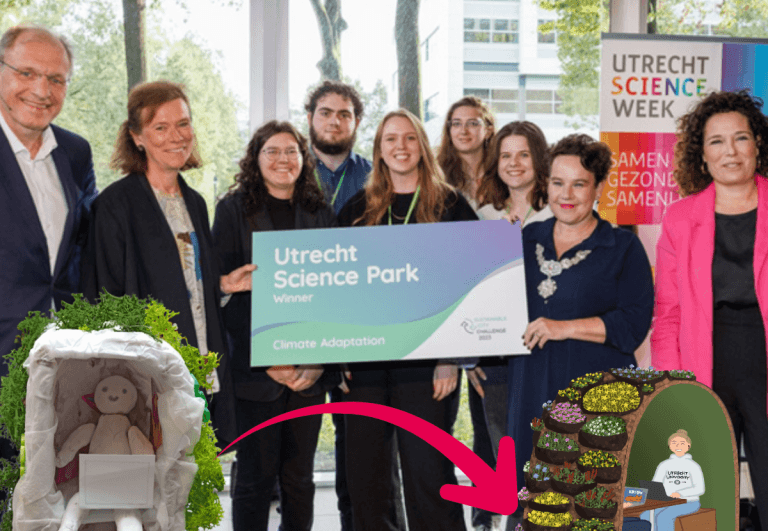
From student idea during challenge to ReGreen Hut at Dutch Design Week
On hot summer days, temperatures can rise significantly at Utrecht Science Park, while students are looking for places to study, relax and find some shade outdoors. At the same time, planting trees is not always straightforward: underground, the campus is crisscrossed by a dense network of cables and utility lines. So how can we create shade, greenery and places to relax without major changes to the ground?
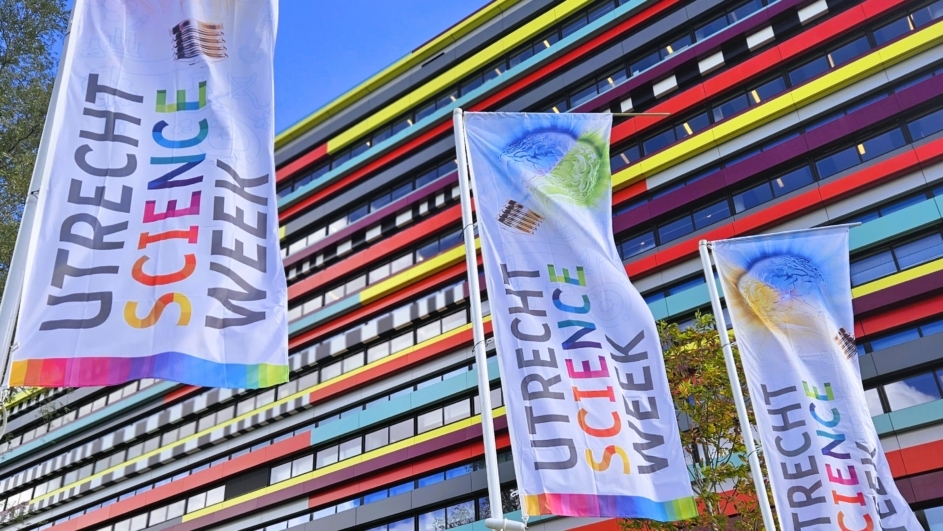
Utrecht Science Week kicks off: social and economic impact of Utrecht Science Park in the spotlight
The sixth edition of Utrecht Science Week takes place from Friday, 25 September to Sunday, 4 October. During this time, Utrecht Science Park opens its doors to the general public, showcasing how research, innovation, and collaboration lead to tangible societal and economic impact. At the same time, the week underscores the importance of sustained investment in knowledge and innovation.
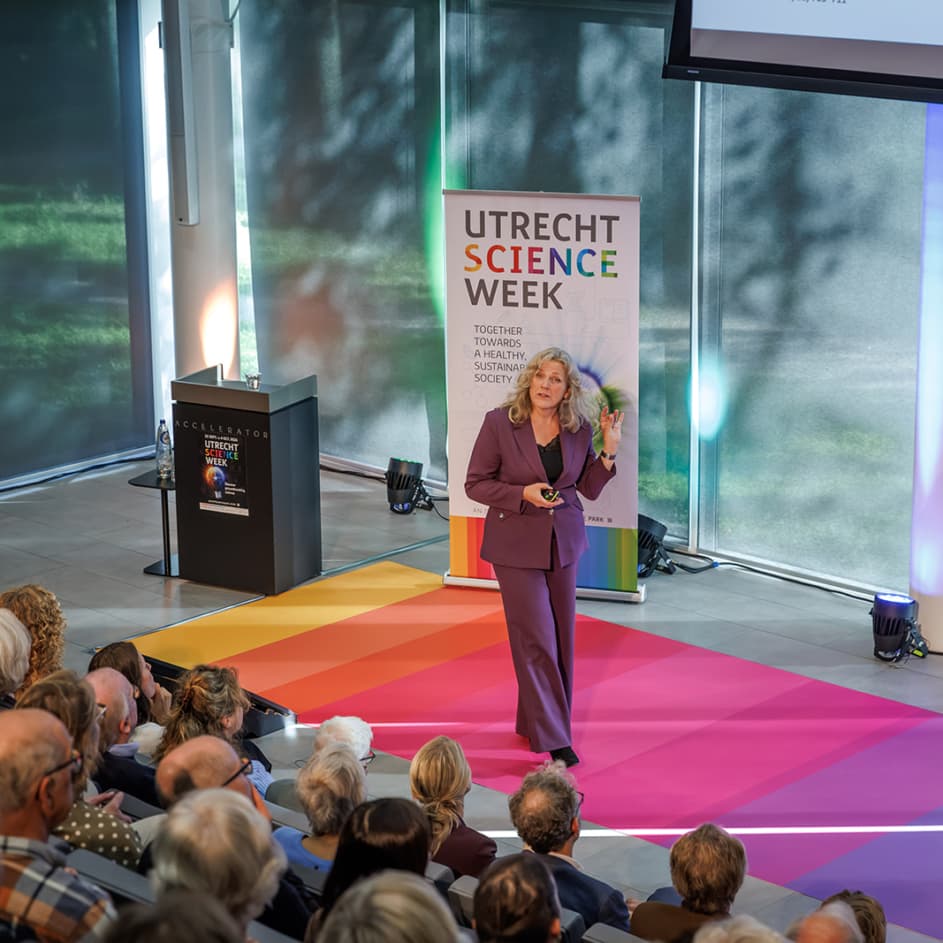
Looking back at Utrecht Science Week: research, education, and entrepreneurship in the spotlight
Utrecht Science Week 2026 has come to a close. For over a week, visitors enjoyed workshops, lectures, group discussions, and tours focused on science and innovation at Utrecht Science Park. With more than thirty program activities across over 25 locations, there were ample opportunities to experience science up close. We look back on a fantastic week that once again highlighted the essential role of collaboration, and the combination of research, education, and entrepreneurship, in addressing the societal challenges of our time.