UMC Utrecht receives grants for research into post-COVID

After the first wave of the corona pandemic, it has become clear that some people have long-term symptoms, even after they have recovered from the infection. These symptoms are often referred to as ‘post-COVID’ or ‘long COVID syndrome’. It is a condition that still raises many questions, both among patients and physicians. Therefore, more scientific research is needed into the causes and treatments of post-COVID. UMC Utrecht is one of the institutions allowed to conduct four promising research projects, thanks to additional funding from the Ministry of Health, Welfare and Sport and ZonMw.
A total of 21 new studies have been launched in the Netherlands, focusing on biomedical and clinical research on post-COVID. UMC Utrecht’s four projects are part of a broader grant program totaling 16.4 million euros aimed at gaining more knowledge about post-COVID. This research is of major importance because it can contribute to better treatments for the thousands of people who struggle daily with the consequences of COVID-19. The honored projects are carried out in collaboration with other research institutions and patient organizations, so that the concerns and needs of patients are always the focus.
- Recovery after exercise: How does extreme fatigue occur?
One of the projects, led by Fred Hartgens (Department of Sports Medicine), professor of Clinical Sports Medicine, specifically addresses the symptoms that many post-COVID patients experience after physical exertion, such as extreme fatigue and pain. This is called ‘post-exertional malaise’ (PEM). The research team will use advanced diagnostic methods, such as heart rate variability and oxygen uptake using near-infrared spectroscopy, to better understand how these symptoms arise and the physiological processes behind them. The goal is to help patients better manage their energy so they can safely resume daily activities. - Post-COVID and the immune system: what exactly happens?
Leo Koenderman (Center for Translational Immunology), professor of Experimental Lung Diseases, focuses on the severe forms of post-COVID. Some patients cannot even come to a hospital because of the severity of their symptoms. This research looks at the role of the immune system and metabolism in the development of post-COVID. By using mobile diagnostic equipment, the team aims to identify symptoms of severe post-COVID and PEM. This may eventually lead to the identification of objective disease markers that will help physicians diagnose and develop treatments. - Post-COVID in children: An understudied problem
Post-COVID is not only a problem for adults; it can also affect children. The research led by Niels Eijkelkamp (Center for Translational Immunology), professor of Neuro-Immunology of Pain, focuses on children with post-COVID, a condition that is often difficult to recognize and treat. Little is known about the biomedical causes of post-COVID in children. Among other things, the research team will analyze blood samples to look for signs of inflammation in the brain or changes in the immune system. The goal is to develop better diagnostic tools and treatment options specifically for children, who are at a different stage of development than adults. - New drugs for post-COVID: Minocycline as a possible solution
Another promising project, led by Janneke van de Wijgert (Julius Center for Health Sciences and Primary Care), professor of Epidemiology of Infectious and Immune-Mediated Diseases, will investigate whether existing drugs originally developed for other conditions could help treat post-COVID symptoms. Minocycline, a drug that inhibits inflammation, is being compared to a placebo. This is part of a larger study of ‘repurposed drugs’, drugs that are approved for other conditions but may also be effective in treating post-COVID.
With these four major research initiatives, UMC Utrecht hopes to contribute to the scientific breakthrough needed to better understand and effectively treat post-COVID.
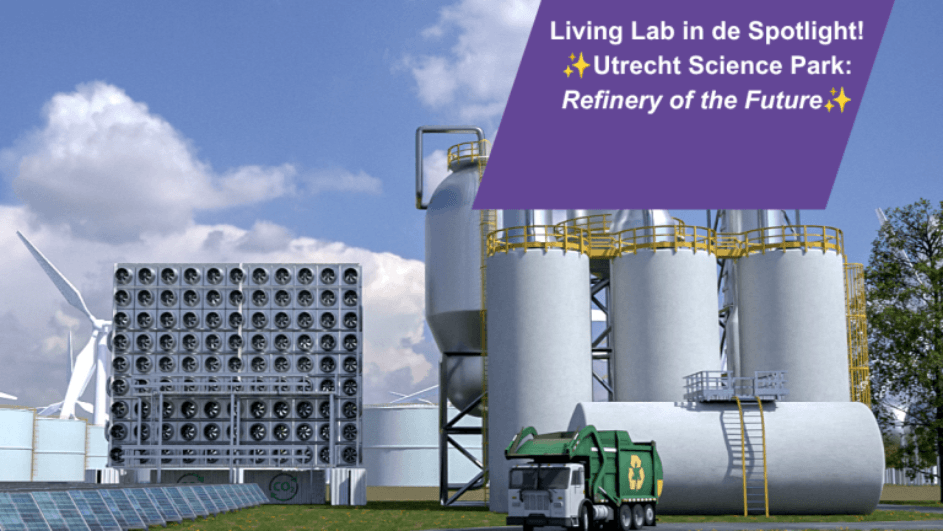
Living Lab in the Spotlight: Utrecht Science Park
Utrecht Science Park is home to several living labs focused on energy and circularity. These include Lumifield, which explores the generation and storage of solar energy, and the biogas digester, which uses organic waste as an energy source. On their own, these are already promising initiatives. Connected, they could become something much bigger: a functioning, learning model for a circular campus.
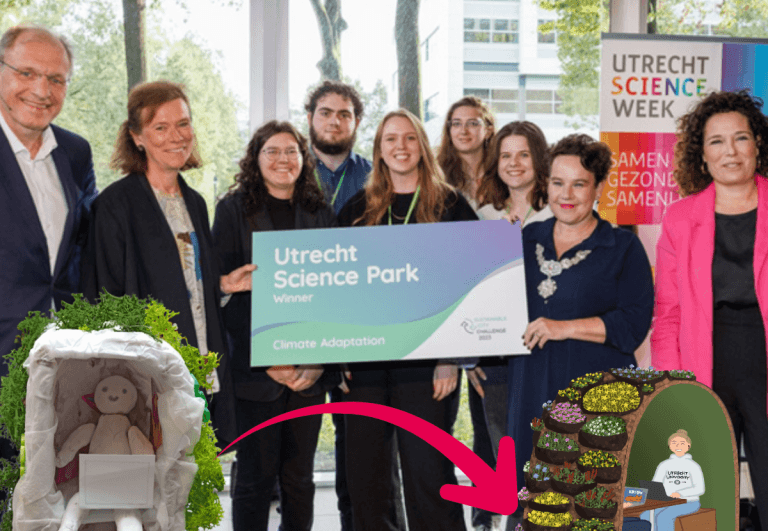
From student idea during challenge to ReGreen Hut at Dutch Design Week
On hot summer days, temperatures can rise significantly at Utrecht Science Park, while students are looking for places to study, relax and find some shade outdoors. At the same time, planting trees is not always straightforward: underground, the campus is crisscrossed by a dense network of cables and utility lines. So how can we create shade, greenery and places to relax without major changes to the ground?
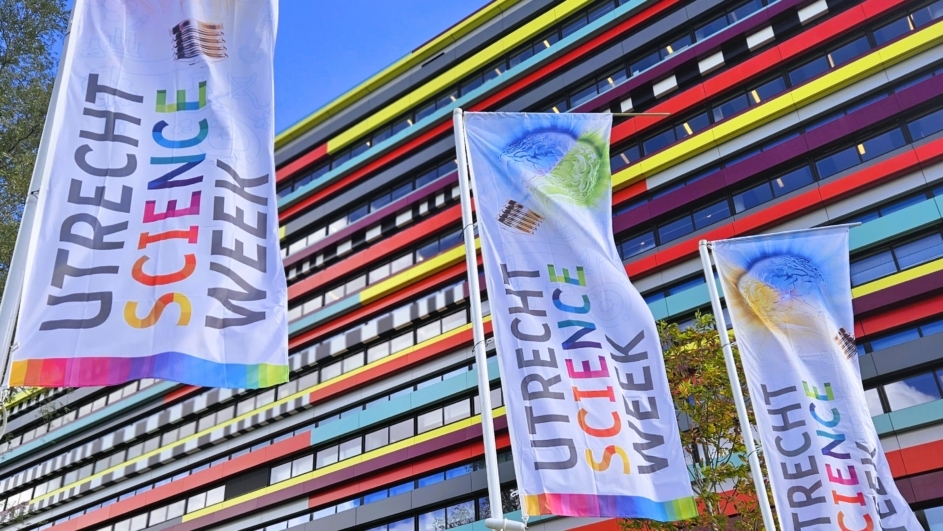
Utrecht Science Week kicks off: social and economic impact of Utrecht Science Park in the spotlight
The sixth edition of Utrecht Science Week takes place from Friday, 25 September to Sunday, 4 October. During this time, Utrecht Science Park opens its doors to the general public, showcasing how research, innovation, and collaboration lead to tangible societal and economic impact. At the same time, the week underscores the importance of sustained investment in knowledge and innovation.
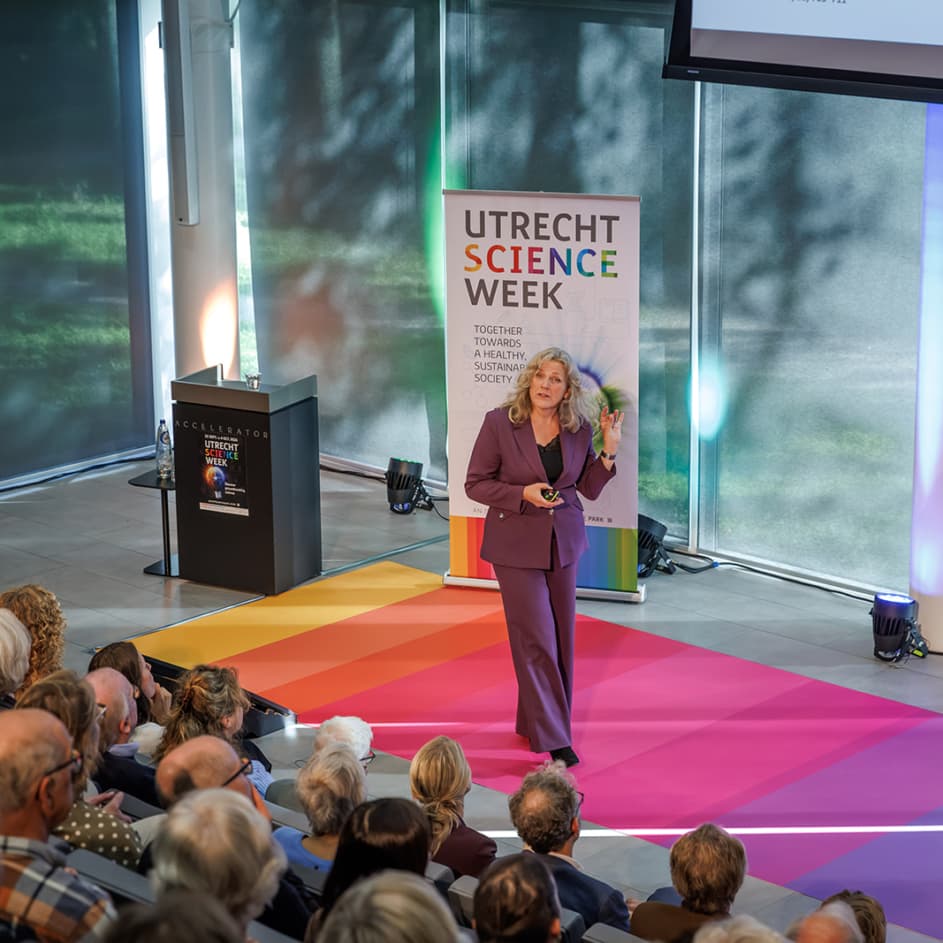
Looking back at Utrecht Science Week: research, education, and entrepreneurship in the spotlight
Utrecht Science Week 2026 has come to a close. For over a week, visitors enjoyed workshops, lectures, group discussions, and tours focused on science and innovation at Utrecht Science Park. With more than thirty program activities across over 25 locations, there were ample opportunities to experience science up close. We look back on a fantastic week that once again highlighted the essential role of collaboration, and the combination of research, education, and entrepreneurship, in addressing the societal challenges of our time.