UMC Utrecht takes third surgical robot into use
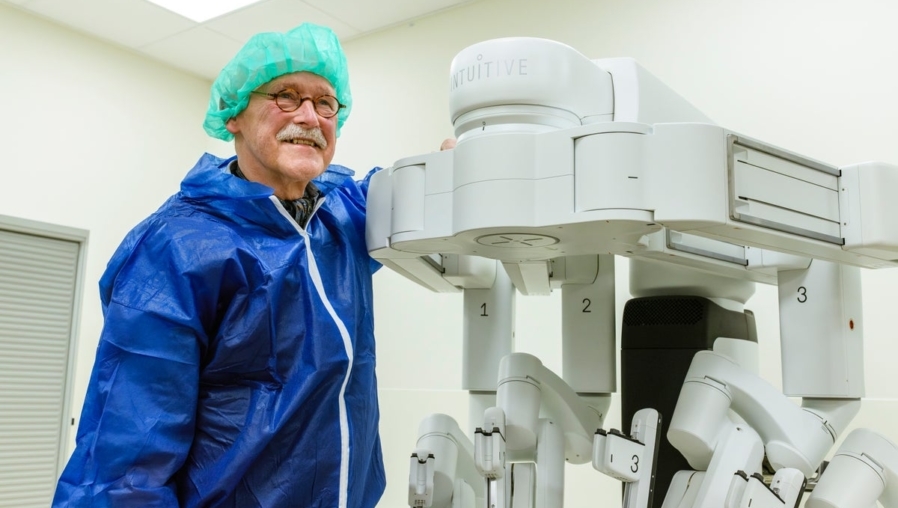
UMC Utrecht has commissioned a third surgical robot. With the arrival of the latest generation, the Da Vinci 5, even more patients can be operated on with minimal stress. This leads to fewer complications and faster recovery. “Apart from the benefits for patients, the Da Vinci 5 also allows us to train even better,” says Jelle Ruurda, gastrointestinal surgeon and professor of robot-assisted minimally invasive surgery. “At the touch of a button, colleagues can watch remotely, and even learn from previous operations. This way we share knowledge faster and more widely.” The hospital is thus building on a tradition of 25 years at the forefront of robotic surgery.
Frontrunner for 25 years
Robotic surgery has been part of care in Utrecht since 2000. Back then, the first robotic surgery in the Netherlands was performed here. Since then, the technique has become an important working method in heart and lung surgery and gynecological cancer. The robot is also used in urological cancer operations and cancer of the esophagus, stomach and liver. There are now seven surgical robots in the Utrecht region and there is intensive cooperation.
Operating even more precisely
The new robot gives surgeons more control during the operation. Jelle Ruurda: “We can better feel how much force we are using, allowing us to handle the patient’s tissue even more carefully than before. The image is sharper and in 3D, and any small vibrations from the hand are filtered out even better. As a result, we can operate even more precisely.”
That helps to spare healthy tissue and reduce complications. For patients, this means smaller incisions, and thus less pain and faster recovery. Ruurda: “What started as pioneering is now indispensable in the care of patients with complex tumors. With this new generation, we are taking another step forward.”
Training and sharing knowledge
UMC Utrecht plays a central role in training surgeons, urologists and gynecologists in robotic surgery, among others. Ruurda: “The national course for AIOS surgery, urology and gynecology was set up in Utrecht. Hundreds of colleagues from home and abroad were trained here. Thanks to the dual console, experienced surgeons and trainees can operate together, as in a driving lesson.”
“With the Da Vinci 5, we can train even better,” continues Ruurda. “At the touch of a button, colleagues can watch remotely and even learn from previous operations. That way we share knowledge faster and more widely.”
Smart technology and AI
The Da Vinci 5 has much more computing power than previous systems. This makes new applications with AI possible. Together with TU Eindhoven, UMC Utrecht is developing technology that supports surgeons during operations. Think of systems that provide real-time information about the operation, similar to navigation. “This is how we help surgeons make even better decisions, both during and after surgery.”
Eye for cost and sustainability
Robotic surgery provides good medical results, but is also critically examined for cost and efficiency.
For esophagectomies, robotic surgery has already been shown to cost as much on balance as open surgery. “Although it’s more expensive in the operating room itself, patients recover faster and are in the hospital for a shorter period of time,” he said. For gastrointestinal surgery, this research is being initiated. Sustainability is also receiving attention. “We are looking at how to use instruments more often and reduce waste,” Ruurda said.