Organoids point to therapy for aggressive, rare ovarian cancer
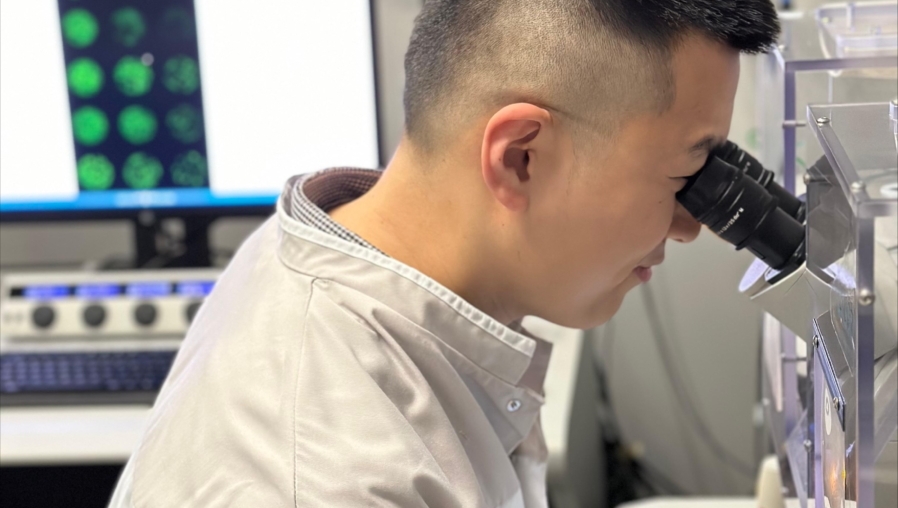
Lab-developed 3D mini-tumors point to a possible new treatment for a very rare, aggressive form of ovarian cancer. Researchers from the Clevers group e.t. grew the tumor organoids and tested them for 153 active compounds from existing drugs. The study shows that organoids can help determine treatment strategies for this and other rare cancers.
-
- SCCOHT organoids have been grown in the lab for the first time
- Drug screening with organoids indicate methotrexate as an effective and selective candidate for the treatment of SCCOHT
- Future studies and discussions are needed to determine whether methotrexate can become a standard part of therapy for these children
Small cell carcinoma of the ovary, hypercalcemic type (SCCOHT) is a very rare form of childhood cancer that occurs in girls and young women. Only a few children with SCCOHT have been treated for this since the opening of the Princess Máxima Center. No standard treatment is currently in place, and the cure rate is low at 10 to 20%. Research into new, better treatments is therefore important. But because of the very limited research material, this has previously been difficult.
In search of an effective drug
Researchers from the Clevers group e.t. at the Princess Máxima Center have succeeded in growing SCCOHT organoids. This allowed them to test the effect of 153 pediatric oncology drugs on tumor cells. From the tests, methotrexate appeared as an effective and selective drug.
Today, the results of the study led by Prof. Dr. Hans Clevers, former research group leader at the Princess Máxima Center and Oncode Investigator, were published in Science Advances. Stichting Kinderen Kankervrij (KiKa), Oncode Institute and Oncode Accelerator made this research possible.
The SCCOHT organoids are a good example of the type of organoids that will be included in the Central Máxima Organoid Biobank (CMOB). These organoids can eventually be requested by researchers from both inside as well as outside the Máxima, which will increase and improve pediatric cancer research worldwide.
Recapulating
The researchers used tumor material from three children with SCCOHT to grow mini tumors in the lab. This tumor material came from the biobank of the Máxima. Seok-Young Kim, PhD candidate in the Clevers group e.t. and first author succeeded together with his colleagues in growing the organoids. He says: ‘We were able to culture eight different organoid lines from the eight tumor samples available in the biobank. These were from three children. Analyses show that the cultured organoids reflect the original tumor tissue, both on a genetic and transcriptomic level.’
In the high-throughput screening facility at the Máxima Center, the organoids were then exposed to 153 different active substances from drugs already used within pediatric oncology. Kim: ‘We saw that methotrexate was the most effective and selective drug in the library, even when compared to the drugs that are used to treat SCCOHT patients.’
Prof. Dr. Hans Clevers, pioneer in the field of organoids: ‘This research shows that organoids can help determine treatment strategies for this and other rare cancers.’
Clinical application
Currently, there is no standard treatment for SCCOHT available. The very small number of patients, children and young adults, makes setting up clinical trials complex.
Dr. Jozsef Zsiros, pediatric oncologist at the Máxima Center and involved in the study: ‘The results in the lab are very promising. Together with colleagues from other research hospitals, I will discuss the next steps for clinical application to determine whether methotrexate can become a standard part of therapy. Because methotrexate is already used in pediatric oncology and the survival rate of SCCOHT patients is low, we will assess, for example, whether methotrexate is appropriate on a child-by-child basis. This way we would learn whether this finding can increase the survival rate of this rare, aggressive ovarian cancer.’
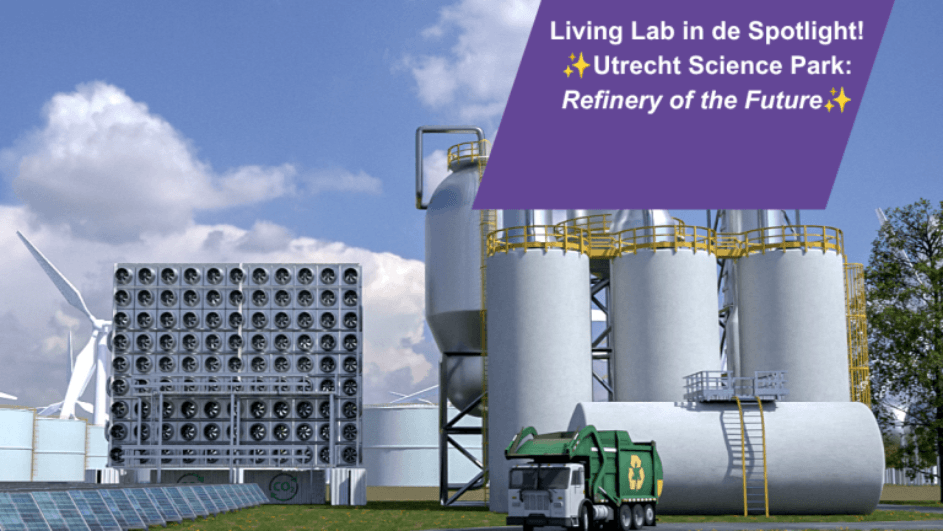
Living Lab in the Spotlight: Utrecht Science Park
Utrecht Science Park is home to several living labs focused on energy and circularity. These include Lumifield, which explores the generation and storage of solar energy, and the biogas digester, which uses organic waste as an energy source. On their own, these are already promising initiatives. Connected, they could become something much bigger: a functioning, learning model for a circular campus.
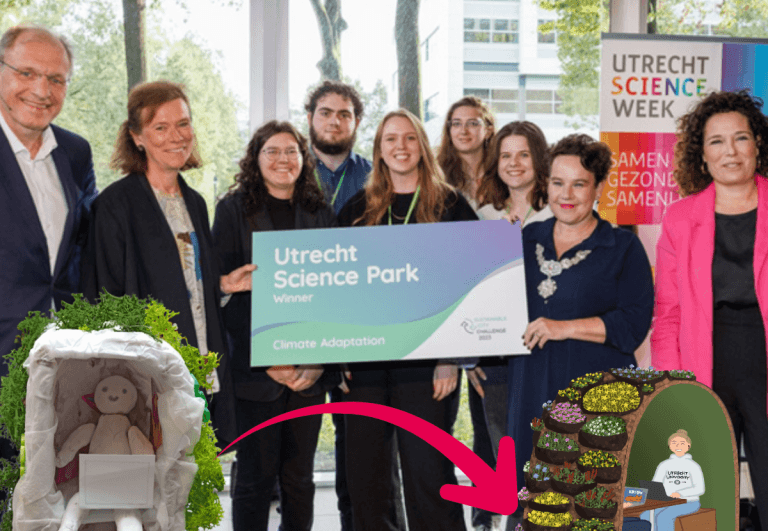
From student idea during challenge to ReGreen Hut at Dutch Design Week
On hot summer days, temperatures can rise significantly at Utrecht Science Park, while students are looking for places to study, relax and find some shade outdoors. At the same time, planting trees is not always straightforward: underground, the campus is crisscrossed by a dense network of cables and utility lines. So how can we create shade, greenery and places to relax without major changes to the ground?
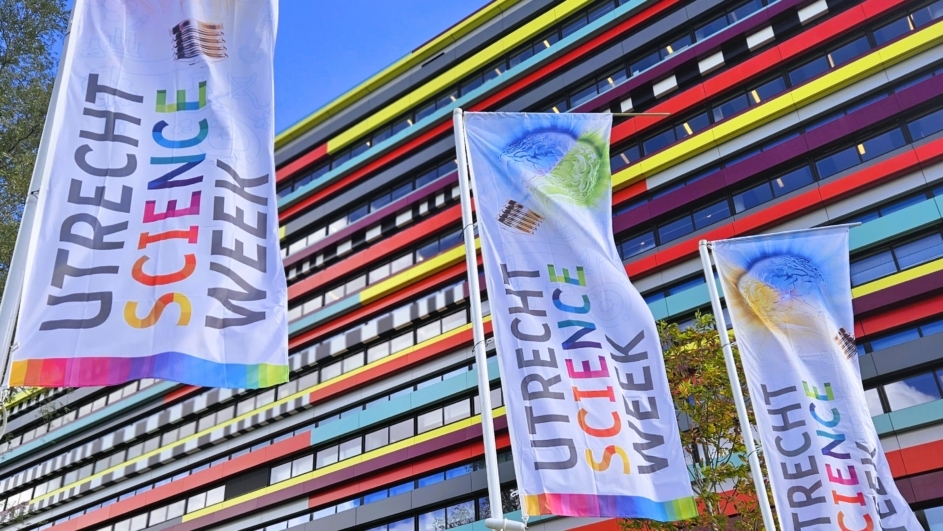
Utrecht Science Week kicks off: social and economic impact of Utrecht Science Park in the spotlight
The sixth edition of Utrecht Science Week takes place from Friday, 25 September to Sunday, 4 October. During this time, Utrecht Science Park opens its doors to the general public, showcasing how research, innovation, and collaboration lead to tangible societal and economic impact. At the same time, the week underscores the importance of sustained investment in knowledge and innovation.
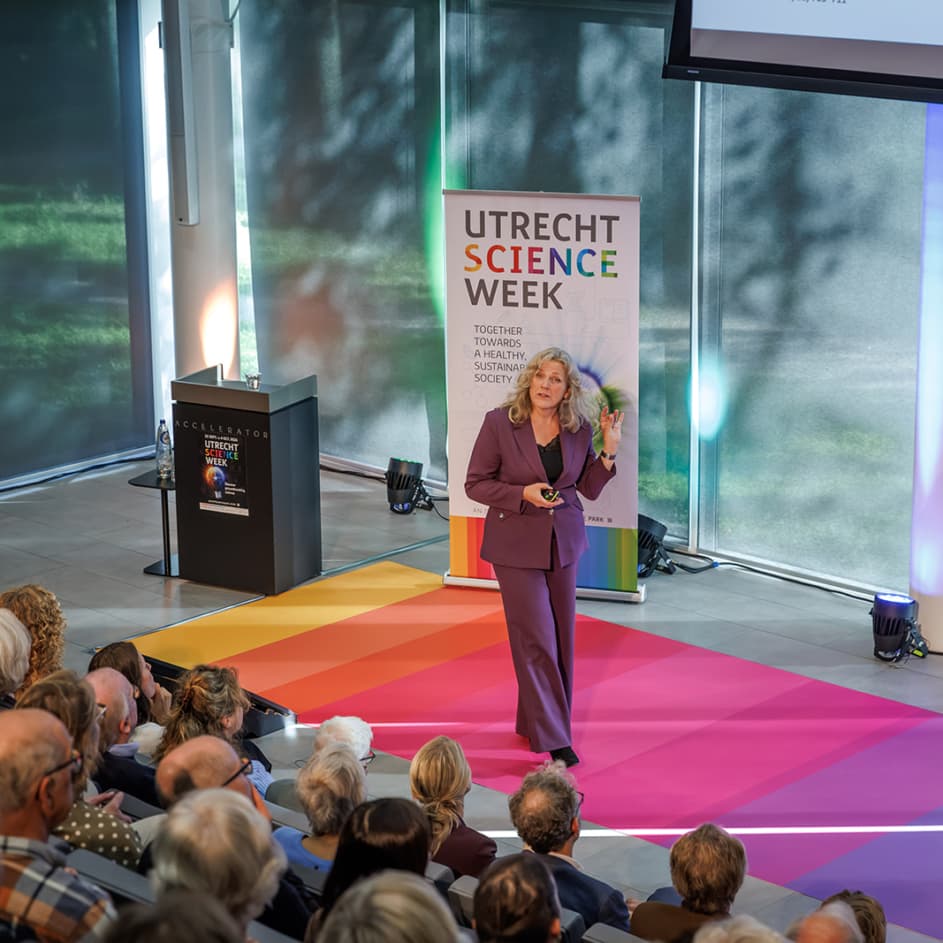
Looking back at Utrecht Science Week: research, education, and entrepreneurship in the spotlight
Utrecht Science Week 2026 has come to a close. For over a week, visitors enjoyed workshops, lectures, group discussions, and tours focused on science and innovation at Utrecht Science Park. With more than thirty program activities across over 25 locations, there were ample opportunities to experience science up close. We look back on a fantastic week that once again highlighted the essential role of collaboration, and the combination of research, education, and entrepreneurship, in addressing the societal challenges of our time.