One step closer to targeted treatment for babies with leukemia in Princess Máxima Center
An aggressive form of leukemia that mainly affects babies is inhibited when an essential nutrient for the growth of leukemia cells is restricted. Research in the laboratory shows promising results. Follow-up research has been started into the possibilities for these treatments that affect the metabolism and are expected to have fewer side effects.
The majority of children with acute lymphocytic leukemia (ALL) are cured, but an aggressive form of the disease that mainly occurs in babies is sometimes still difficult to treat. In this form of ALL, the tumor has a specific error in the DNA: a so-called MLL fusion gene.
Essential nutrient for leukemia cells
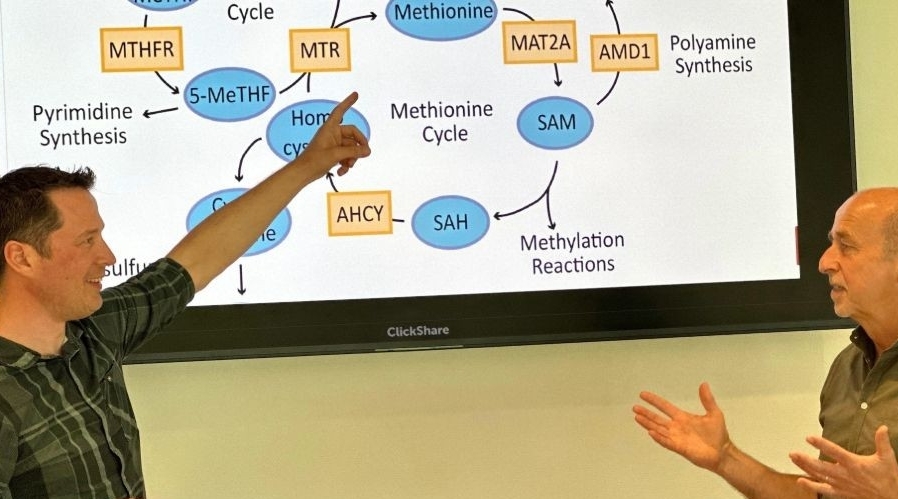
In research published today, Dr. Trisha Tee, former PhD candidate in the Van Leeuwen group, shows that this MLL leukemia is much more dependent on the amino acid methionine than healthy body cells. This nutrient, which is abundant in protein-rich food, is essential for the growth of these leukemia cells.
Research with mice with MLL leukemia cells shows that the growth of the leukemia cells can be inhibited by giving them a low-methionine diet. A drug, a MAT2A inhibitor, also appears to be able to replace this diet. Drug tests in the high-throughput screening facility of the Máxima show that the effect of this drug is enhanced by combining it with a drug that is already widely used: an HDAC inhibitor.
The results of the preclinical research led by Dr. Frank van Leeuwen and Dr. Laurens van der Meer were published in Haematologica today. This research was made possible by KWF Dutch Cancer Society.
Cell metabolism
A good insight into the disrupted metabolic processes in leukemia cells was the basis for this study. Tee, who wrote her dissertation on this research, says: ‘With the knowledge that this type of leukemia cell is dependent on methionine, we were able to look for a drug with this target. When we saw that it inhibited tumor growth, we started looking for ways to enhance this effect. We tested several hundred drugs that are already used in cancer treatment on the MLL fusion leukemia cells in the screening facility. We then saw that one of the combinations found also had the desired targeted effect on the growth of this type of leukemia in mice.’
Van der Meer adds: ‘Even though this is a preclinical study, our results show that intervening in the metabolism of the tumor is a potentially effective therapy. We also hope and expect that this targeted therapy, unlike many chemotherapy drugs, has no long-term side effects.’
Next steps
Follow-up research and clinical studies are needed to determine whether these drug combinations can be included in the treatment. Methionine-free food has already been approved and is available for babies with a congenital metabolic disorder. This could also become part of the treatment of children with MLL leukemia. To do this, the possible effect of a combination of metabolic therapy with the usual chemotherapy or immunotherapy first needs to be studied in the lab.
The sensitivity of other tumors to methionine restriction is also being studied. Research by the Van Leeuwen group showed that the same diet can block the growth of neuroblastoma cells. Studies in adults also show good results. Van Leeuwen: ‘The results of our research show that intervening in the metabolism with medication or a diet is very interesting and promising. By investigating this further, we ultimately hope to further increase the chance of recovery with optimal quality of life for babies with this aggressive form of leukemia and children with other forms of cancer.’
Living Lab in the Spotlight: Utrecht Science Park
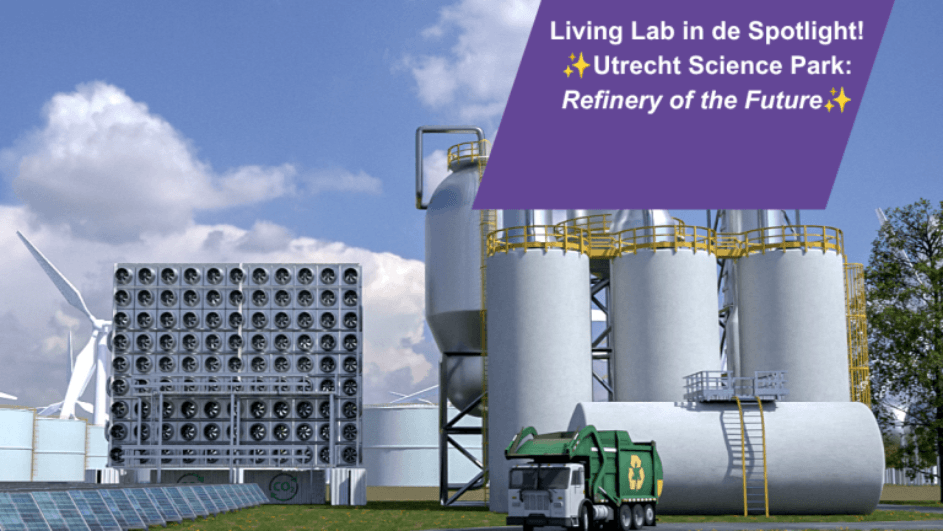
Utrecht Science Park is home to several living labs focused on energy and circularity. These include Lumifield, which explores the generation and storage of solar energy, and the biogas digester, which uses organic waste as an energy source. On their own, these are already promising initiatives. Connected, they could become something much bigger: a functioning, learning model for a circular campus.
From student idea during challenge to ReGreen Hut at Dutch Design Week
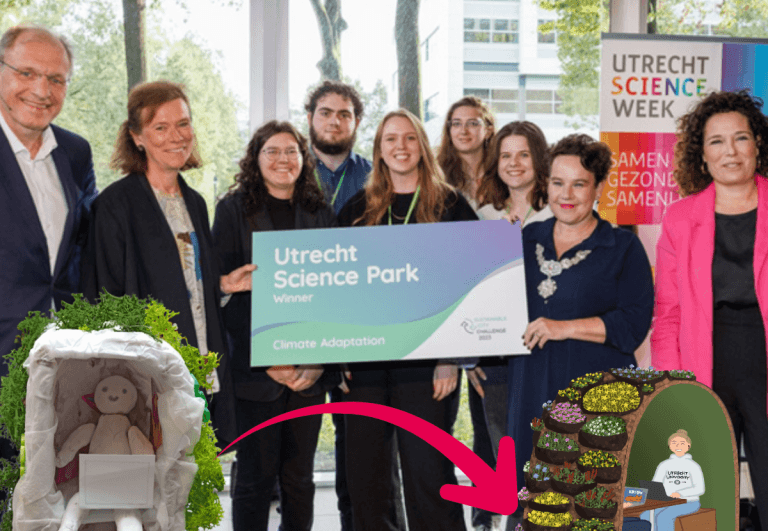
On hot summer days, temperatures can rise significantly at Utrecht Science Park, while students are looking for places to study, relax and find some shade outdoors. At the same time, planting trees is not always straightforward: underground, the campus is crisscrossed by a dense network of cables and utility lines. So how can we create shade, greenery and places to relax without major changes to the ground?
Utrecht Science Week kicks off: social and economic impact of Utrecht Science Park in the spotlight
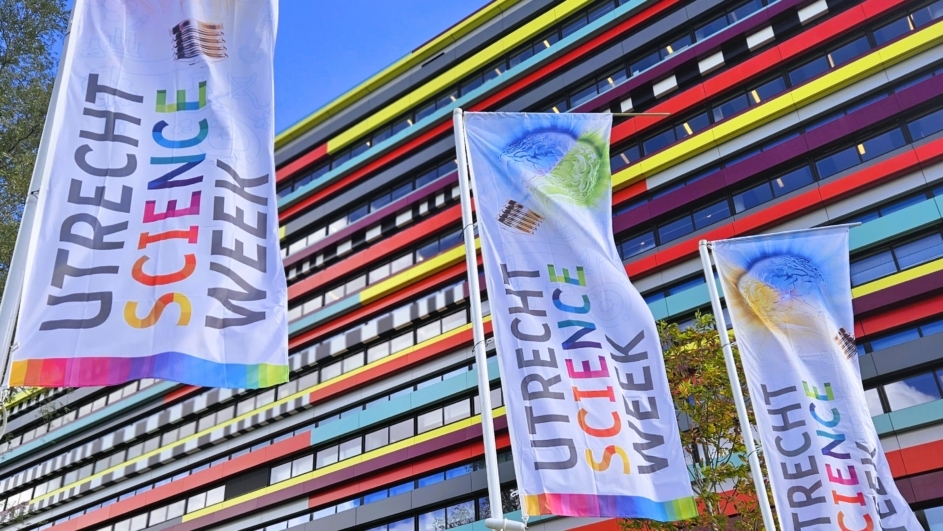
The sixth edition of Utrecht Science Week takes place from Friday, 25 September to Sunday, 4 October. During this time, Utrecht Science Park opens its doors to the general public, showcasing how research, innovation, and collaboration lead to tangible societal and economic impact. At the same time, the week underscores the importance of sustained investment in knowledge and innovation.
Looking back at Utrecht Science Week: research, education, and entrepreneurship in the spotlight
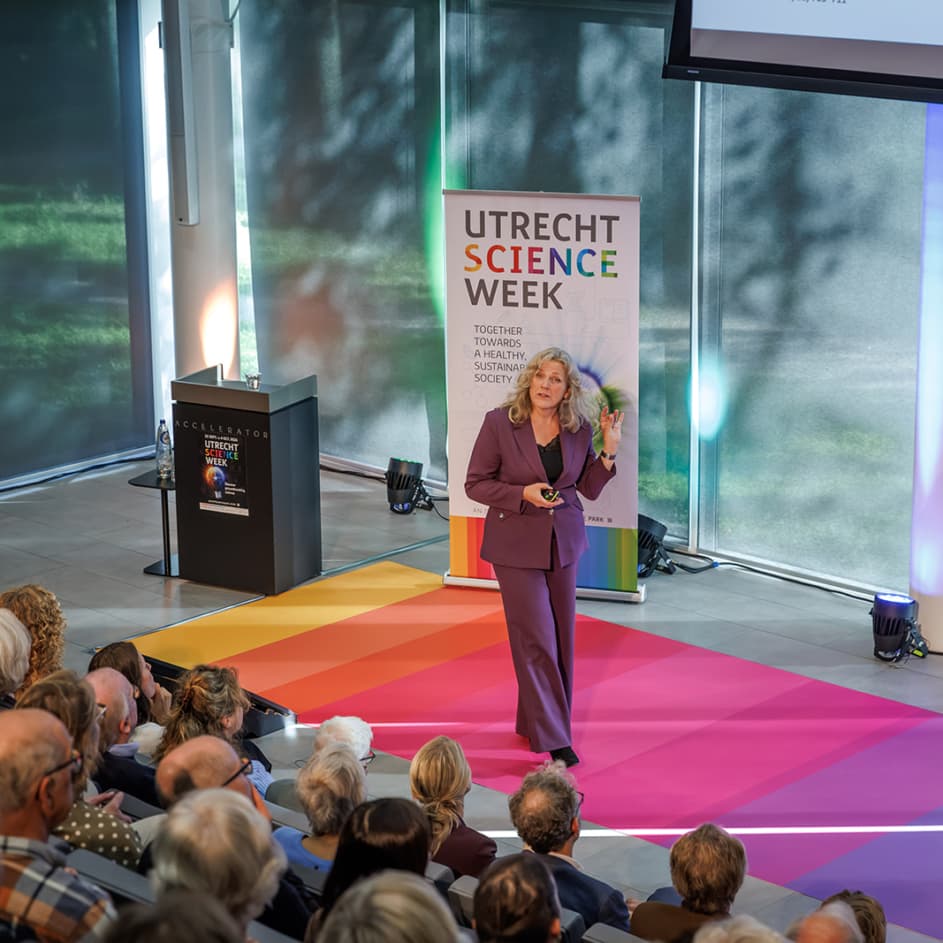
Utrecht Science Week 2026 has come to a close. For over a week, visitors enjoyed workshops, lectures, group discussions, and tours focused on science and innovation at Utrecht Science Park. With more than thirty program activities across over 25 locations, there were ample opportunities to experience science up close. We look back on a fantastic week that once again highlighted the essential role of collaboration, and the combination of research, education, and entrepreneurship, in addressing the societal challenges of our time.