More children undergoing MRI without anesthesia.
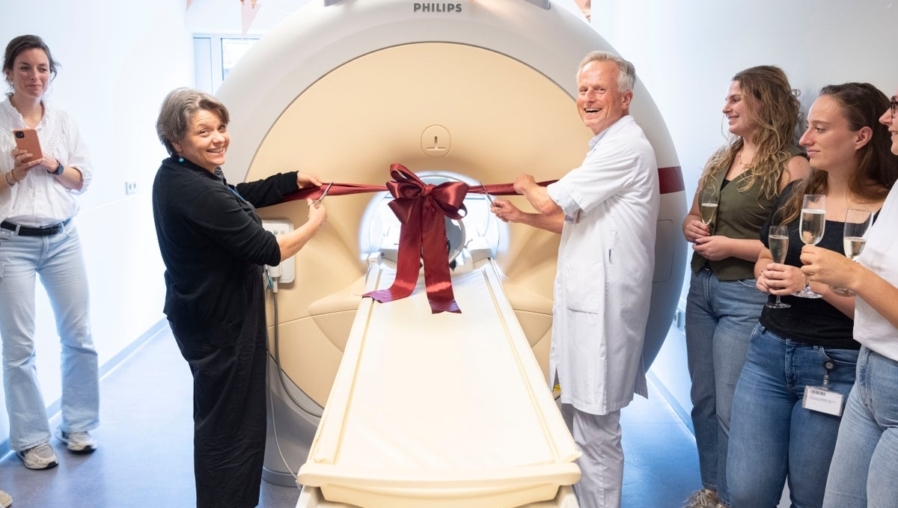
The Wilhelmina Children’s Hospital introduced a practice MRI to help children prepare for real MRI scans without anesthesia, reducing stress and improving efficiency.
At the Wilhelmina Children’s Hospital (WKZ), there is a new MRI machine—not a real one, but a practice MRI. What is a practice MRI, and how will this device help patients at WKZ? The official opening took place on Monday, July 15, 2024.
Lying completely still for three to six minutes in the cramped, small, impressive, and noisy space of the MRI scanner is difficult for most children under eight years old. And they often need to do this multiple times, with each MRI scan lasting at least 30 minutes. That’s why young children often require anesthesia when undergoing an MRI. Rutger Jan Nievelstein, pediatric radiologist at WKZ, explains: “If children move during an MRI scan, the images are often blurry, making it difficult for us radiologists to interpret them. This frequently results in the need to repeat the MRI scan. We aim to reduce anesthesia use in children. Children with chronic illnesses often require multiple MRI scans, and frequent or excessive anesthesia is ultimately not good for them. The goal is therefore to minimize anesthesia use unless medically necessary. With the practice MRI, children from around four years old can get used to a real MRI scan without anesthesia. This is ultimately better for the child’s health.”
Two scans instead of one in the same amount of time
The arrival of the practice MRI contributes to improved quality of pediatric care. Olga Braams, health psychologist in training to become a clinical psychologist at WKZ, says: “By preparing children with the practice MRI before they go into the real MRI scanner without anesthesia, the child experiences less stress and anxiety. This also shortens waiting lists and speeds up MRI results and any follow-up treatments. Medical pedagogical caregivers prepare children using information and materials such as an MRI construction kit.” Rutger Jan adds: “Normally, an MRI scan under anesthesia takes about an hour, including preparation and recovery. By training children in advance, technicians can get them on the MRI table faster. Instructions are shorter. Reducing anesthesia use also leads to shorter waiting lists and less anesthesia consumption, enabling two MRI scans instead of one to be done in the same amount of time. It is more efficient.”
A giant scanner that fits through the door
But getting a practice MRI machine isn’t so simple. It’s a colossal device, no longer in real use, and it has to fit through a door. That proved quite a challenge. Olga explains: “The first time we tried to get one, it didn’t work because the scanner wouldn’t fit through the door. Eventually, the Youth Study researchers offered us a prototype MRI scanner.”
Now, the practice MRI stands in the Pediatric Radiology department at WKZ. A gigantic scanner without any technology inside, but with highly realistic sound simulations. “It’s the best and most realistic thing there is. We had already been gratefully using a practice MRI at the Princess Máxima Center, but there we had to work with fixed time slots, which made our work inflexible. We are very happy with this one. Other groups also want to start using it, both clinically and for research—for example, to practice tasks and images for functional MRI studies,” says Olga.
Source: UMC Utrecht, WKZ
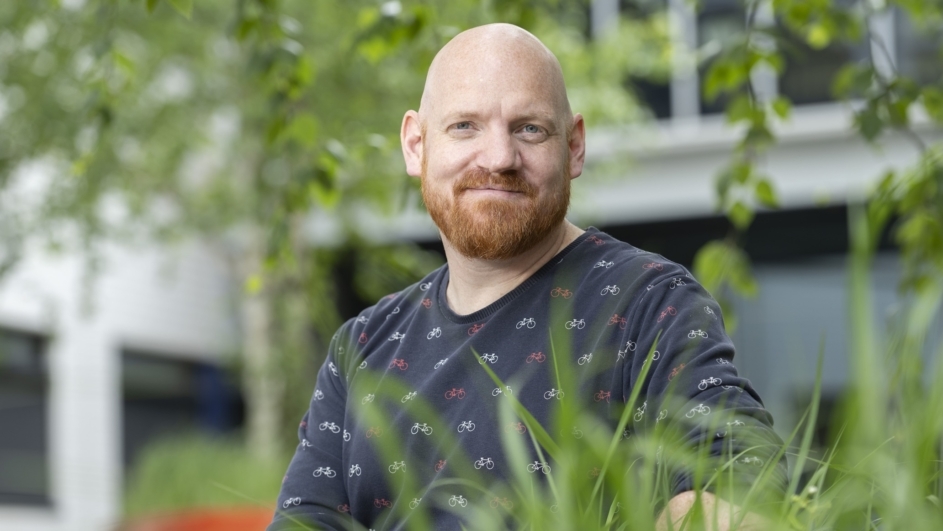
Interview: Thomas Hoogeboom on the future of Mobility & Health
Healthcare in the Netherlands is at a turning point. The new Societal Impact Platform Mobility & Health aims to connect knowledge and expertise across research disciplines, organizations and societal partners. We spoke to Thomas Hoogeboom, Professor of Physiotherapy Sciences and initiator of the platform, about the importance of mobility for health, the value of collaboration and what to expect from the kick-off during Utrecht Science Week.

How UtrechtInc. helps startups grow
From a promising idea to a startup: getting there takes more than a good idea. UtrechtInc is a startup incubator that supports students, researchers and entrepreneurs in the Utrecht region during the early stages of their startup. Through validation programmes, personal guidance and a network of experts and investors, UtrechtInc helps founders develop and test their ideas.
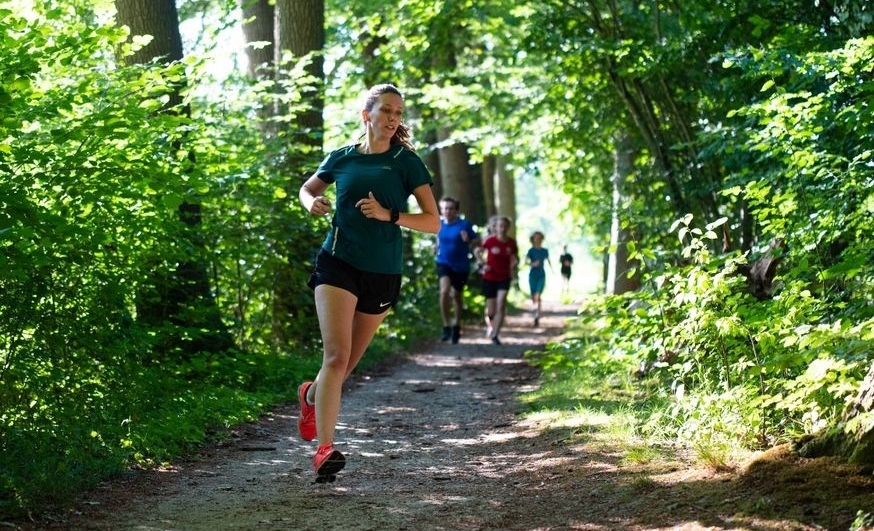
The new sports season at Olympos has kicked off again
The holidays are over, and the sports season has kicked off again! With packed schedules and tight deadlines, it is tempting to just keep working. Before you know it, you’ve spent hours in front of your screen or in the lab without taking a real break. Especially when things are busy, physical activity can help you unwind and gain new energy and inspiration.
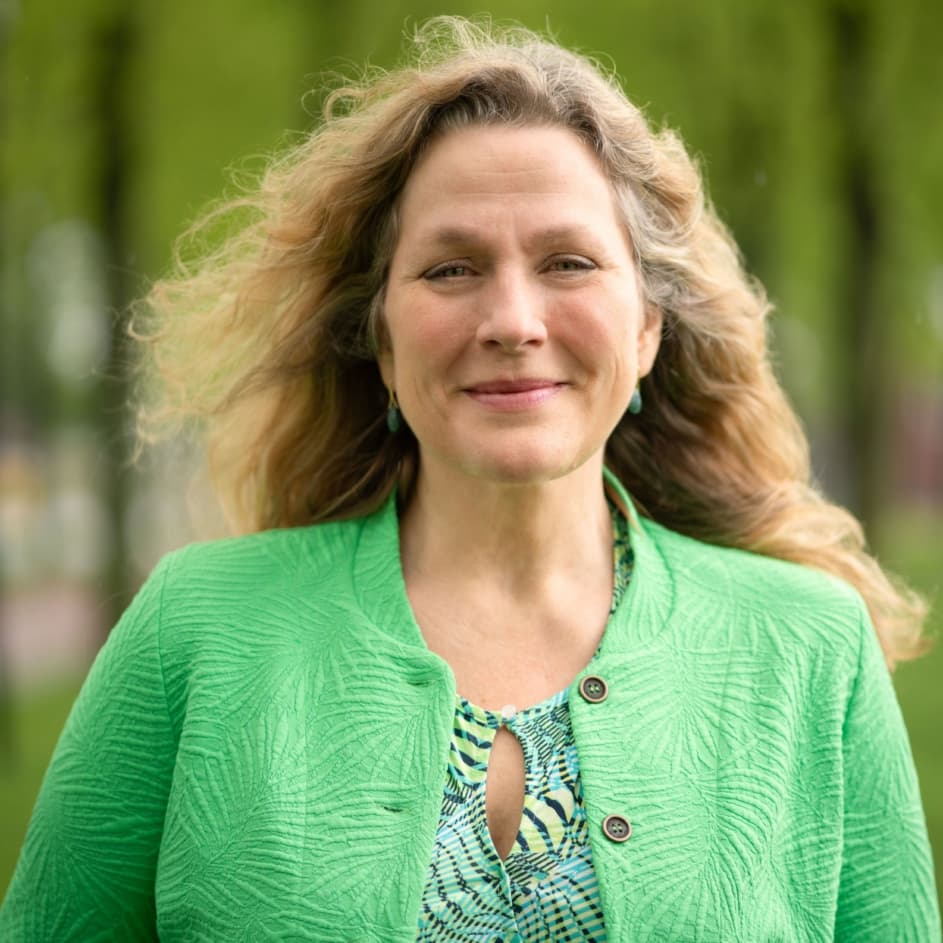
Opening Utrecht Science Week with keynote by Juliette Legler on the hidden influence of environmental chemicals
On Friday, September 25, the annual science festival ‘Utrecht Science Week’ kicks off once again at Utrecht Science Park. We are pleased to announce that this year, Prof. Dr. Ir. Juliette Legler will deliver the Utrecht Science Lecture. Juliette Legler is Professor of Toxicology at the Faculty of Veterinary Medicine at Utrecht University and leads the ‘One Health Toxicology’ group at the Institute for Risk Assessment Sciences (IRAS).