Impressive presentations of new cell technologies at well-attended ‘Ziekenhuis van de Toekomst’ event
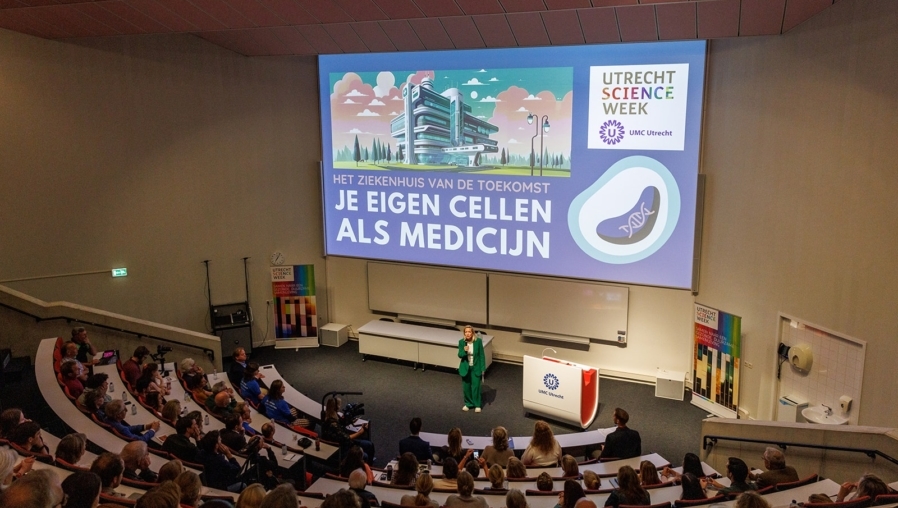
A new knee with your own cartilage cells? Or a world where there is no shortage of donor organs? It sounds like future music, but during the well-attended public event ‘Ziekenhuis van de Toekomst’ (Hospital of the Future) on Tuesday 1 October at UMC Utrecht, it turned out that reality is closer than you think.
Regenerative medicine
The theme of the evening was regenerative medicine. This aims to develop new treatments that take advantage of the body’s ability to repair damaged tissue itself. During the evening, there were very interesting presentations and demos that gave visitors a unique insight into the future of medicine.
Stem cells
After the introduction by Carina Hilders, chairman of the Executive Board of UMC Utrecht, and Stephan van Duin, University lecturer and biologist Joost Fledderus gave a clear explanation of what stem cells are, why they are so important for medicine and how they could change the future of treatments. Stem cells, form the basis of the human body and through division are able to change into other cell types.
A new knee with your own cartilage cells
Orthopaedic surgeon Roel Custers gave visitors more insight into the effective treatment of osteoarthritis (a decrease in cartilage around a joint) through the use of stem cell cartilage transplantation.
Repairing DNA
Next, paediatrician Sabine Fuchs told an impressive story about treating children with metabolic diseases. These are often serious diseases caused by a mistake in the DNA. Advances in genetic techniques are making it increasingly possible to repair faults in DNA.
Alternatives to dialysis and repairing brain damage
After the break with interesting demos, nephrologist Karin Gerritsen explained her research on how we can make dialysis better, more sustainable and less stressful for patients by using smart materials, chip technology and kidney cells. Paediatric neonatologist Manon Benders explained how stem cells can repair brain damage in newborns.
The costs of innovation
Finally, health economics researcher Renske ten Ham addressed the cost side. Cell and gene therapies are often much more expensive than regular treatments, but essential for curing a patient. Renske develops models to support reimbursement decisions.
Impressive evening
Overall, a very impressive evening during the Utrecht Science Week, in which visitors were taken through the wonderful innovations within the field of medicine at UMC Utrecht, in cooperation with many other parties and organisations.
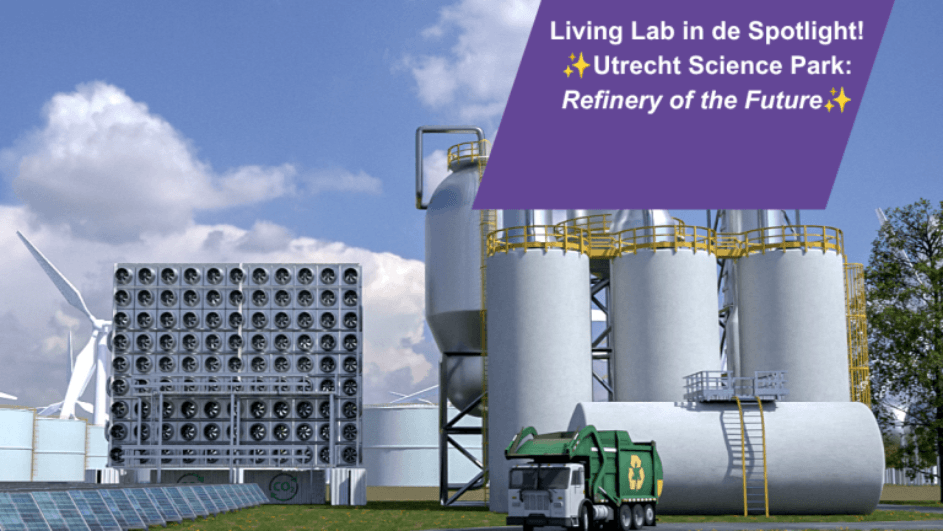
Living Lab in the Spotlight: Utrecht Science Park
Utrecht Science Park is home to several living labs focused on energy and circularity. These include Lumifield, which explores the generation and storage of solar energy, and the biogas digester, which uses organic waste as an energy source. On their own, these are already promising initiatives. Connected, they could become something much bigger: a functioning, learning model for a circular campus.
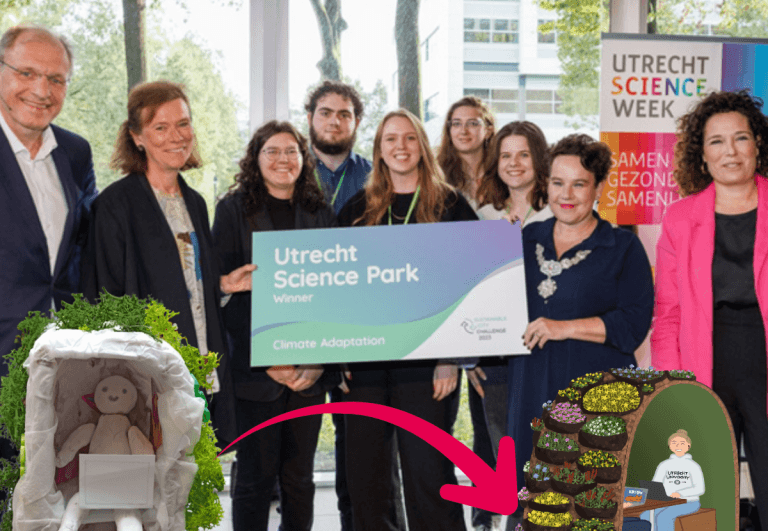
From student idea during challenge to ReGreen Hut at Dutch Design Week
On hot summer days, temperatures can rise significantly at Utrecht Science Park, while students are looking for places to study, relax and find some shade outdoors. At the same time, planting trees is not always straightforward: underground, the campus is crisscrossed by a dense network of cables and utility lines. So how can we create shade, greenery and places to relax without major changes to the ground?
Utrecht Science Week kicks off: social and economic impact of Utrecht Science Park in the spotlight
The sixth edition of Utrecht Science Week takes place from Friday, 25 September to Sunday, 4 October. During this time, Utrecht Science Park opens its doors to the general public, showcasing how research, innovation, and collaboration lead to tangible societal and economic impact. At the same time, the week underscores the importance of sustained investment in knowledge and innovation.
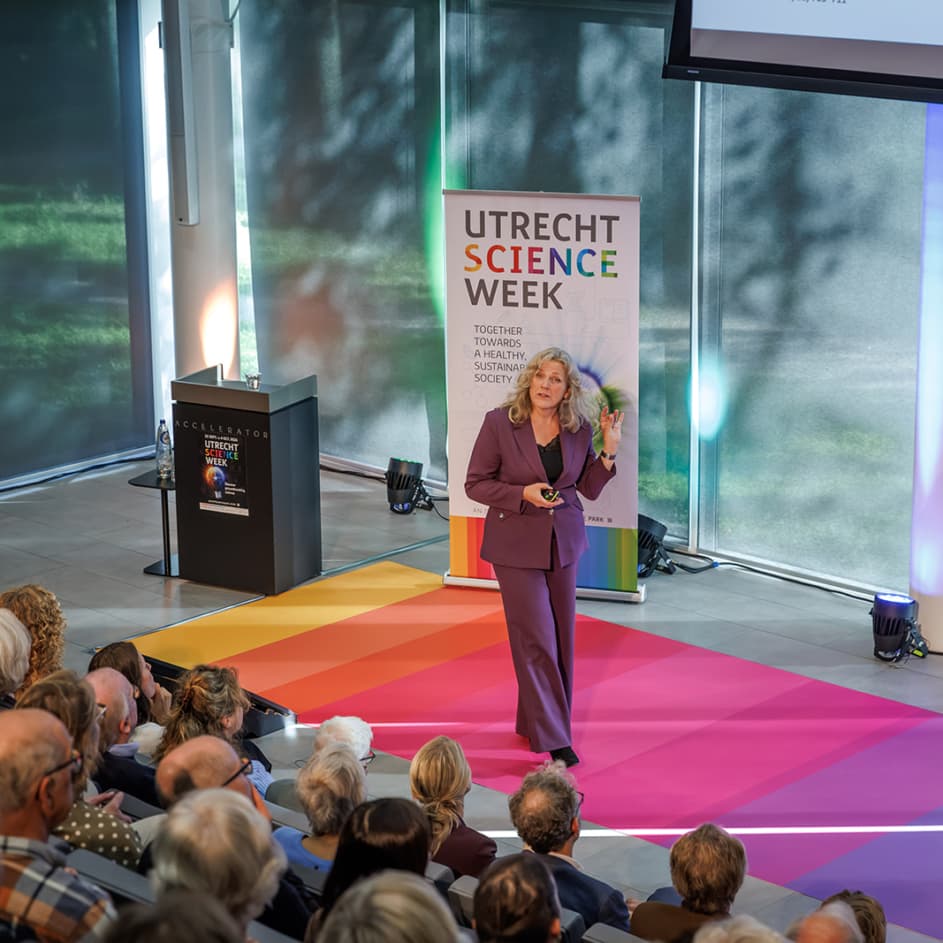
Looking back at Utrecht Science Week: research, education, and entrepreneurship in the spotlight
Utrecht Science Week 2026 has come to a close. For over a week, visitors enjoyed workshops, lectures, group discussions, and tours focused on science and innovation at Utrecht Science Park. With more than thirty program activities across over 25 locations, there were ample opportunities to experience science up close. We look back on a fantastic week that once again highlighted the essential role of collaboration, and the combination of research, education, and entrepreneurship, in addressing the societal challenges of our time.