HU University of Applied Sciences Utrecht has new Master: Change Science in Animal(free) Testing Innovations

At HU, you can follow ‘Change Science in Animal(free) Testing Innovations’. This is a new 2-year Master.
At the Utrecht Science Park, there are several initiatives that contribute to accelerating the transition to animal-free innovations. For instance, in 2024, the National Growth Fund was awarded to the Centre for Animal-free Biomedical Translation (CPBT), in which HU University of Applied Sciences Utrecht, Utrecht University, UMC Utrecht and RIVM play an important role. In addition, research is also being done on how AI can play a role in this. Various tools are already being used for this purpose.
- HU Story: Animal-free testing with AI
The use of laboratory animals within the (bio)medical domain will continue to decrease in the future. New imaging and molecular techniques, as well as innovative animal-free methods and computer models, will contribute to this. This creates a need for professionals who can supervise the transition to (animal-free) innovations. The change manager in animal-free innovations is this type of professional.
What does the master’s degree in change management offer?
This 2-year part-time master’s offers (experienced) professionals opportunities to grow or take on new challenges within their own organisation. The master’s is designed for professionals who want to play a key role in the transition to animal-free innovations. During the programme, students work on practice-based case studies linked to relevant issues, often in consultation with their work or client. As a result, this programme provides knowledge as well as applicable solutions that contribute to scientific progress and societal value. Supporting education focuses on developing academic, strategic and personal competences.
What can a Change Manager do?
A Change Manager can:
- Accelerate innovations in a research and development process.
- Implement sustainable and ethical solutions.
- Further position an organisation as a leader in the transition to modern research methods.
Want to know more about this Master?
For more information on the programme: https://www.hu.nl/deeltijd-opleidingen/innovatie-in-zorg-en-welzijn-veranderkunde-in-dierproefvrije-innovaties
You can attend an open evening on Tuesday 4 February or Thursday 12 June 2025 at 20h. Want to know more about the (online) open evenings? Then take a look at: Online events part-time EN ⋮ Blackthorn Events
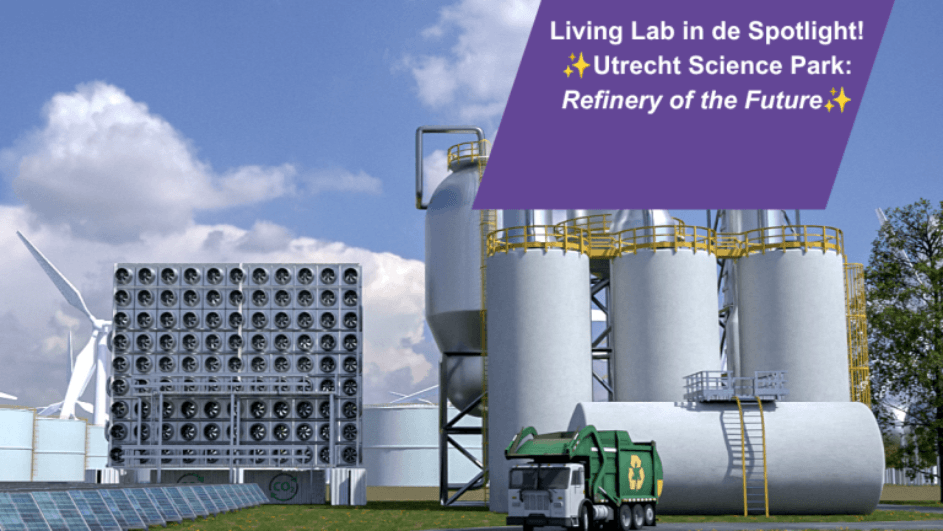
Living Lab in the Spotlight: Utrecht Science Park
Utrecht Science Park is home to several living labs focused on energy and circularity. These include Lumifield, which explores the generation and storage of solar energy, and the biogas digester, which uses organic waste as an energy source. On their own, these are already promising initiatives. Connected, they could become something much bigger: a functioning, learning model for a circular campus.
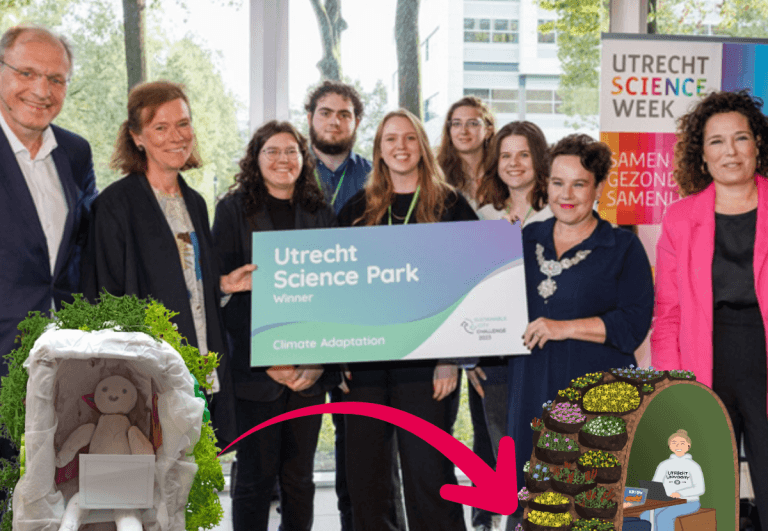
From student idea during challenge to ReGreen Hut at Dutch Design Week
On hot summer days, temperatures can rise significantly at Utrecht Science Park, while students are looking for places to study, relax and find some shade outdoors. At the same time, planting trees is not always straightforward: underground, the campus is crisscrossed by a dense network of cables and utility lines. So how can we create shade, greenery and places to relax without major changes to the ground?
Utrecht Science Week kicks off: social and economic impact of Utrecht Science Park in the spotlight
The sixth edition of Utrecht Science Week takes place from Friday, 25 September to Sunday, 4 October. During this time, Utrecht Science Park opens its doors to the general public, showcasing how research, innovation, and collaboration lead to tangible societal and economic impact. At the same time, the week underscores the importance of sustained investment in knowledge and innovation.
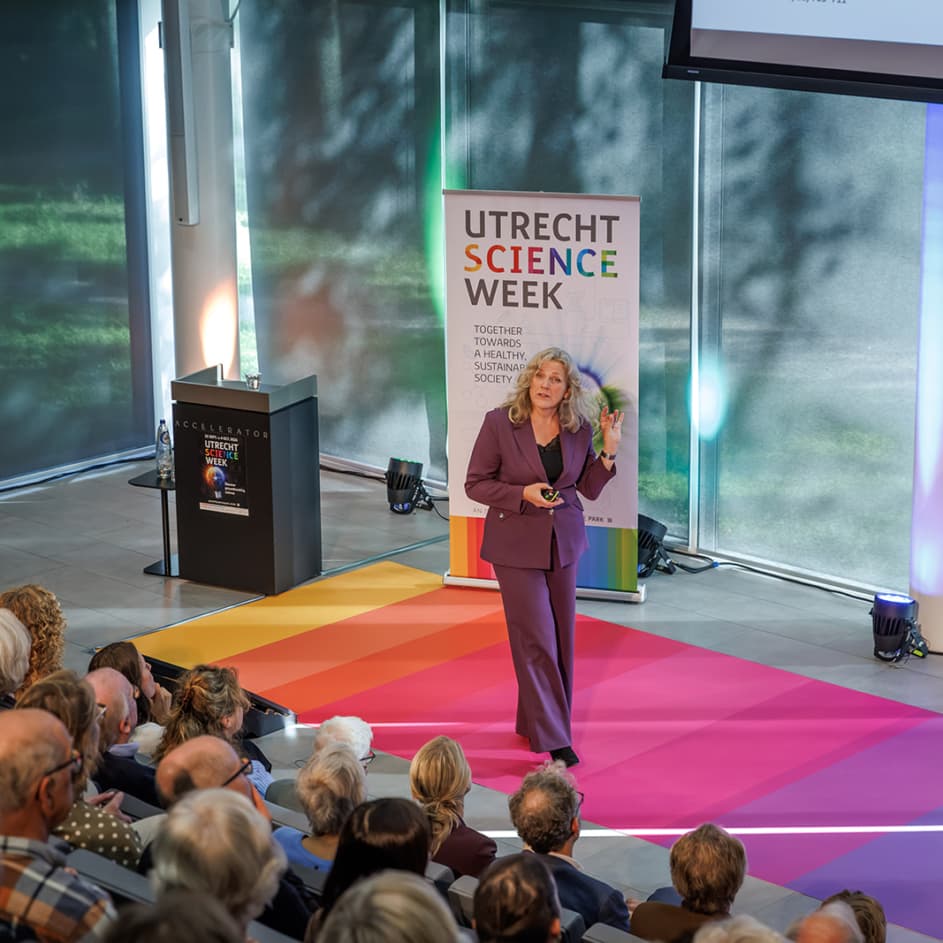
Looking back at Utrecht Science Week: research, education, and entrepreneurship in the spotlight
Utrecht Science Week 2026 has come to a close. For over a week, visitors enjoyed workshops, lectures, group discussions, and tours focused on science and innovation at Utrecht Science Park. With more than thirty program activities across over 25 locations, there were ample opportunities to experience science up close. We look back on a fantastic week that once again highlighted the essential role of collaboration, and the combination of research, education, and entrepreneurship, in addressing the societal challenges of our time.