Talkshow ‘The New Utrecht Doctor’ during the Utrecht Science Week: What Will the Doctor of the Future Look Like?
What will the doctor of the future look like? Changing insights into healthcare, technological developments such as AI, and evolving patient expectations call for a renewed approach to medical education. That is why UMC Utrecht is updating its medical curriculum under the name The New Utrecht Doctor
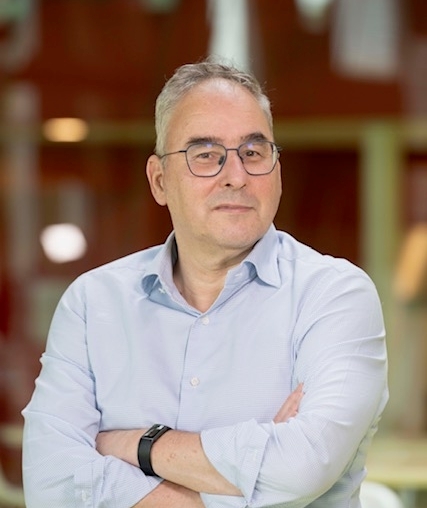
Prof. dr. Marc Bonten, Vice Dean of Education and Director of the Education Center at UMC Utrecht, talks about the curriculum renewal, his vision for the doctor of the future and the key discussions surrounding medical education. During Utrecht Science Week, The New Utrecht Doctor takes center stage in a talk show about the future of medical education.
Why The New Utrecht Doctor? What’s wrong with the old one?
There is nothing wrong with the “old” doctors we have trained and continue to train. But society and the medical profession are changing, and medical education needs to adapt accordingly. Our understanding of the origins of disease, diagnostics and opportunities for prevention is constantly evolving. Patients and people who are not yet patients have changing expectations, and each new generation of doctors has different ideas about how they want to practise medicine. That is why The New Utrecht Doctor is also the name of the renewed medical curriculum.
What is your personal mission as Vice Dean?
To educate doctors, healthcare professionals and researchers who not only have the knowledge and skills we expect of them today, but who are also able to continue developing those skills and knowledge. And – very importantly – who have the initiative and courage to contribute to good healthcare for everyone beyond the consultation room or laboratory. To reduce health inequalities, ensure that children receive vaccinations, make sure young people with mental health problems are seen and supported, reduce the harm caused by addictions, and ensure that people with rare diseases have access to the latest and often most expensive medicines.
Are you going to make something great out of your Late Night talk show?
That is certainly the intention. I no longer watch these kinds of programmes myself, but we only have genuine experts at the table. Angela de Jong, Victor Vlam and Johan Derksen were all unavailable…
What is your most provocative statement?
Difficult to choose. We have three sections. The first focuses on how to put together a new cohort of medical students. Should we use a lottery, selection, and should we take students’ backgrounds into account? The second focuses on how to address current issues such as AI and sustainability. And the final section is about the kind of doctors we want to train. In my view, that is where the most provocative statements can be found. “Medical education should be divided into an HBO and a university-level programme” and “The development from 120-hour to 80-hour to 40-hour working weeks for doctors is a bad thing.”
Who is the talk show primarily aimed at?
Everyone who finds education interesting and/or important, including students and teachers. There will always be two students and two teachers at the table, and the moderators will also be a student and a teacher. And of course, we hope the audience will make their voices heard as well.
Want to join the discussion?
Would you like to experience the discussion about the doctor of the future for yourself? View the Utrecht Science Week programme and register for Talk show ‘The New Utrecht Doctor’