HU University of Applied Sciences Utrecht and KWR water research institute strengthen collaboration with special lecturer
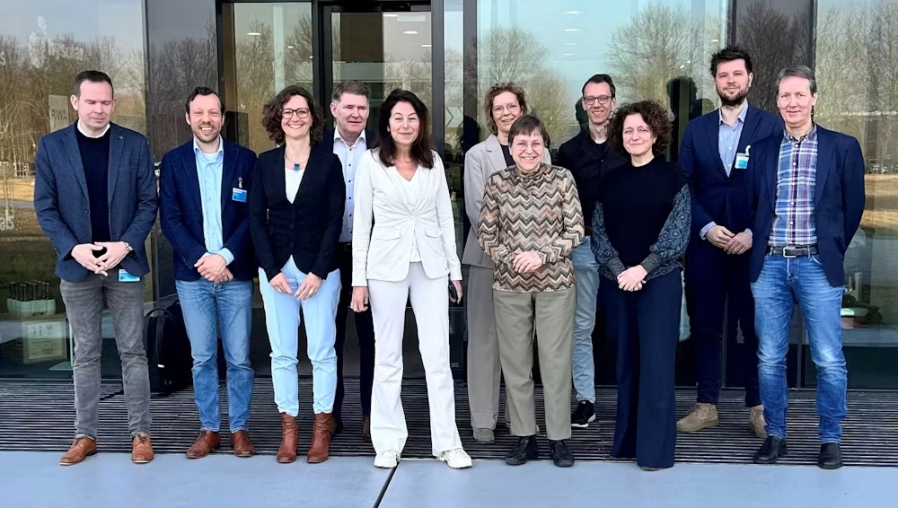
HU and water research institute KWR signed a cooperation agreement with the intention to appoint a special lecturer to conduct (practice-oriented) research in the field of water quality, water quantity and water treatment. Both institutes also want to contribute to the training of young professionals needed by the water sector.
In the coming years, many people in the water sector will retire, so new employees are urgently needed. In order to interest more young people in the water sector, HU and KWR are developing an education and research program around practice-oriented water issues, including a water technology minor.
Practice-oriented education and research
During the minor, students will work with HU lecturer-researchers and KWR staff on practical research issues introduced by KWR, such as new demonstration setups for purifying water and measuring water quality using innovative screening methods. They do this under the direction of the special lecturer and are supervised by HU lecturer-researchers and KWR staff.
Building on ongoing collaboration
The cooperation builds on an ongoing collaboration between HU and KWR. In fact, since January 2023, Roberta Hofman-Caris has already been seconded to the HU from KWR.
Accelerated solution to water challenges
Wilma Scholte op Reimer, President of the Executive Board at HU, emphasizes the importance of the collaboration: “I am very pleased to further perpetuate our collaboration with a proposed special lecturer on the subject of water. I am convinced that we can accelerate the realization of innovative solutions to challenging water challenges, such as sufficient clean water; by having our inquisitive students collaborate with experienced researchers from KWR and using our passionate researchers and facilities.”
Future in the here and now
Mariëlle van der Zouwen, director of KWR, is also enthusiastic: “At HU and KWR we share a love of practice and the development of people. We have noticed this in the past two years of collaboration. I look forward to joint research to further bring to life the values of water for people and the environment. The students of the HU connect the here and now to the future: they are the ones who also work on a healthy and sustainable society after 2050. By joining forces, we are bringing time to us and already building a water wise future.”
About the HU and KWR
HU trains young professionals for the jobs of the future and works with students, teachers, hands-on researchers and the field on mission-driven issues. Here the focus is on creating an inclusive, sustainable and healthy living environment, with special attention to water, food, sports and exercise. An important ambition is to contribute to circular drinking water, dealing with shortages and surpluses of rainwater and combating heat stress in the context of climate adaptation. By creating rich learning environments, we train the professionals of the future and contribute to an inclusive, sustainable and healthy living environment.
Water research institute KWR in Nieuwegein contributes to a water wise society through applied scientific research. In a thriving society, water has a key role. It connects sectors such as energy, food supply, nature and health and is an important starting point for sustainable solutions. With contemporary water expertise, the institute builds on a solid knowledge base of more than fifty years of (drinking) water science. Under the motto “bridging science to practice,” KWR professionals work together with stakeholders from the water world, government, industry, agriculture, nature management, research and society. In this they focus on the themes: water quality & health, freshwater availability, public design for water, resource reuse & circular systems, the balance between water supply and demand in the water chain, nature-inclusive water management & biodiversity, energy transition and digital water.
In the coming months, both organizations will draw up concrete action plans to further shape the cooperation and start joint projects.
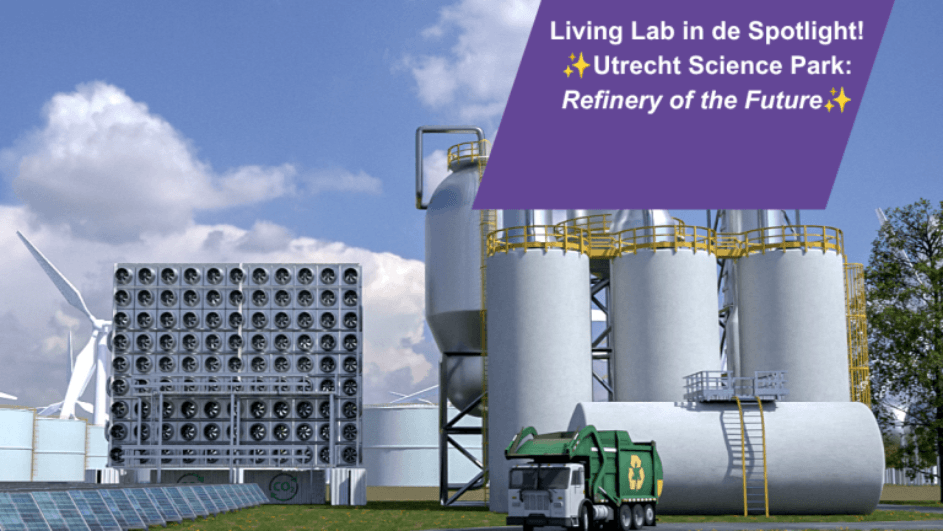
Living Lab in the Spotlight: Utrecht Science Park
Utrecht Science Park is home to several living labs focused on energy and circularity. These include Lumifield, which explores the generation and storage of solar energy, and the biogas digester, which uses organic waste as an energy source. On their own, these are already promising initiatives. Connected, they could become something much bigger: a functioning, learning model for a circular campus.
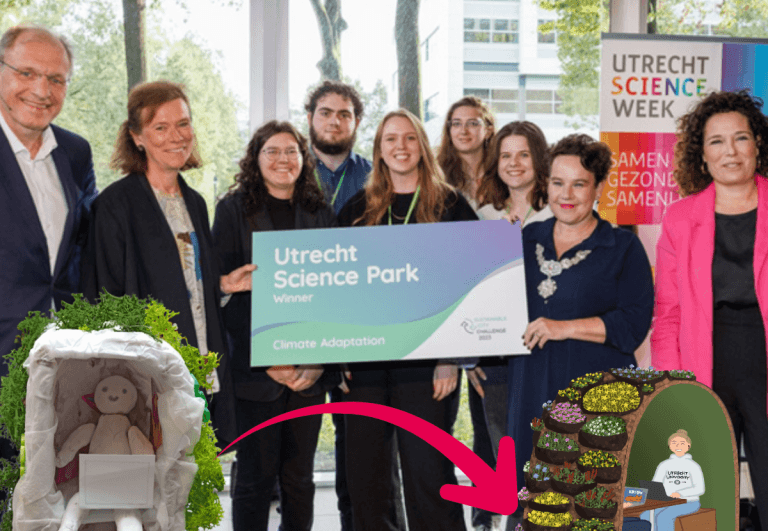
From student idea during challenge to ReGreen Hut at Dutch Design Week
On hot summer days, temperatures can rise significantly at Utrecht Science Park, while students are looking for places to study, relax and find some shade outdoors. At the same time, planting trees is not always straightforward: underground, the campus is crisscrossed by a dense network of cables and utility lines. So how can we create shade, greenery and places to relax without major changes to the ground?
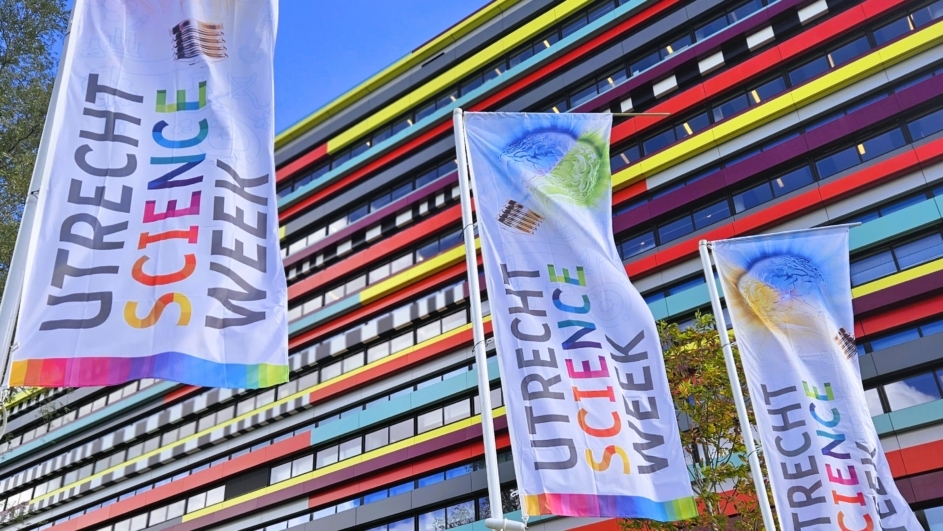
Utrecht Science Week kicks off: social and economic impact of Utrecht Science Park in the spotlight
The sixth edition of Utrecht Science Week takes place from Friday, 25 September to Sunday, 4 October. During this time, Utrecht Science Park opens its doors to the general public, showcasing how research, innovation, and collaboration lead to tangible societal and economic impact. At the same time, the week underscores the importance of sustained investment in knowledge and innovation.
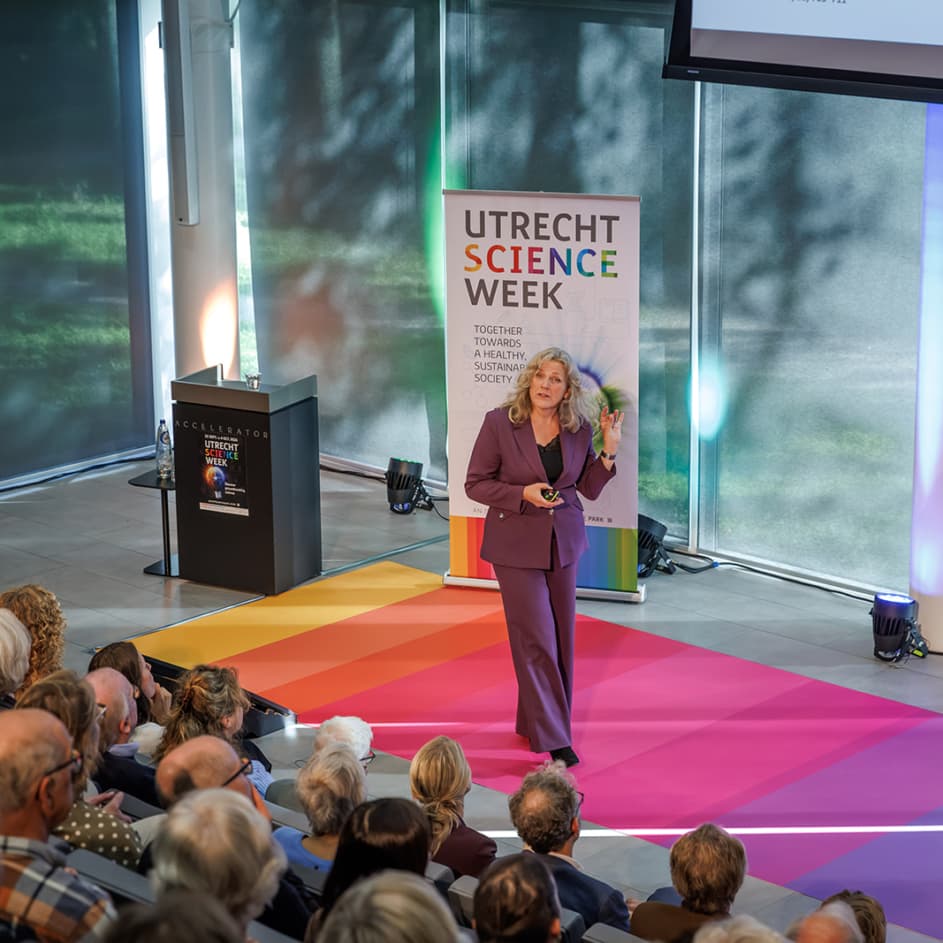
Looking back at Utrecht Science Week: research, education, and entrepreneurship in the spotlight
Utrecht Science Week 2026 has come to a close. For over a week, visitors enjoyed workshops, lectures, group discussions, and tours focused on science and innovation at Utrecht Science Park. With more than thirty program activities across over 25 locations, there were ample opportunities to experience science up close. We look back on a fantastic week that once again highlighted the essential role of collaboration, and the combination of research, education, and entrepreneurship, in addressing the societal challenges of our time.