Hans Clevers receives Animal Welfare Research Prize 2025
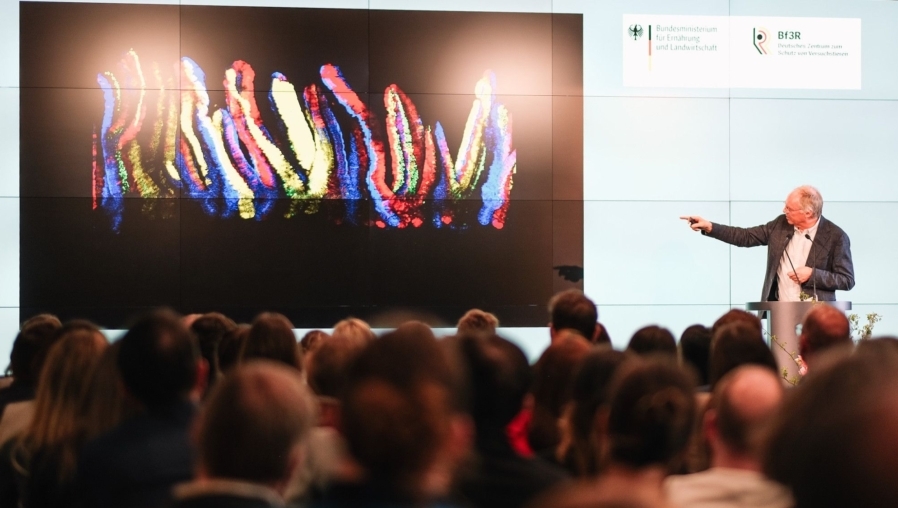
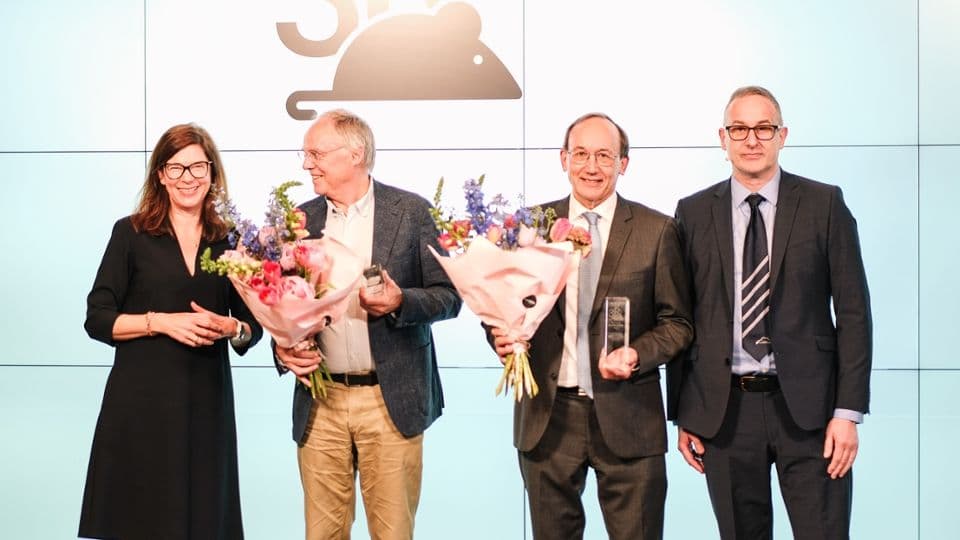
On 22 April 2025, Hans Clevers has been awarded the Animal Welfare Research Prize for outstanding research in the replacement and reduction of animal testing by the German Federal Ministry of Food and Agriculture (BMEL) during the award ceremony in Berlin. Hans Clevers was nominated for his work in establishing organoids as a groundbreaking method in modern biomedical research with significant impact on the replacement or reduction of animal testing. The prize is endowed with €100,000, with which the BMEL supports the research and development of alternative methods to replace animal testing.
As part of their commitment to improve animal welfare, the German Federal Ministry of Food and Agriculture (BMEL) has awarded the 2025 Animal Welfare Research Prize, worth €100,000, to Hans Clevers. Clevers was nominated for his leading role in the development of organoids, miniature organs that can be grown in the lab. This technology has had a major impact on reducing and replacing animal testing in biomedical research. Organoids mimic both the structure and function of real organs and can be used to address biological and medical questions that previously required animal models.
Parliamentary State Secretary Ophelia Nick commented: “Hans Clevers and his team laid the foundation for organoid research and hence provide a vital contribution to further reducing animal testing to the necessary minimum in the future.”
Discovery of organoids through fundamental research
During the award ceremony, Hans Clevers explained how his team at the Hubrecht Institute discovered organoids more or less by chance, highlighting the importance of fundamental research. Clevers and his team have developed a method that allows stem cells to multiply indefinitely and form organoids in the lab.
Hans Clevers: “It is important to know that organoids will replace many animal experiments, but never all of them. All animals, including human beings, are much more than the sum of their parts, and many parts together make up a body. But even though organoids are very reductionist, they often give us better answers on how humans will respond to disease or to drugs than animals or cell lines in a lab will do.”
Next step: 2D organoids for broader applications
The prize money will be used to support research at the Hubrecht Institute, where Clevers and his team plan to scale up organoid production. This includes both translational research and industrial applications. A key focus will be the development of organoids as flat 2D sheets. While organoids are traditionally grown as 3D structures, transitioning to a 2D format offers several significant advantages. In a 2D setup, the cells are easier to culture and observe. Additionally, it becomes more practical to test a wide range of drugs simultaneously. Moreover, the natural cellular organization is maintained, ensuring biological relevance. Read more on the method that will allow these developments here.
More information about the award can be found on the website of The Federal Ministry of Food and Agriculture (BMEL). The full award ceremony can be rewatched on Youtube.
Living Lab in the Spotlight: Utrecht Science Park
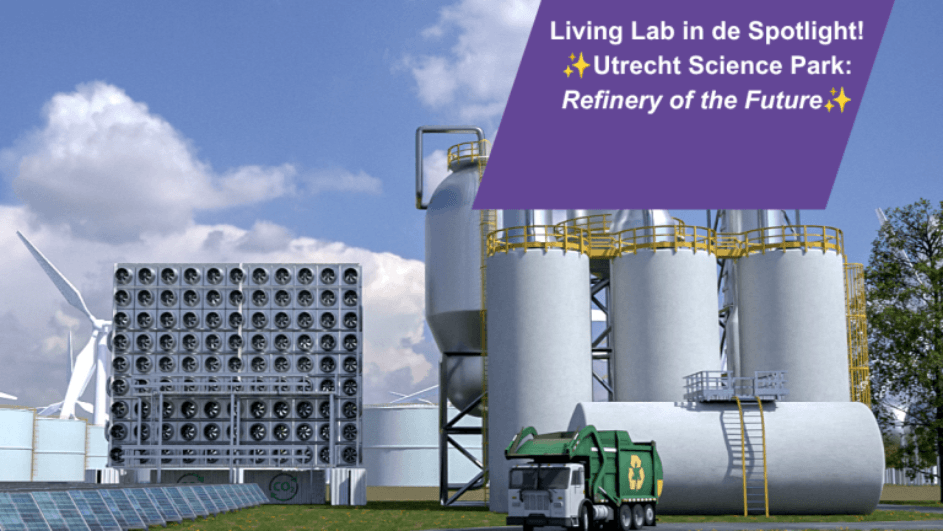
Utrecht Science Park is home to several living labs focused on energy and circularity. These include Lumifield, which explores the generation and storage of solar energy, and the biogas digester, which uses organic waste as an energy source. On their own, these are already promising initiatives. Connected, they could become something much bigger: a functioning, learning model for a circular campus.
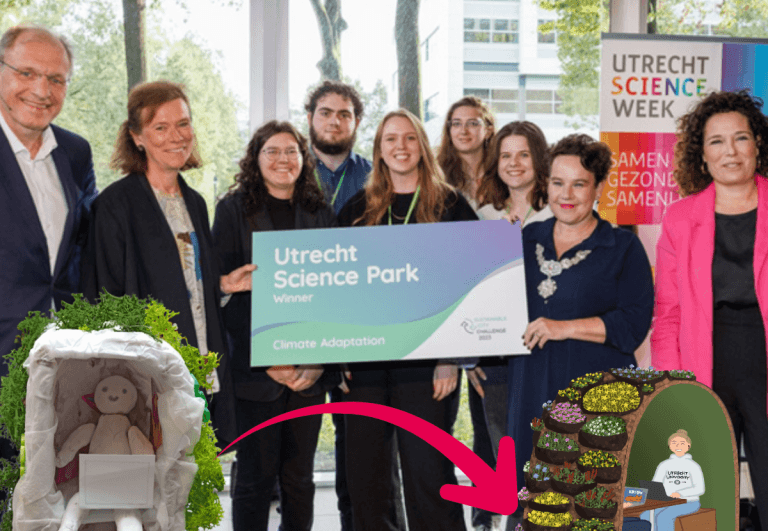
From student idea during challenge to ReGreen Hut at Dutch Design Week
On hot summer days, temperatures can rise significantly at Utrecht Science Park, while students are looking for places to study, relax and find some shade outdoors. At the same time, planting trees is not always straightforward: underground, the campus is crisscrossed by a dense network of cables and utility lines. So how can we create shade, greenery and places to relax without major changes to the ground?
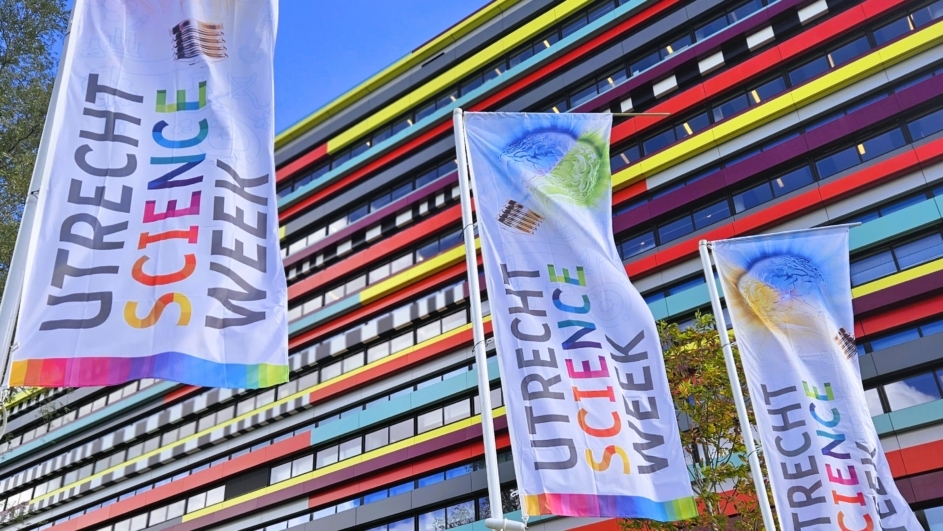
Utrecht Science Week kicks off: social and economic impact of Utrecht Science Park in the spotlight
The sixth edition of Utrecht Science Week takes place from Friday, 25 September to Sunday, 4 October. During this time, Utrecht Science Park opens its doors to the general public, showcasing how research, innovation, and collaboration lead to tangible societal and economic impact. At the same time, the week underscores the importance of sustained investment in knowledge and innovation.
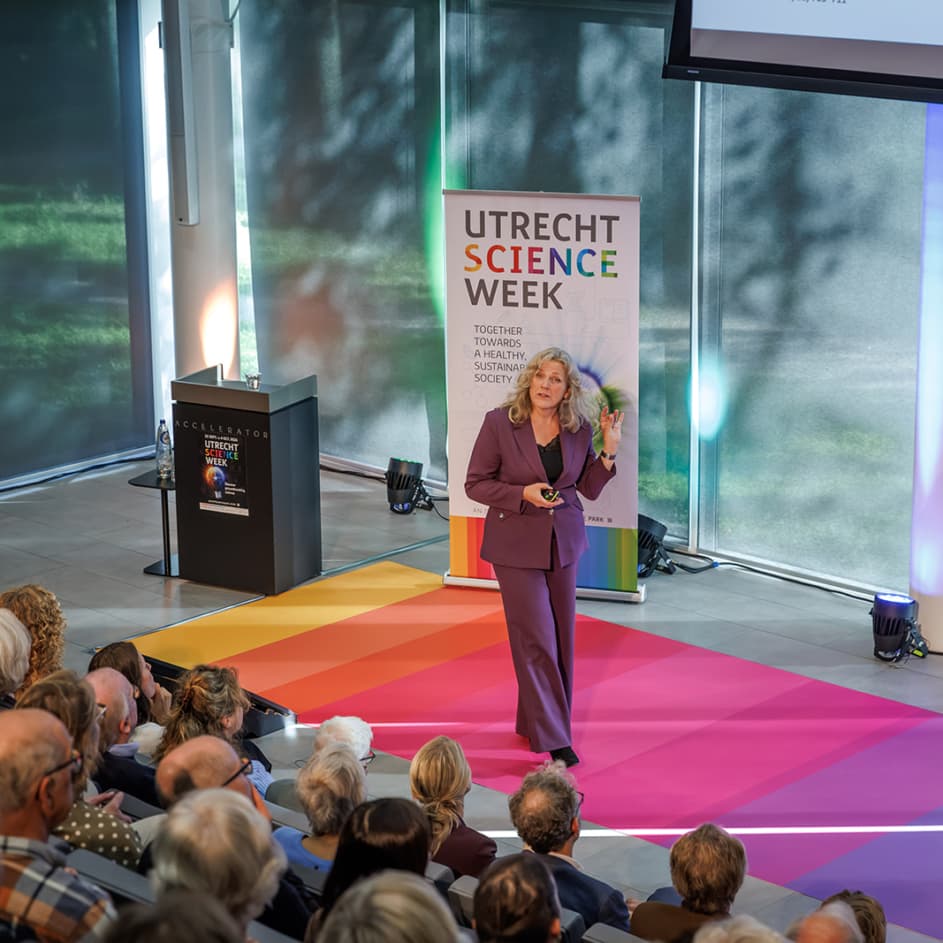
Looking back at Utrecht Science Week: research, education, and entrepreneurship in the spotlight
Utrecht Science Week 2026 has come to a close. For over a week, visitors enjoyed workshops, lectures, group discussions, and tours focused on science and innovation at Utrecht Science Park. With more than thirty program activities across over 25 locations, there were ample opportunities to experience science up close. We look back on a fantastic week that once again highlighted the essential role of collaboration, and the combination of research, education, and entrepreneurship, in addressing the societal challenges of our time.