Grand opening of the world’s largest and most complete evolution garden
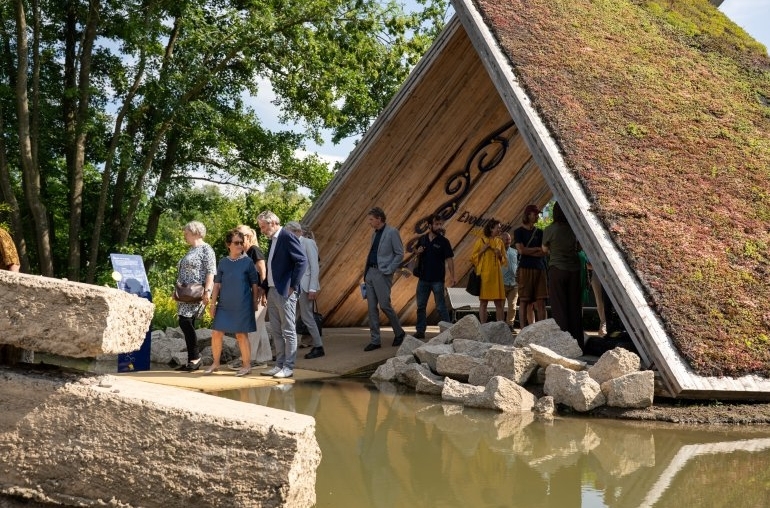
The world’s largest and most comprehensive Evolution Garden, as far as we know, is now officially open.
Scientific Director of the Botanical Gardens, Edwin Pos, emphasized the Evolution Garden’s role in increasing understanding of diversity within the plant kingdom and its origins. Margot van der Starre, Vice President of Utrecht University’s Executive Board, performed the official opening ceremony together with Pos.
The Evolution Garden is designed for both visitors who enjoy a scenic garden walk and those interested in learning more about plant evolution. Along the pathways, visitors encounter key moments in plant evolution, each marked by an information panel and an artistic installation. You’ll discover how vascular systems developed or how plants disperse seeds. These installations are dynamic in various ways – after all, evolution is always in motion. In the Evolution Garden, you take a journey through 900 million years of plant evolution.
Latest scientific insights
Pos, who studied biology at Utrecht University, spoke at the opening about the role of plant evolution in shaping biodiversity.
Pos: “The immense diversity of the plant kingdom, which can also be admired in other sections of the garden, captures the imagination. In this new Evolution Garden, our audience – from students and staff to the broader public – can learn how this diversity came to be. I am proud that the Evolution Garden reflects the latest scientific insights, while remaining clear and accessible to a wide audience.”
Learning about the plant kingdom
Margot van der Starre planted the first tree in the Evolution Garden in 2022. Since then, she has closely followed the development and growth of this new garden section.
She says: “During my lunch breaks, I watched the Evolution Garden transform from a network of paths with many of the same plants – meant to prepare the soil – into what it is now. And that makes me proud. The clear explanations help continuously pass on knowledge. And sharing knowledge is the most important task of a university. It’s my hope that many young people will visit the Evolution Garden in the future and learn about the plant kingdom and how it developed.”
Evolution: the foundation of biology
In the Evolution Garden – considered the largest and most complete of its kind – you’ll learn more about how plants evolved.
Pos explains: “Evolution is at the root of the immense variety of plants we know today – already, some 400,000 species have been described, and we haven’t discovered everything yet. Evolution is the foundation of biology; it helps us understand how biodiversity arises and changes. And in today’s world, where biodiversity is rapidly declining, that understanding is more important than ever.”
The Utrecht University Botanical Gardens are open daily from 10:00 AM to 4:30 PM.
In June, multiple festive opening events are taking place.
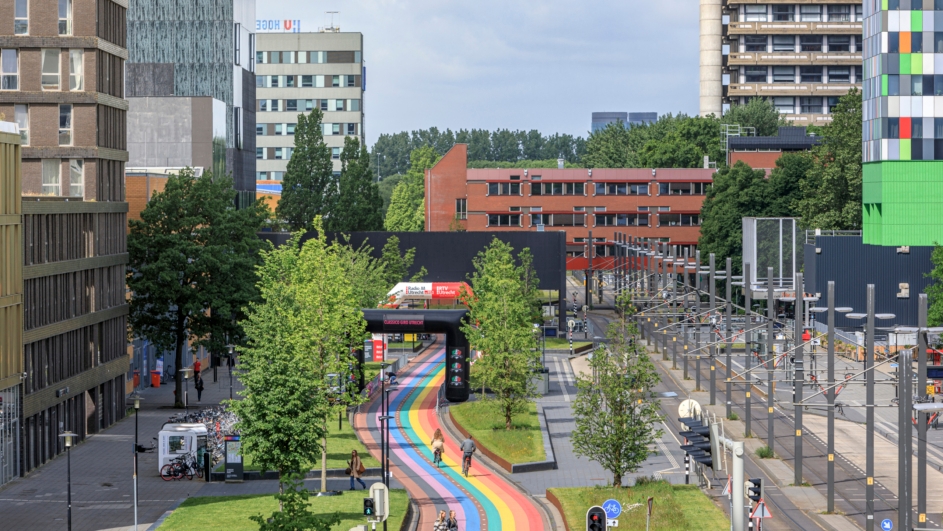
Utrecht University and UMC Utrecht awarded with twelve NWO Vidi-grants
The Dutch Research Council (NWO) has awarded Vidi grants to 109 researchers. Twelve leading researchers at Utrecht University and UMC Utrecht will each receive a Vidi grant of up to €850,000. NWO awards Vidi grants annually, enabling recipients to develop an innovative line of research over the next five years and further expand their research teams.
ReVoice restores one’s own voice after voice loss
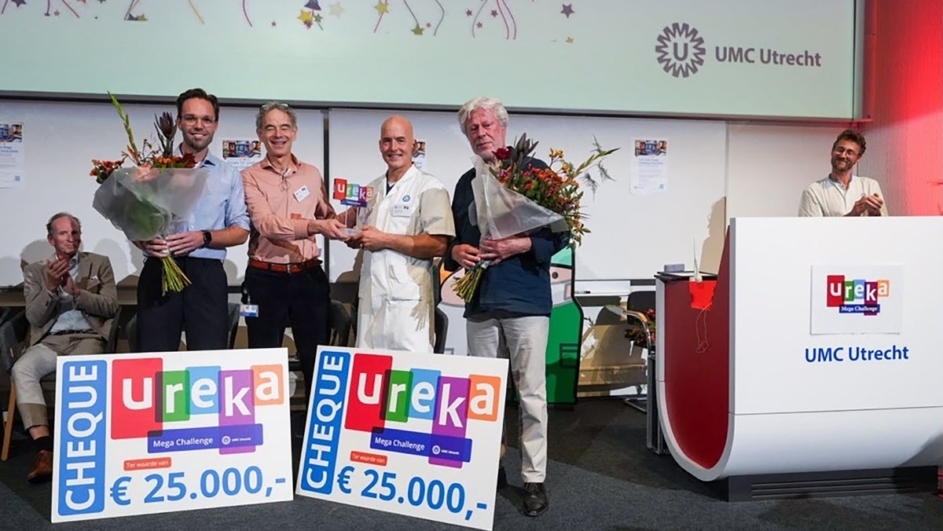
People who lose their voice, for example after surgery for head and neck cancer, want to be able to speak again with a voice that sounds like their own. ReVoice aims to provide this, with the help of AI. With this innovation, head and neck surgeon Weibel Braunius, innovation manager Mart Schoondermark, and patient Boudewijn Faber won the Ureka Mega Challenge 2026 from UMC Utrecht.
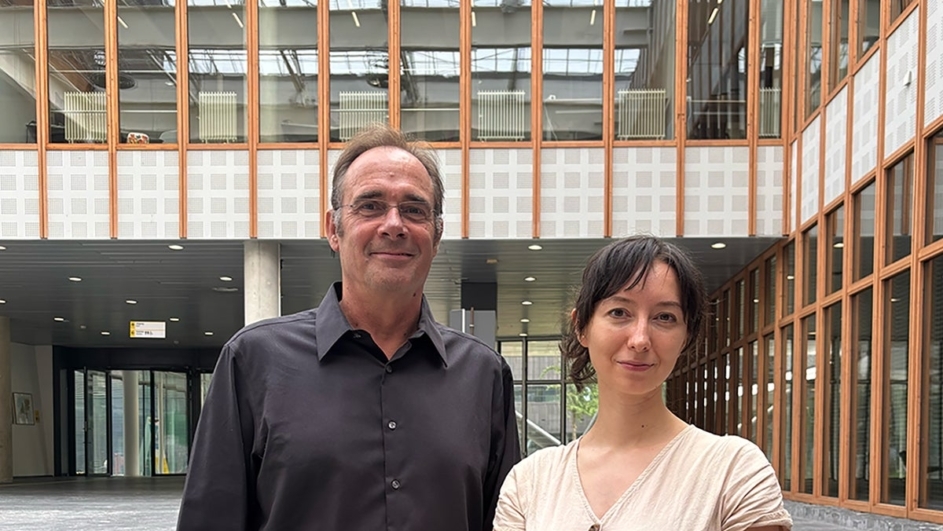
A voice for people who can no longer speak
From a winning idea to their own company. In 2025, Julia Berezutskaya and Nick Ramsey won the UMC Utrecht Ureka Mega Challenge with their innovation, Alphabet. Through this challenge, UMC Utrecht supports healthcare professionals and researchers in further developing promising ideas and bringing them into practice. A year later, Julia shares how their innovation has developed and what steps are still to come.
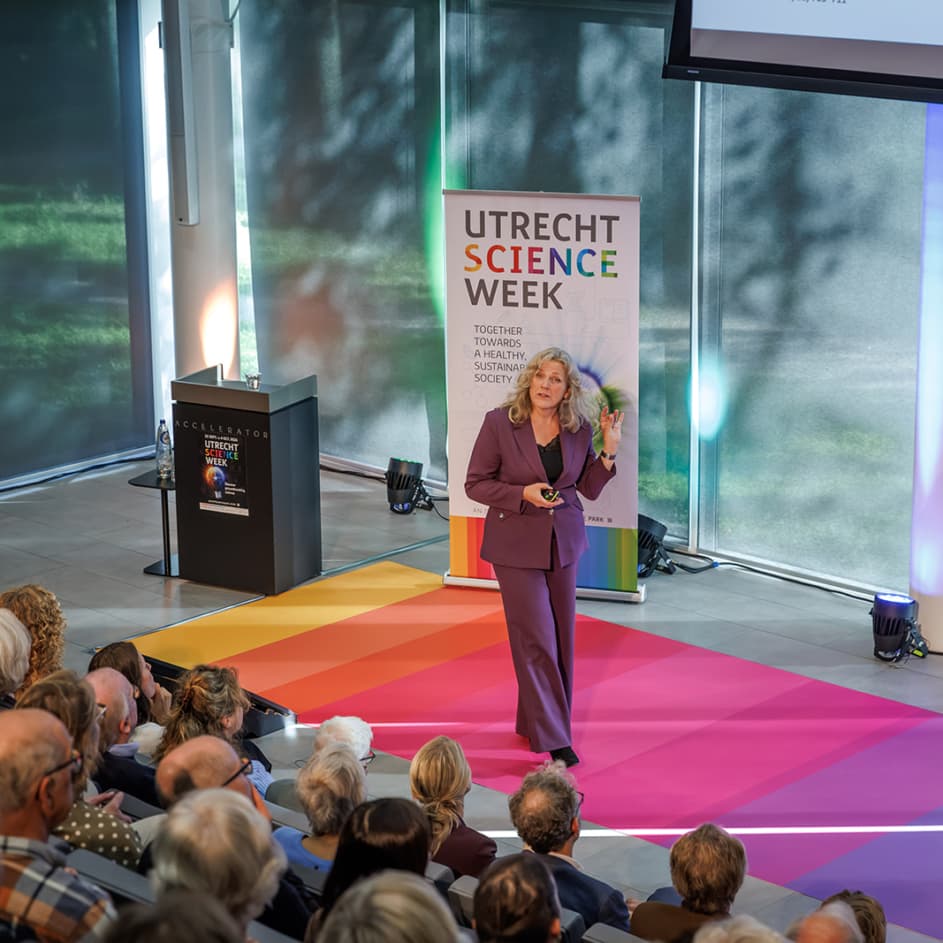
Looking back at Utrecht Science Week: research, education, and entrepreneurship in the spotlight
Utrecht Science Week 2026 has come to a close. For over a week, visitors enjoyed workshops, lectures, group discussions, and tours focused on science and innovation at Utrecht Science Park. With more than thirty program activities across over 25 locations, there were ample opportunities to experience science up close. We look back on a fantastic week that once again highlighted the essential role of collaboration, and the combination of research, education, and entrepreneurship, in addressing the societal challenges of our time.