First part of ecological corridor Utrecht Science Park completed
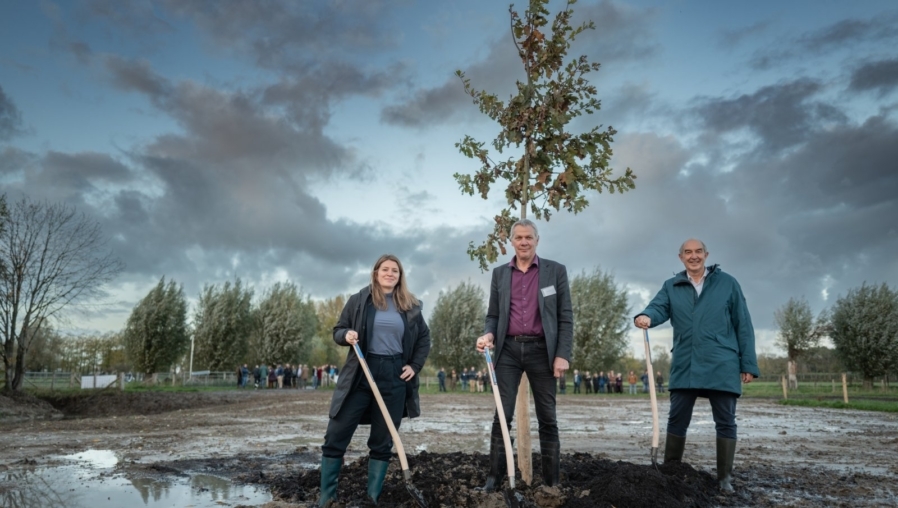
Utrecht University, together with its partners, officially opened the first part of the ecological corridors at Utrecht Science Park.
Utrecht University, together with its partners, officially opened the first part of the ecological corridors at Utrecht Science Park. This thirty-meter-wide natural strip connects the Science Park with the surrounding estates, creating a continuous habitat for plants and animals. The corridors mark an important step in the university’s ambition to enhance biodiversity on and around the campus.
During the festive opening on October 28, Alderman Susanne Schilderman, President of the Executive Board Anton Pijpers, and Water Board Member Bert de Groot discussed the importance of biodiversity. Afterwards, they jointly planted a tree in the area.
Green lane for plants and animals
The ecological corridors literally form a green lane for flora and fauna between the nature reserves surrounding Utrecht Science Park. Flower-rich grasslands, ponds, shrubs and nature-friendly banks give species more space to move around, reproduce and survive.
‘These kinds of connections are incredibly valuable,’ says Anton Pijpers. ‘All plant and animal species are dependent on each other in one way or another; they keep each other in balance. The same applies to us as humans: only by working together with our environment can we restore biodiversity.’
Alderman Schilderman: ‘Utrecht Science Park is an important area for the municipality of Utrecht. Here, we are creating space for living, innovation, working, sports and recreation. A strong and healthy natural environment is naturally part of that. This corridor makes it possible for animals to cross the road safely. I am proud of the four wildlife passages that we have constructed around the Science Park in collaboration with the province, the university and Staatsbosbeheer. In this way, we are working together to strengthen the landscape and biodiversity in this area.’
The first zone, the north-south connection, runs from the Oostbroek estate to Fort bij Rhijnauwen. Construction of the east-west connection, between Tolakkerlaan and Boeijelaan, will start in 2026.
Collaboration for nature restoration
For the construction of the east-west connection, the university will collaborate with, among others, De Stichtse Rijnlanden Water Board, which is making €80,000 available through an incentive scheme. The collaboration agreement was officially signed during the meeting.
Bert de Groot: ‘There can’t be biodiversity without clean water. The water board is investing heavily in the water quality of the future. The pools and ten-metre-wide nature-friendly banks that are being created here are a good example of this.’
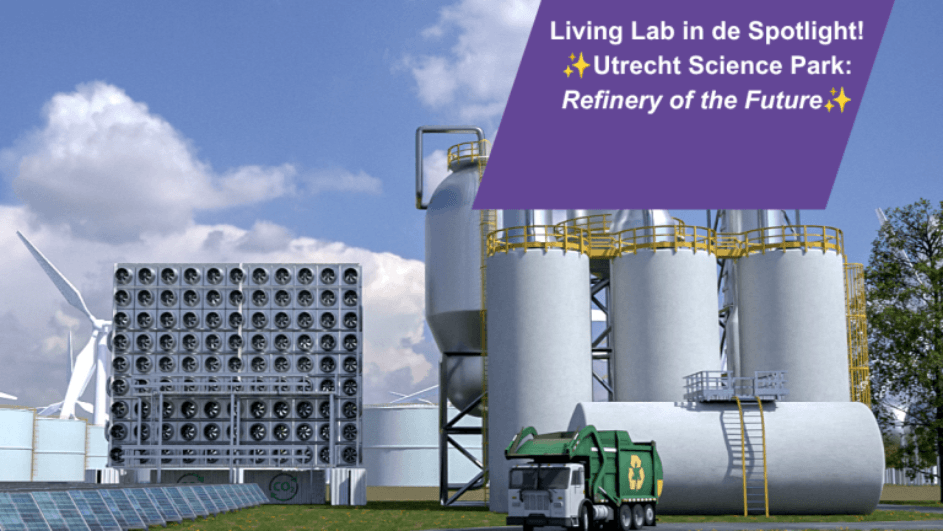
Living Lab in the Spotlight: Utrecht Science Park
Utrecht Science Park is home to several living labs focused on energy and circularity. These include Lumifield, which explores the generation and storage of solar energy, and the biogas digester, which uses organic waste as an energy source. On their own, these are already promising initiatives. Connected, they could become something much bigger: a functioning, learning model for a circular campus.
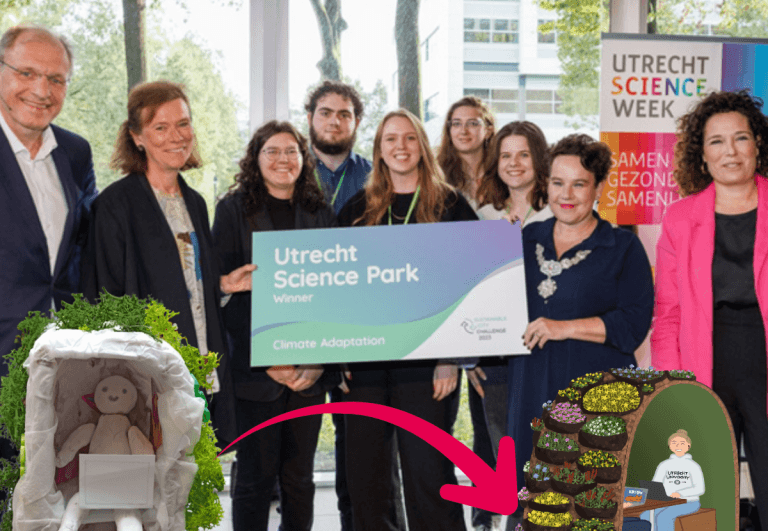
From student idea during challenge to ReGreen Hut at Dutch Design Week
On hot summer days, temperatures can rise significantly at Utrecht Science Park, while students are looking for places to study, relax and find some shade outdoors. At the same time, planting trees is not always straightforward: underground, the campus is crisscrossed by a dense network of cables and utility lines. So how can we create shade, greenery and places to relax without major changes to the ground?
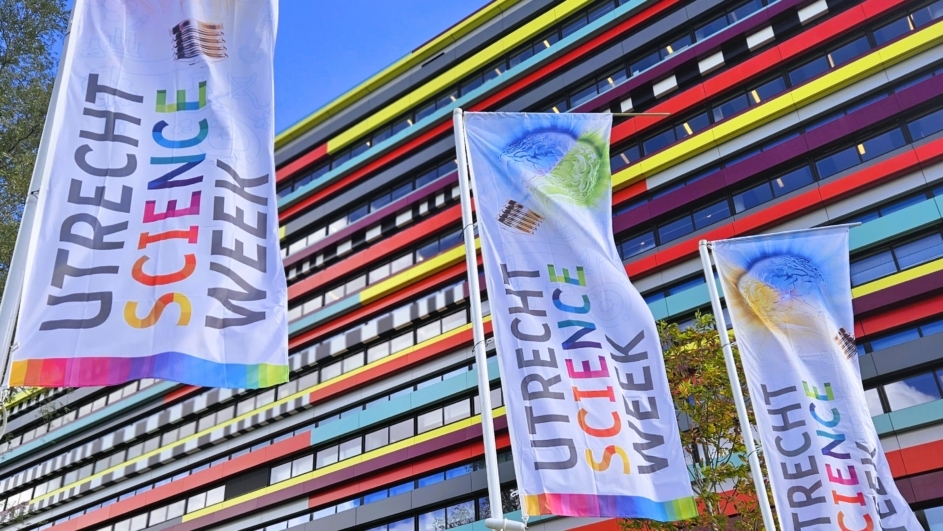
Utrecht Science Week kicks off: social and economic impact of Utrecht Science Park in the spotlight
The sixth edition of Utrecht Science Week takes place from Friday, 25 September to Sunday, 4 October. During this time, Utrecht Science Park opens its doors to the general public, showcasing how research, innovation, and collaboration lead to tangible societal and economic impact. At the same time, the week underscores the importance of sustained investment in knowledge and innovation.
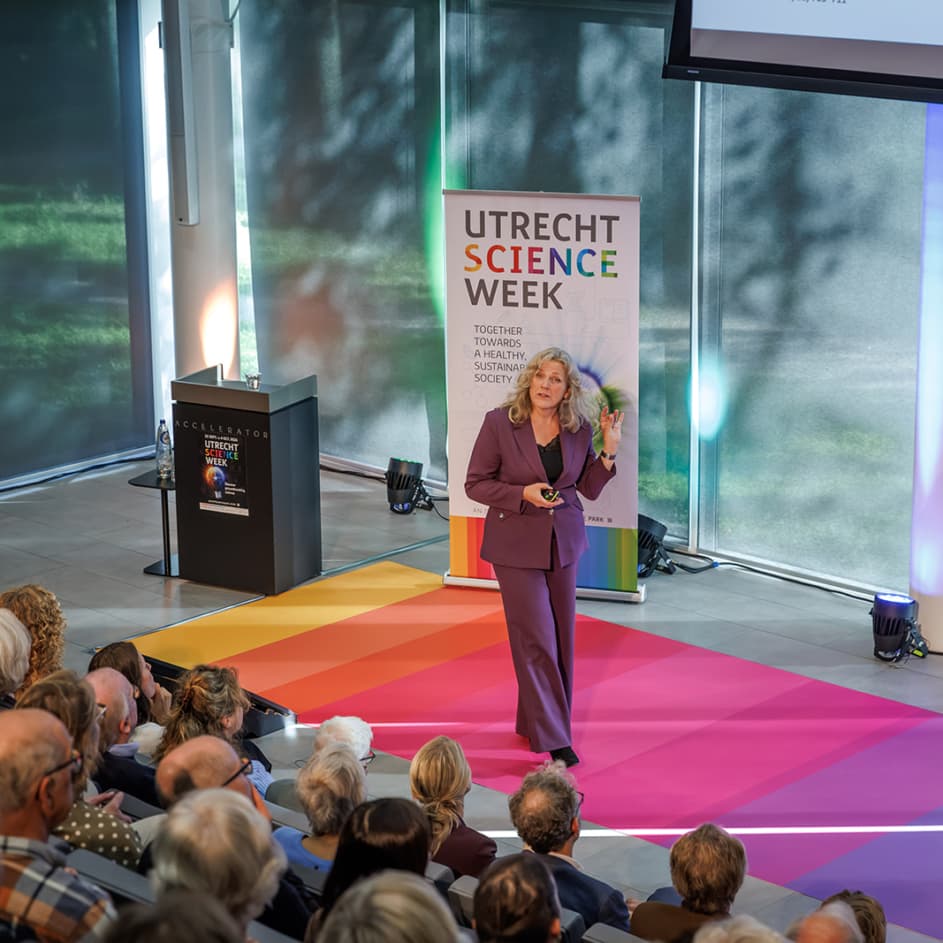
Looking back at Utrecht Science Week: research, education, and entrepreneurship in the spotlight
Utrecht Science Week 2026 has come to a close. For over a week, visitors enjoyed workshops, lectures, group discussions, and tours focused on science and innovation at Utrecht Science Park. With more than thirty program activities across over 25 locations, there were ample opportunities to experience science up close. We look back on a fantastic week that once again highlighted the essential role of collaboration, and the combination of research, education, and entrepreneurship, in addressing the societal challenges of our time.