First human receives 3D-printed implant developed in veterinary medicine
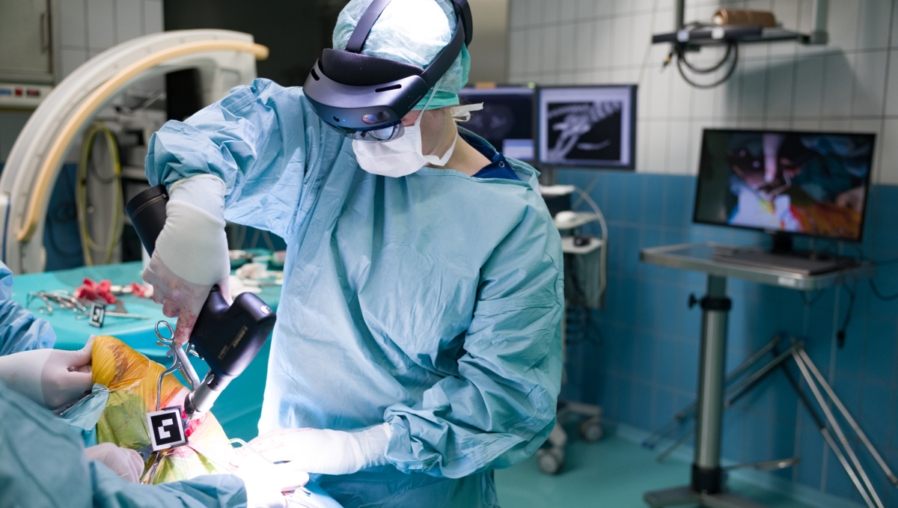
Vijf jaar geleden werd een 3D-geprint titanium implantaat aangebracht bij de elleboog van een hond. Dankzij een samenwerking tussen de faculteit Diergeneeskunde van de Universiteit Utrecht en het 3D Lab van het UMC Utrecht kon toen een amputatie worden voorkomen. Afgelopen vrijdag is de eerste stap richting de humane geneeskunde gezet: in het Anna Ziekenhuis in Geldrop werd voor het eerst een 3D-geprinte titanium heupkom aangebracht bij een 36-jarige man met heupdysplasie.
Bart van der Wal and Björn Meij both specialize in orthopedics, but while Van der Wal treats people, Meij’s patients are mostly dogs. In his practice, Van der Wal saw many young people with hip dysplasia who still had symptoms despite previous treatment. In this condition, the hip socket is too shallow, causing the femoral head to partially move out of the socket.
Hip dysplasia occurs in both dogs and humans, so Van der Wal decided to call his colleagues at the Faculty of Veterinary Medicine. At the time, he was a surgeon at UMC Utrecht, and he is currently a professor of orthopedics at LUMC in Leiden. Van der Wal: “The idea was simple: if a piece of the hip socket is missing, can’t we just print a new edge?” Veterinary surgeon Bjorn Meij was immediately enthusiastic. Meij: “Hip dysplasia can lead to cracks in the cartilage, resulting in inflammation and osteoarthritis. This damage is irreversible. Rapid treatment, often of both hips, is therefore crucial.“ This usually means two major operations in which the surgeon has to cut through the pelvis in three places in order to tilt the hip socket. The dogs then face a painful six-week rehabilitation period for each hip.
The new treatment proved to be a great success in dogs. More than seventy patients have now been treated, dogs ranging from 15 to 90 kilograms. Meij: “Most of them had both hips operated on in a single operation. They are often walking around the clinic again on the same day and can go home with their owners the next day.”
Translation to humans
The paperwork proved to be a major challenge before the first human could be treated in this way. Van der Wal: “We are working with various authorities to obtain permission, documenting every stage of development in detail, patenting the technology, and also producing patient information leaflets.”
Last Friday, the first human was treated. A logical but exciting step, because dogs distribute their weight over four legs, while humans have to distribute their body weight over two legs. It is still unclear what this means for the intensity and duration of the recovery period. The operation took place within a safety study designed to determine the safety of the new procedure. Four other young people with hip dysplasia are expected to receive the new hip socket from the 3D printer. Orthopedic surgeon Rintje Agricola of the Anna Hospital in Geldrop performed the first operation.
One health
This treatment method demonstrates how innovation in veterinary medicine can contribute to human health. The Faculty of Veterinary Medicine remains committed to innovative veterinary care and research, whereby the insights gained can contribute to solutions for both humans and animals.
Photo: Bas Niemans, Surgeon Bjorn Meij (right) during an operation.
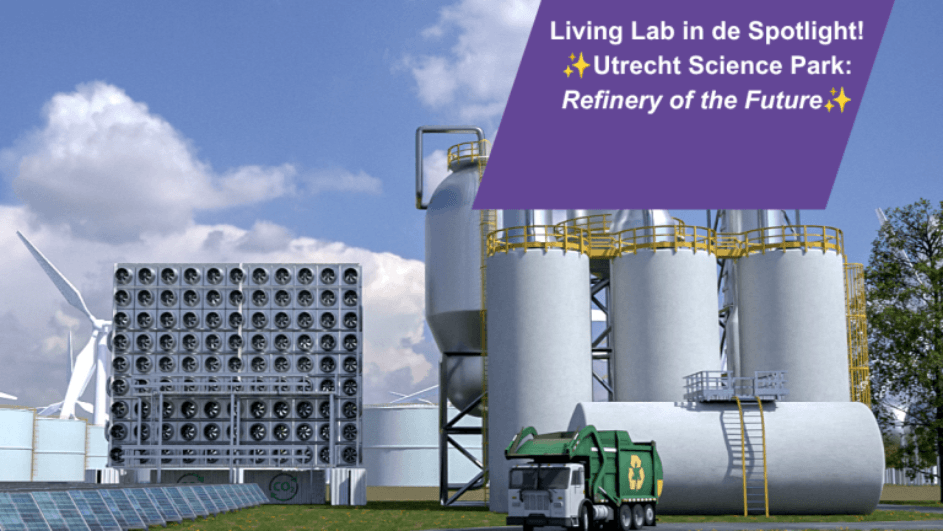
Living Lab in the Spotlight: Utrecht Science Park
Utrecht Science Park is home to several living labs focused on energy and circularity. These include Lumifield, which explores the generation and storage of solar energy, and the biogas digester, which uses organic waste as an energy source. On their own, these are already promising initiatives. Connected, they could become something much bigger: a functioning, learning model for a circular campus.
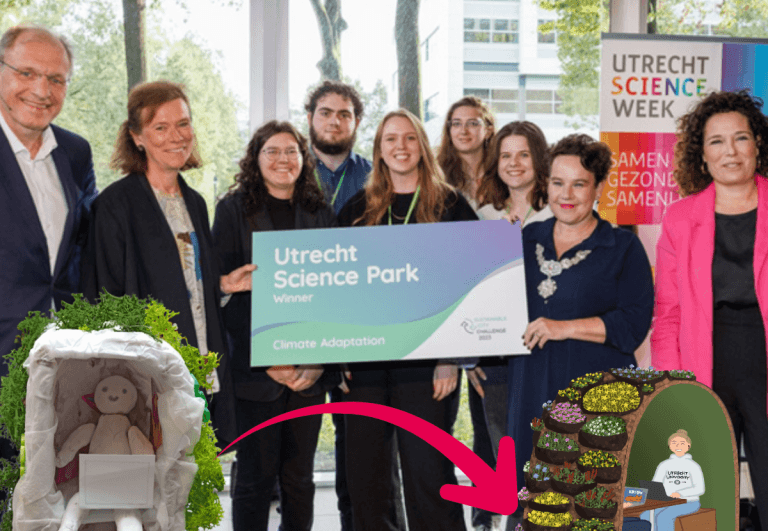
From student idea during challenge to ReGreen Hut at Dutch Design Week
On hot summer days, temperatures can rise significantly at Utrecht Science Park, while students are looking for places to study, relax and find some shade outdoors. At the same time, planting trees is not always straightforward: underground, the campus is crisscrossed by a dense network of cables and utility lines. So how can we create shade, greenery and places to relax without major changes to the ground?
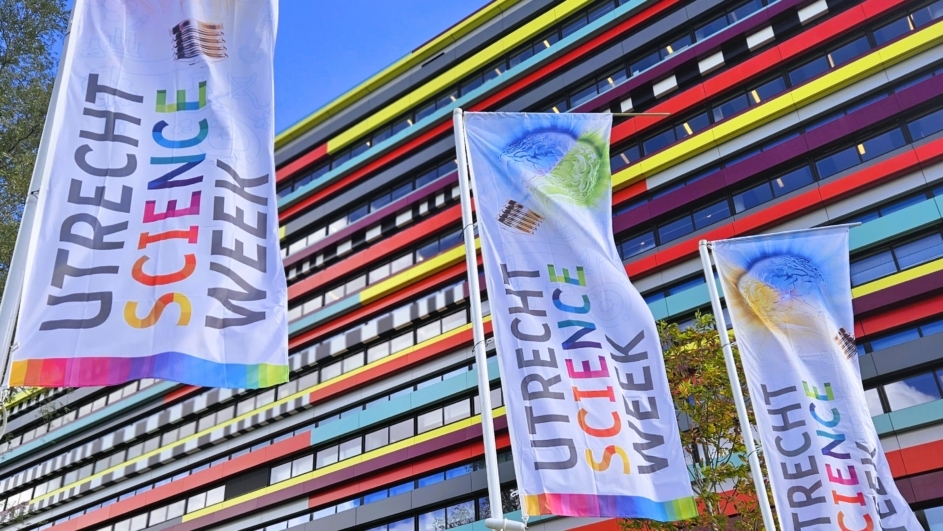
Utrecht Science Week kicks off: social and economic impact of Utrecht Science Park in the spotlight
The sixth edition of Utrecht Science Week takes place from Friday, 25 September to Sunday, 4 October. During this time, Utrecht Science Park opens its doors to the general public, showcasing how research, innovation, and collaboration lead to tangible societal and economic impact. At the same time, the week underscores the importance of sustained investment in knowledge and innovation.
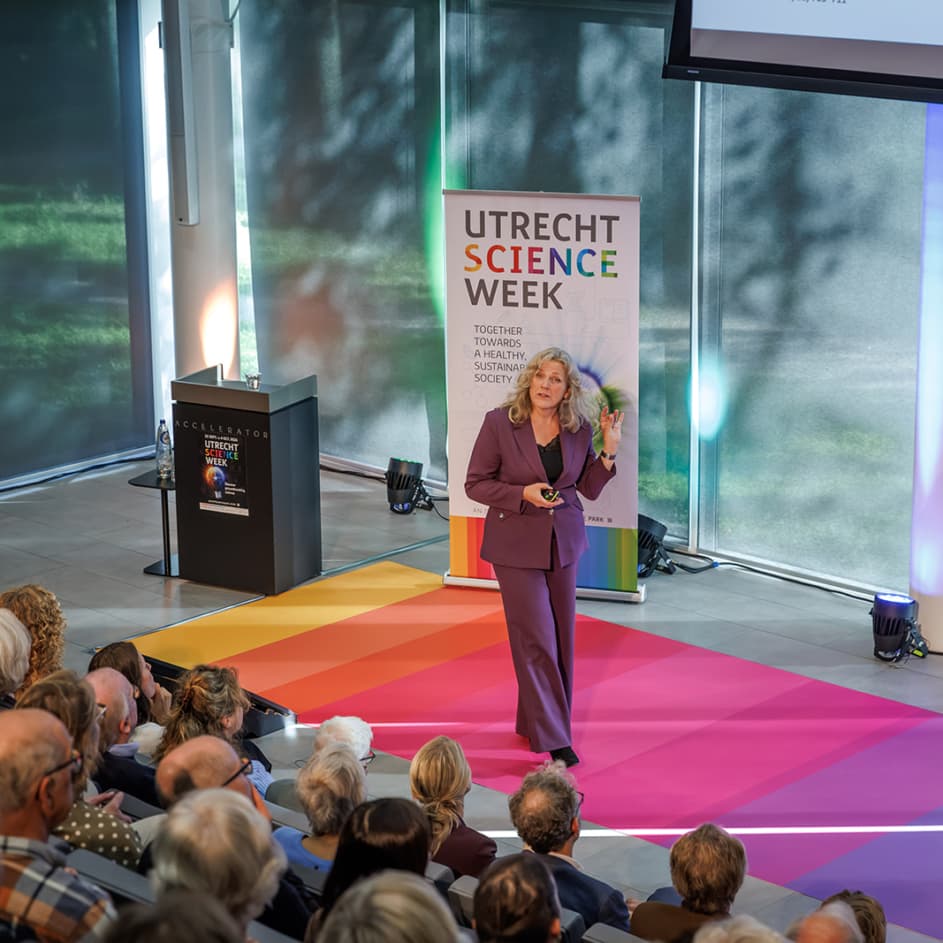
Looking back at Utrecht Science Week: research, education, and entrepreneurship in the spotlight
Utrecht Science Week 2026 has come to a close. For over a week, visitors enjoyed workshops, lectures, group discussions, and tours focused on science and innovation at Utrecht Science Park. With more than thirty program activities across over 25 locations, there were ample opportunities to experience science up close. We look back on a fantastic week that once again highlighted the essential role of collaboration, and the combination of research, education, and entrepreneurship, in addressing the societal challenges of our time.