Copilot for COPD: ‘The patient is in control’
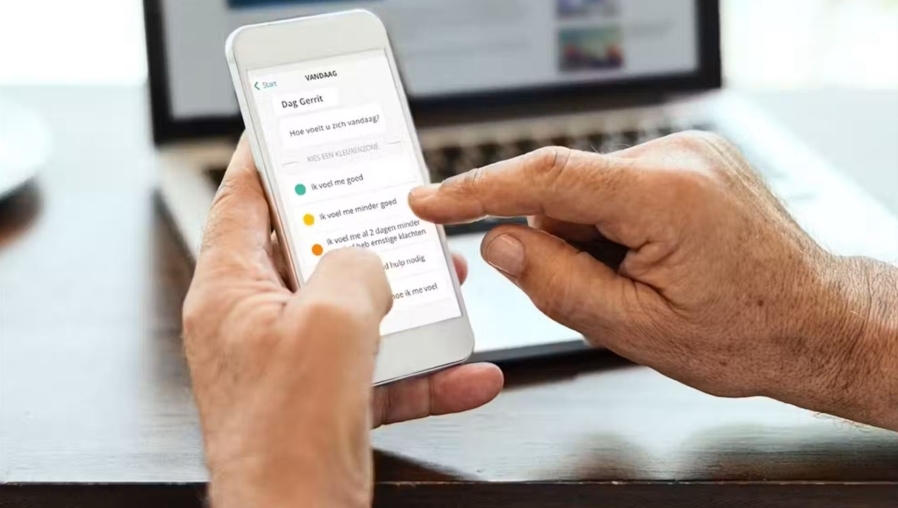
The new Copilot for COPD tool helps people with COPD to have fewer and less severe lung attacks. Developed on the basis of years of research by Yvonne Korpershoek of the Lectorate of Proactive Care for Older People Living at Home (HU University of Applied Sciences Utrecht), the tool focuses on self-management. Chris Spaan, COPD patient: ‘Self-management means understanding your disease, knowing your limits and knowing when to intervene. This improves the quality of life.’ Copilot for COPD was developed in collaboration with UMC Utrecht, Longfonds, Topicus and Digidok and will be free to use from 20 November 2024, on World COPD Day.
People with COPD often have periods when their symptoms get worse. They then start coughing more, acquire more mucus and become more stuffy. These lung attacks accelerate the deterioration of the lungs. Self-management helps to prevent this. ‘Research shows that people with lung disease can themselves influence how bad a lung attack is and how quickly they recover,’ explains Jaap Trappenburg of UMC Utrecht. Yvonne and Jaap have been doing research for years on how self-management can help people with COPD. ‘Self-management means, for example, adjusting your medication or contacting your healthcare provider on time. But it’s also about how you deal with the physical and psychological consequences of worsening symptoms.’
Traffic light model
A few years ago, they developed the COPD Lung Attack Action Plan. This paper plan works with a traffic light model to clarify the severity of symptoms and give advice. ‘The action plan is completed together with the healthcare provider,’ says Trappenburg. ‘Research showed that patients who used the plan during a lung attack were less ill and recovered two to three days faster.’
‘For someone like me, who can no longer rely completely on his lungs, this app is a huge help. It gives you more control over your own situation, which is exactly what you need with COPD.’, Chris Spaan (COPD patient).
Digital
The success of the action plan led to more. Because: ‘The fact that such a simple tool can already make a lot of difference shows that a digital tool might be able to do even more.’ Thus was born the idea for Copilot for COPD. It is important that people with COPD have as much control over their disease themselves as possible. That is why Longfonds was also involved in both the Lung Attack Action Plan and Copilot for COPD, its digital version. With Copiloot, patients can now monitor their health themselves, even if their healthcare provider does not use a digital environment. This makes the tool unique.
Copilot for COPD mainly helps to track health. In addition, the tool contains useful tips for people with COPD. Trappenburg: ‘In winter, good hygiene is extra important, especially during a flu wave. It is then better to avoid crowded places where many people cough. We teach patients these kinds of tips with the tool.’
Never lost again
‘COPD often falls between first- and second-line care. Patients sometimes don’t know who their case manager is or who they can turn to,’ says Trappenburg. ‘With this tool, they no longer have to feel lost. They can positively influence their future themselves.’
The digital tool is now available to everyone. But, says Jaap: ‘A tool is never finished. We keep improving it based on patients’ wishes and needs. That way, the tool will hopefully remain a good complement to doctor visits.’
Copilot for COPD was born out of a collaboration between HU University of Applied Sciences Utrecht, UMC Utrecht, Topicus, DigiDok and Lung Fund.
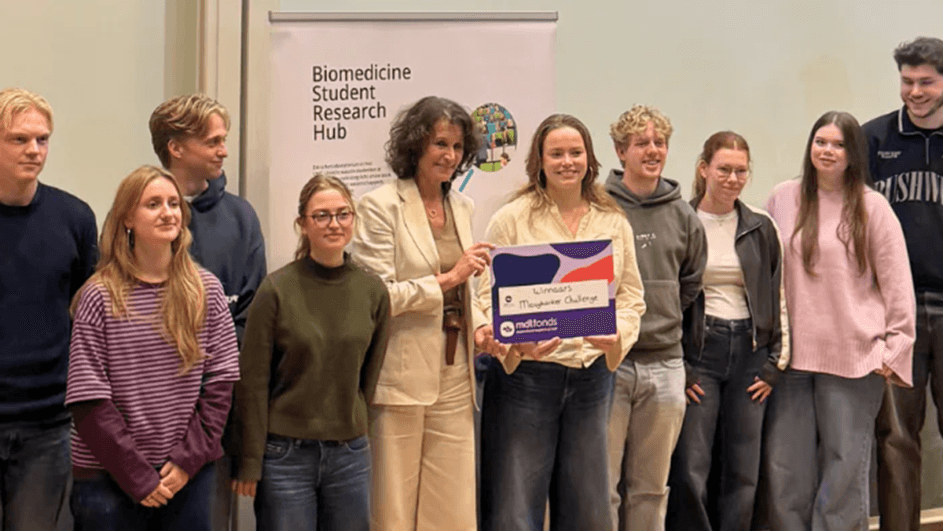
600 Students Combine Knowledge to Improve Gastric Cancer Care
How can we improve care for people with hereditary gastric cancer? This was the question that nearly 600 bachelor’s students from the Faculty of Medical Sciences explored over four weeks during the Gastric Cancer Challenge, organised by UMC Utrecht and the MDL Fonds. On 13 November, the student teams presented their 24 research proposals during the final. Three winning ideas were selected for further research, demonstrating how students can bring a fresh perspective to complex challenges in patient care.

Utrecht brings a leading international conference on Urban Health to the Netherlands
Utrecht has been selected as the host city for the 23rd edition of the International Conference on Urban Health (ICUH) in 2027. This marks the first time this leading international conference on urban health will be held in the Netherlands. The official announcement was made last night during the closing day of ICUH 2026 in Mexico City.
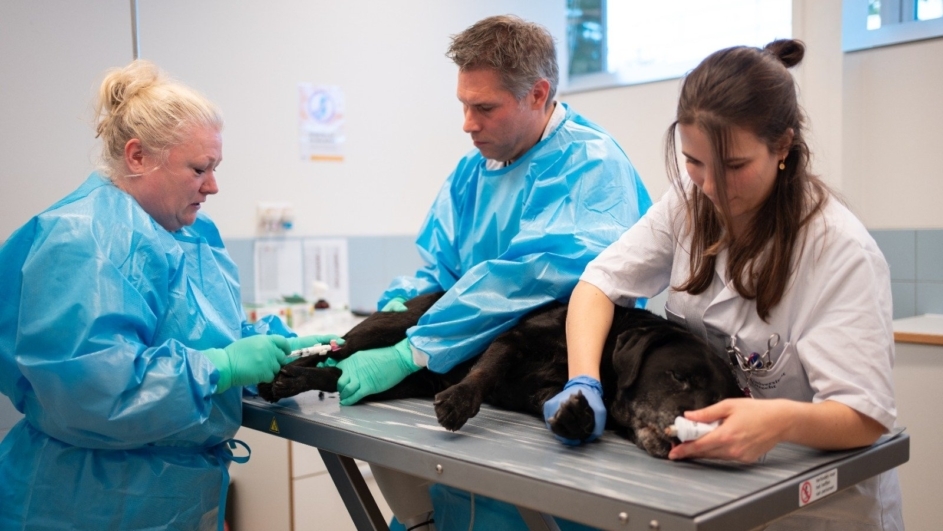
Oncological research for animals and humans
Journalist Eric Reijnen followed the treatment of Pluck, a dog undergoing chemotherapy at the University Veterinary Hospital. The story shows how factors such as the dog’s age, health and temperament, as well as the owner’s personal circumstances, are taken into account when treating cancer. Based on these considerations, vets work with the owner to draw up a suitable treatment plan.
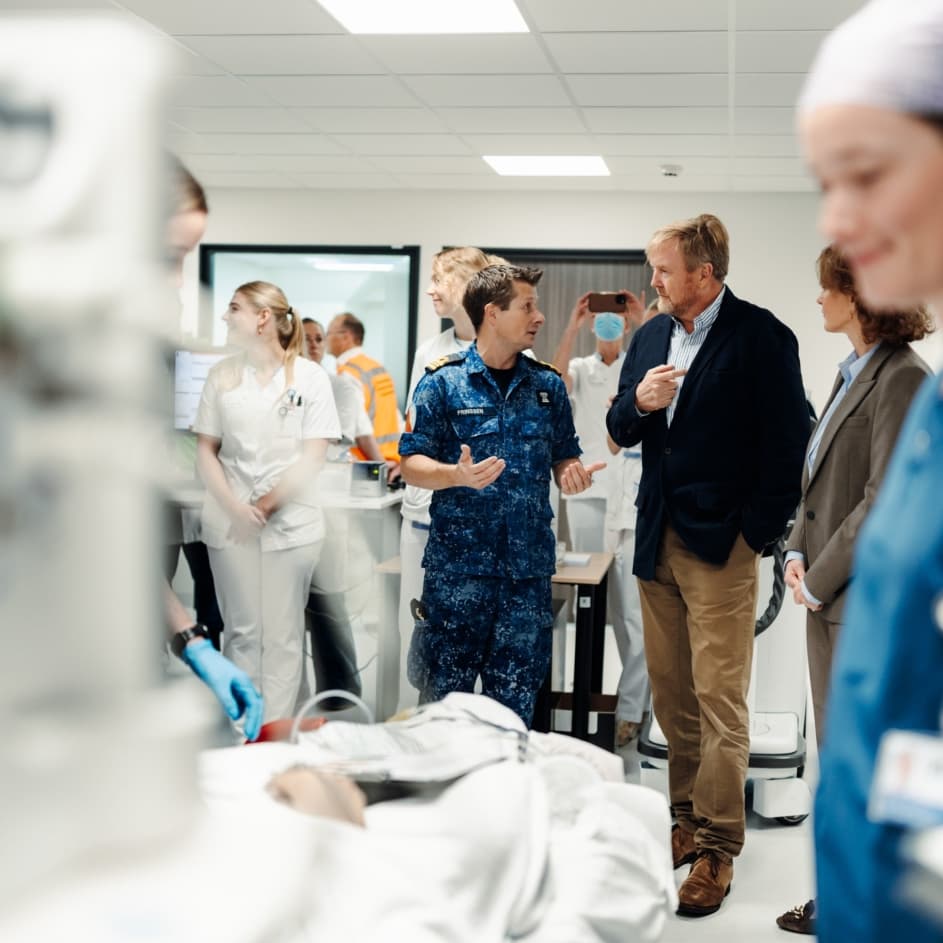
His Majesty the King visits large-scale exercise at the Major Incident Hospital at Utrecht Science Park: prepared together for major emergencies
On Saturday, October 31, a large-scale exercise took place at the Major Incident Hospital at the Utrecht Science Park. During the exercise, dubbed “Dubbelspoor” (Dual Track), the Major Incident Hospital had to respond to two major incidents almost simultaneously. In Amersfoort, a train carrying thirty injured Dutch military personnel arrived. At nearly the same time, a coach plowed into a crowd during a Halloween celebration. His Majesty the King also visited both locations, marking the 35th anniversary of the Major Incident Hospital.