Making an Impact with Immersive Reality: How HU University of Applied Sciences Utrecht Does It
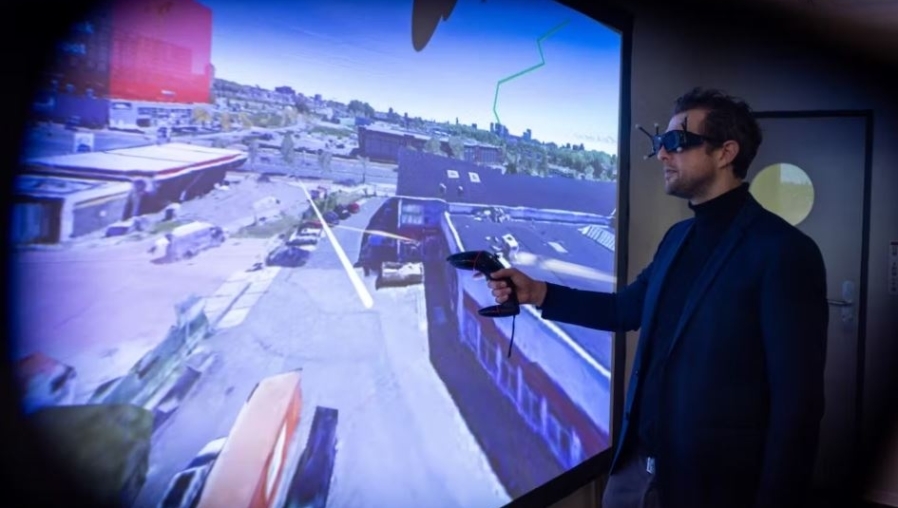
At HU, immersive realities are being built and tested. This results in unique products for our own programs, solutions for hospitals, and provinces. This article highlights three initiatives that show how immersive experiences improve education, help solve problems, and are recognized with awards and nominations.
Immersive reality is a collective term for virtual reality (VR), augmented reality (AR), and extended reality (XR). These technologies immerse users in a digital reality. With the advent of AI, the possibilities to create immersive experiences have accelerated. You’ll hear about them more often. What can you expect? Let’s show you how our experts and students apply immersive experiences.
1. Immersive experience lab
The Immersive Experience Lab is filled with technology: a projection set with four ultra-short throw projectors, trusses, and screens to create an immersive environment of 4 x 4 x 2.5 meters. In this space, immersive designers have the chance to create new worlds, like a holographic wall visualizing environmental effects in a construction process. Or, in the distant future, a digital overlay allowing a surgeon to remotely remove a tumor. These are just some examples of use cases tested and researched in the lab.
Xander Lub, Professor of Organizations in Digital Transition and lab initiator, explains: “While VR is more of an individual experience, we can create group-focused experiences in the immersive lab that respond to presence, movement, and language. People can talk about the experience together.” Projects in the lab include helping people experience neurodiversity and exploring the impact of new construction in collaboration with the Province of Utrecht.
2. Library for VR Glasses, 3D Platforms, and Robotics
De HU Bibliotheek interpreteert haar rol ruim. Ze leent niet alleen boeken uit, maar biedt ook toegang tot VR-brillen, 3D-platformen, AI-toepassingen en robotica. Via hun HUB-lab zijn al heel wat virtual, augmented en extended realities gecreëerd. Projectleider Marleen Nijhuis: “Studenten, docenten en onderzoekers weten de weg goed te vinden, het aantal bezoekers groeit jaarlijks. Ze komen voor een op maat gemaakte workshop; om VR-brillen of een robot te lenen; om onderzoek op te zetten; of voor hun afstudeer- of stageproject.” Alles voorzien van deskundige begeleiding.
The HU Library interprets its role broadly. It not only lends books, but also provides access to VR glasses, 3D platforms, AI applications and robotics. Through their HUB lab, many virtual, augmented and extended realities have already been created. Project leader Marleen Nijhuis: ‘Students, teachers and researchers know how to find their way around, the number of visitors is growing every year. They come for a tailor-made workshop; to borrow VR glasses or a robot; to set up research; or for their graduation or internship project.’ All provided with expert guidance.
3. Learn to present in front of virtual audiences
In both education and business, presenting is important. But presenting well is not only difficult, some people simply find it scary. The solution: lots of practice, but there is not enough time for that in class. That is why the lectorate Meaningful Digital Innovation wanted to train this skill with AI models, which is how Honest Mirror was born.
‘With Honest Mirror, you can practise presentations in front of a virtual audience, from whom you get real-time feedback,’ says Olivier van der Molen, one of the ICT students who collaborated on the project. ‘You can do this with VR glasses, but also with your laptop or smartphone. You place your device so that it sees your movements and hears speech, and you start presenting. If you talk too fast or barely make eye contact, for example, the virtual listeners may look away uninterested. Afterwards, Honest Mirror provides feedback for improvement.’
Many HU students are already using the app. ‘But we will also make a version available to a wider audience in 2025,’ continues Olivier, now project leader of the presentation app. ‘Because students at other (high) schools also need to learn how to present. In addition, there is interest from organisations that want to train their employees or help them overcome presentation anxiety.’ There are also plans to publish the app in several languages. And – nice detail – the project received the Computable Award and two nominations for the Unesco Prize. A nice appreciation for our work.
Getting started with immersive?
Would you like to work with our experts or students on immersive technology? Get in touch with Xander Lub.
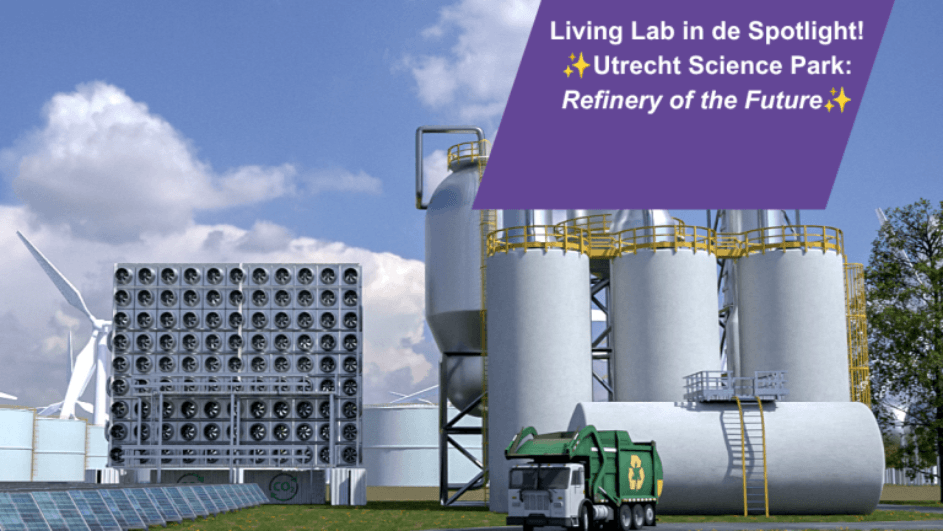
Living Lab in the Spotlight: Utrecht Science Park
Utrecht Science Park is home to several living labs focused on energy and circularity. These include Lumifield, which explores the generation and storage of solar energy, and the biogas digester, which uses organic waste as an energy source. On their own, these are already promising initiatives. Connected, they could become something much bigger: a functioning, learning model for a circular campus.
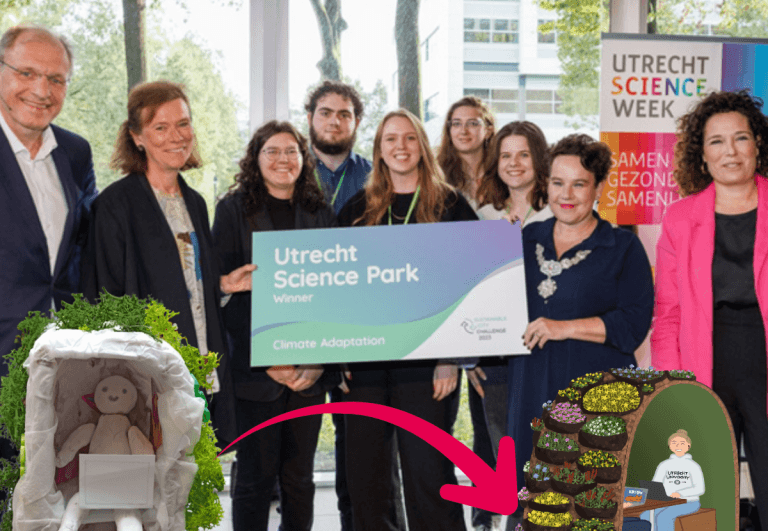
From student idea during challenge to ReGreen Hut at Dutch Design Week
On hot summer days, temperatures can rise significantly at Utrecht Science Park, while students are looking for places to study, relax and find some shade outdoors. At the same time, planting trees is not always straightforward: underground, the campus is crisscrossed by a dense network of cables and utility lines. So how can we create shade, greenery and places to relax without major changes to the ground?
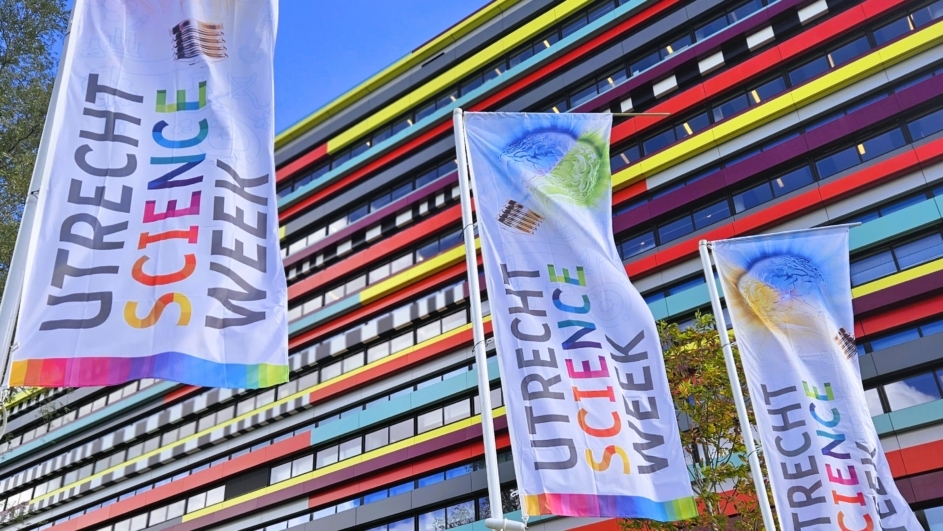
Utrecht Science Week kicks off: social and economic impact of Utrecht Science Park in the spotlight
The sixth edition of Utrecht Science Week takes place from Friday, 25 September to Sunday, 4 October. During this time, Utrecht Science Park opens its doors to the general public, showcasing how research, innovation, and collaboration lead to tangible societal and economic impact. At the same time, the week underscores the importance of sustained investment in knowledge and innovation.
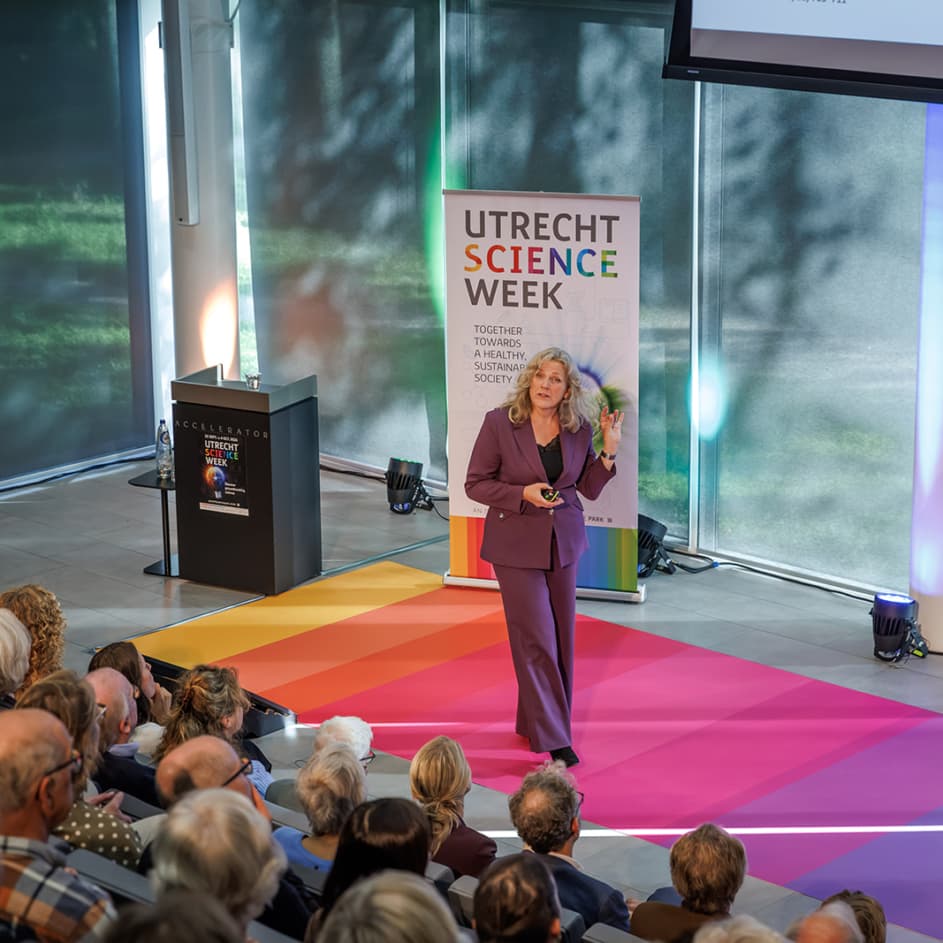
Looking back at Utrecht Science Week: research, education, and entrepreneurship in the spotlight
Utrecht Science Week 2026 has come to a close. For over a week, visitors enjoyed workshops, lectures, group discussions, and tours focused on science and innovation at Utrecht Science Park. With more than thirty program activities across over 25 locations, there were ample opportunities to experience science up close. We look back on a fantastic week that once again highlighted the essential role of collaboration, and the combination of research, education, and entrepreneurship, in addressing the societal challenges of our time.