How UMC Utrecht is encouraging staff to travel differently
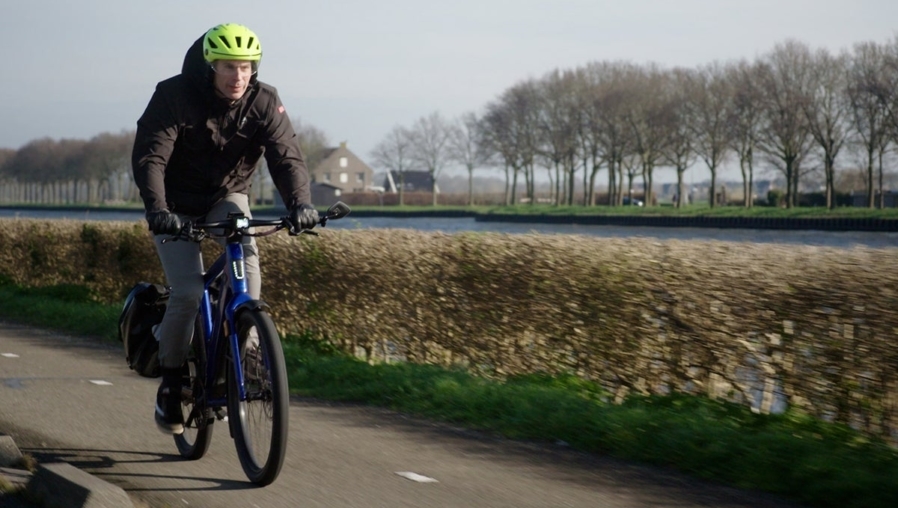
How can you ensure that employees not only travel more sustainably but that you also remain an attractive employer and contribute to the accessibility of the Utrecht Science Park? With this key question in mind, UMC Utrecht, in collaboration with mobility providers Shuttel and Hely, took on the challenge. In an era where accessibility and climate change are increasingly significant issues, the answer was clear: combine the power of experience with the right incentives.
This is how the Sustainable Transport Pilot came into being. For seven months, 300 UMC Utrecht employees voluntarily swapped their cars for more sustainable modes of transport. This was achieved by offering them numerous benefits and investigating which set of measures contributed to behavioural change. The project yielded surprising outcomes. It helped UMC Utrecht not only reduce CO2 emissions but also contribute to the health and well-being of its employees. The pilot has now been completed, and the final report has been published, with practical results and recommendations for the entire healthcare sector.
“We hope that this will make an impact on the sector. That these experiences and insights will contribute to accelerating the transition to a sustainable healthcare system and, thereby, a healthy society. And who knows, even more broadly. It’s all about our health,” says Celina Kroon, Sustainability Program Manager at UMC Utrecht.
Doing nothing is not an option
Whether you travel to UMC Utrecht by car, public transport, bicycle, or a combination of these, is very personal. Travel time, costs, and the comfort of the car are often decisive factors. Celina: “This choice depends on the type of work you do, working hours, and the options provided by UMC Utrecht. But it is also a strategic and social issue, involving the accessibility of the Utrecht Science Park, where traffic congestion is increasing significantly during the day. Additionally, as UMC Utrecht, we are committed to the Climate Act and the Green Deal for Sustainable Healthcare. Doing nothing is therefore not an option. Based on these principles, we started thinking in terms of solutions. By learning together, we discovered plenty of them.”
Pilot setup
- 300 colleagues who often travel by car, a diverse group including healthcare providers, researchers, education and support services, 29% of whom work irregular hours and shifts.
- The average travel distance of the participants is 33.2 kilometres.
- Most of the pilot participants travelled to UMC Utrecht by car/motorbike before the start of the pilot.
- Participants received 100% free public transport (with a Shuttel public transport card and Shuttel app) and a higher bicycle allowance.
- Access to Hely hubs with free (electric) shared bicycles at Utrecht Central Station, UMC Utrecht, and in Bunnik.
- Parking restrictions at certain times and a working-from-home allowance.
Learning together what works
During the pilot, there were many contact moments such as surveys, focus groups, in-depth interviews, and walk-in sessions. This way, very diverse and rich travel data was collected. Celina Kroon: “Communication was essential to learn from participants’ experiences. We asked interested participants for feedback on the setup before the start of the pilot. Thanks to this feedback, the original setup, where participants were assigned per mode of transport, was changed so that participants could indicate in the app how they wanted to travel each day. Based on feedback from the focus groups, it was also decided to open a Hely hub in Bunnik and at UMC Utrecht. By learning together what works, broad support was quickly established.”
Results: Reduction in car kilometres
- The sustainable transport pilot demonstrates that the chosen mix of measures leads to an impressive change in behaviour.
- Where previously colleagues mainly travelled to UMC Utrecht by petrol car or motorbike, during the pilot 90% of the journeys were made sustainably.
90 percent Sustainable journeys
What followed was an impressive change in behaviour and mentality. Participants made 90% of their journeys sustainably. The 300 employees discovered that sustainable travel was more comfortable than expected for many and was not only better for the environment but also for themselves. Studies conducted together with TU Delft around the pilot show that irregular working hours had little influence on participants’ attitudes and travel behaviour.
Results: More relaxation, fitter and safer
- Where many people thought that sustainable travel would be more tiring, they actually felt more relaxed when travelling by train, bus, or bicycle. It gave them the chance to let their minds wander or enjoy the surroundings.
- Another unexpected advantage was the health of the participants. By cycling or walking from the station to work more often, many felt fitter and more energetic. This not only improved their physical condition but also had a positive impact mentally.
- For evening and night shifts, public transport also offered an extra sense of safety. Instead of driving tired and with reduced concentration after a long night shift, they could now relax on the train.
Freedom of choice and flexibility
“What I like most is the breakthrough in sentiment,” says Celina. “There was resistance, but now people have become genuinely enthusiastic. Some participants said, ‘if I can park twice a month, I am completely okay with giving up my parking spot on the other days.’ This allows room for differentiation in parking policy. With so many different colleagues, it requires the organization to be flexible in its mobility offer. For this reason, we partnered with Shuttel and Hely. These providers of sustainable transport options have a lot of knowledge on this. In turn, they wanted to learn from large employers what transport options would fit. A very nice collaboration.”
Recommendations: provide travel advice
The report also provides useful recommendations, such as sharing travel tips among colleagues and offering customized travel advice as a valuable addition to the transport policy. “We already have a bicycle plan and 100% public transport reimbursement for employees at UMC Utrecht. This year, we will look at the possibilities for a public transport card to make travelling by public transport easier for colleagues,” says Celina.
Furthermore, the report offers plenty of recommendations for follow-up. There are still so many opportunities. It took some getting used to, as you have your fixed travel pattern, but by consciously choosing to do things differently now, that pattern changes. This way, sustainable travel becomes the new norm.”
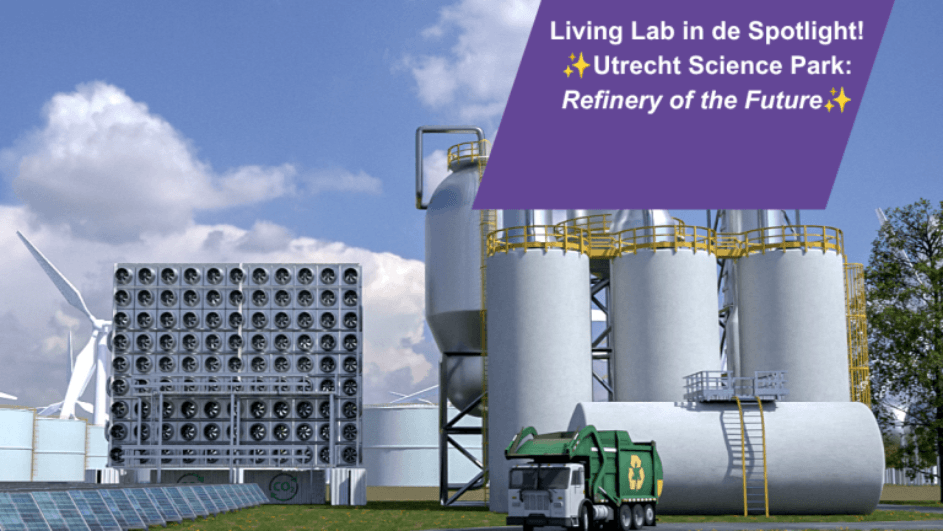
Living Lab in the Spotlight: Utrecht Science Park
Utrecht Science Park is home to several living labs focused on energy and circularity. These include Lumifield, which explores the generation and storage of solar energy, and the biogas digester, which uses organic waste as an energy source. On their own, these are already promising initiatives. Connected, they could become something much bigger: a functioning, learning model for a circular campus.
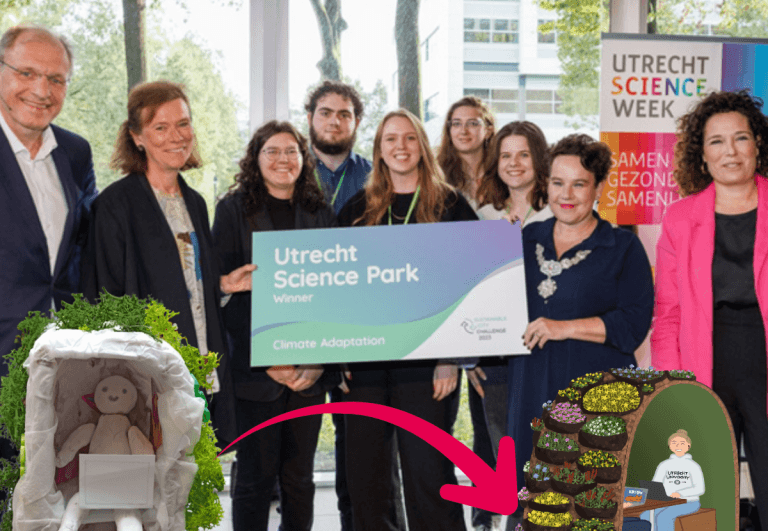
From student idea during challenge to ReGreen Hut at Dutch Design Week
On hot summer days, temperatures can rise significantly at Utrecht Science Park, while students are looking for places to study, relax and find some shade outdoors. At the same time, planting trees is not always straightforward: underground, the campus is crisscrossed by a dense network of cables and utility lines. So how can we create shade, greenery and places to relax without major changes to the ground?
Utrecht Science Week kicks off: social and economic impact of Utrecht Science Park in the spotlight
The sixth edition of Utrecht Science Week takes place from Friday, 25 September to Sunday, 4 October. During this time, Utrecht Science Park opens its doors to the general public, showcasing how research, innovation, and collaboration lead to tangible societal and economic impact. At the same time, the week underscores the importance of sustained investment in knowledge and innovation.
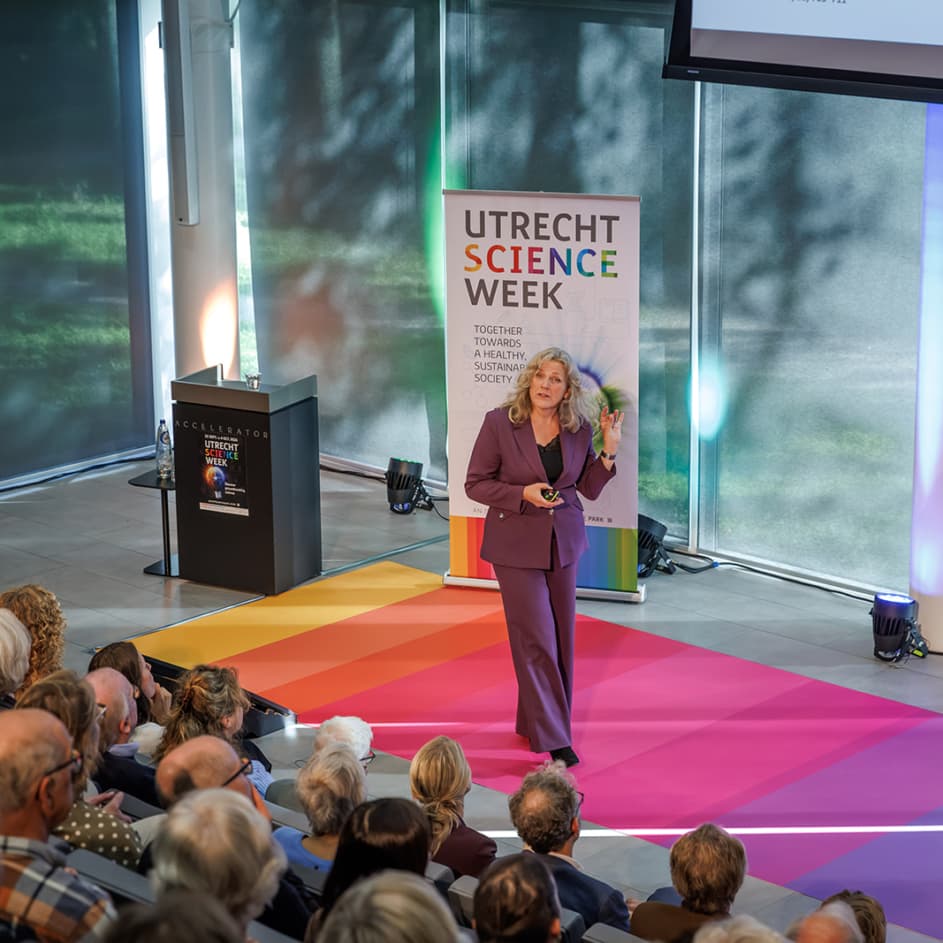
Looking back at Utrecht Science Week: research, education, and entrepreneurship in the spotlight
Utrecht Science Week 2026 has come to a close. For over a week, visitors enjoyed workshops, lectures, group discussions, and tours focused on science and innovation at Utrecht Science Park. With more than thirty program activities across over 25 locations, there were ample opportunities to experience science up close. We look back on a fantastic week that once again highlighted the essential role of collaboration, and the combination of research, education, and entrepreneurship, in addressing the societal challenges of our time.