Zebrafish protein unlocks dormant genes for heart repair
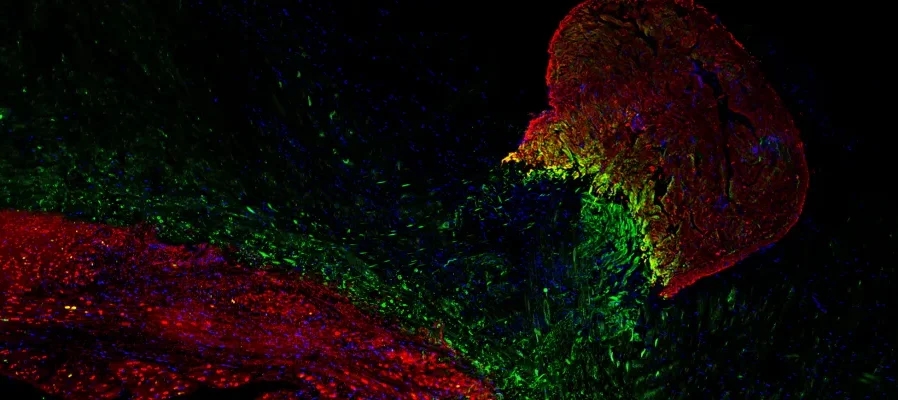
Researchers from the Bakkers group at the Hubrecht Institute have successfully repaired damaged mouse hearts using a protein from zebrafish. They discovered that the protein Hmga1 plays a key role in heart regeneration in zebrafish. In mice, this protein was able to restore the heart by activating dormant repair genes without causing side effects, such as heart enlargement. This study, supported by the Dutch Heart Foundation and Hartekind Foundation, marks an important step toward regenerative therapies to prevent heart failure. The findings were published in Nature Cardiovascular Research on January 2, 2025.
After a heart attack, the human heart loses millions of muscle cells that cannot regrow. This often leads to heart failure, where the heart struggles to pump blood effectively. Unlike humans, zebrafish grow new heart muscle cells: they have a regenerative capacity. When a zebrafish heart is damaged, it can fully restore its function within 60 days. “We don’t understand why some species can regenerate their hearts after injury while others cannot”, explains Jeroen Bakkers, the study’s leader. “By studying zebrafish and comparing them to other species, we can uncover the mechanisms of heart regeneration. This could eventually lead to therapies to prevent heart failure in humans.”
A protein that repairs damage
The research team identified a protein that enables heart repair in zebrafish. “We compared the zebrafish heart to the mouse heart, which, like the human heart, cannot regenerate”, says Dennis de Bakker, the study’s first author. “We looked at the activity of genes in damaged and healthy parts of the heart”, he explains. “Our findings revealed that the gene for the Hmga1 protein is active during heart regeneration in zebrafish but not in mice. This showed us that Hmga1 plays a key role in heart repair.” Typically, the Hmga1 protein is important during embryonic development when cells need to grow a lot. However, in adult cells, the gene for this protein is turned off.
Clearing ‘roadblocks’
The researchers investigates how the Hmga1 protein works. “We discovered that Hmga1 removes molecular ‘roadblocks’ on chromatin”, explains Mara Bouwman, co-first author. Chromatin is the structure that packages DNA. When it is tightly packed, genes are inactive. When it unpacks, genes can become active again. “Hmga1 clears the way, so to say, allowing dormant genes to get back to work”, she adds.
From fish to mammals
To test if the protein works similarly in mammals, the researchers applied it locally to damaged mouse hearts. “The results were remarkable: the Hmga1 protein stimulated heart muscle cells to divide and grow, significantly improving heart function”, says Bakkers. Surprisingly, cell division occurred only in the damaged area—precisely where repair was needed. “There were no adverse effects, such as excessive growth or an enlarged heart. We also didn’t see any cell division in healthy heart tissue”, Bouwman emphasizes. “This suggests that the damage itself sends a signal to activate the process.”
The team then compared the activity of the Hmga1 gene in zebrafish, mice, and humans. In human hearts, as in adult mice, the Hmga1 protein is not produced after a heart attack. However, the gene for Hmga1 is present in humans and active during embryonic development. “This provides a foundation for gene therapies that could unlock the heart’s regenerative potential in humans”, Bakkers explains.
What’s next?
These findings open doors for safe, targeted regenerative therapies, but there is still much work to do. “We need to refine and test the therapy further before it can be brought to the clinic”, says Bakkers. “The next step is to test whether the protein also works on human heart muscle cells in culture. We are collaborating with UMC Utrecht for this, and in 2025, the Summit program (DRIVE-RM) will begin to explore heart regeneration further.”
Heart for collaboration
This research brought together scientists from the Hubrecht Institute and beyond. It was conducted as part of the OUTREACH consortium and funded by the Dutch Heart Foundation and Hartekind Foundation. The OUTREACH consortium is a collaboration between research institutes and all academic hospitals involved in treating patients with congenital heart defects in the Netherlands. “Normally, our group only focusses on zebrafish”, says Bouwman. “But to understand how our findings could be applied to mammals, we collaborated with the Van Rooij group and Christoffels group (Amsterdam UMC), experts in mouse research. Thanks to the Single Cell Core at the Hubrecht Institute, we were able to study heart regeneration at a detailed level.”
“We’re very lucky that we were able to set up these collaborations”, Bouwman continues. “It allows us to translate discoveries from zebrafish to mice and, hopefully, eventually to humans. We are learning so much from the zebrafish and its remarkable ability to regenerate its heart.”
Publication
Cross-Species Comparison Reveals Hmga1 Reduces H3K27me3 Levels to Promote Cardiomyocyte Proliferation and Cardiac Regeneration. Mara Bouwman, Dennis E.M. de Bakker, Hessel Honkoop, Alexandra E. Giovou, Danielle Versteeg, Arie R. Boender, Phong D. Nguyen, Merel Slotboom, Daniel Colquhoun, Marta Vigil-Garcia, Lieneke Kooijman, Rob Janssen, Ingeborg B. Hooijkaas, Marie Günthel, Kimberly J. Visser, Mischa Klerk, Lorena Zentilin, Mauro Giacca, Jan Kaslin, Gerard J.J. Boink, Eva van Rooij, Vincent M. Christoffels, Jeroen Bakkers. Nature Cardiovascular Research, 2025.
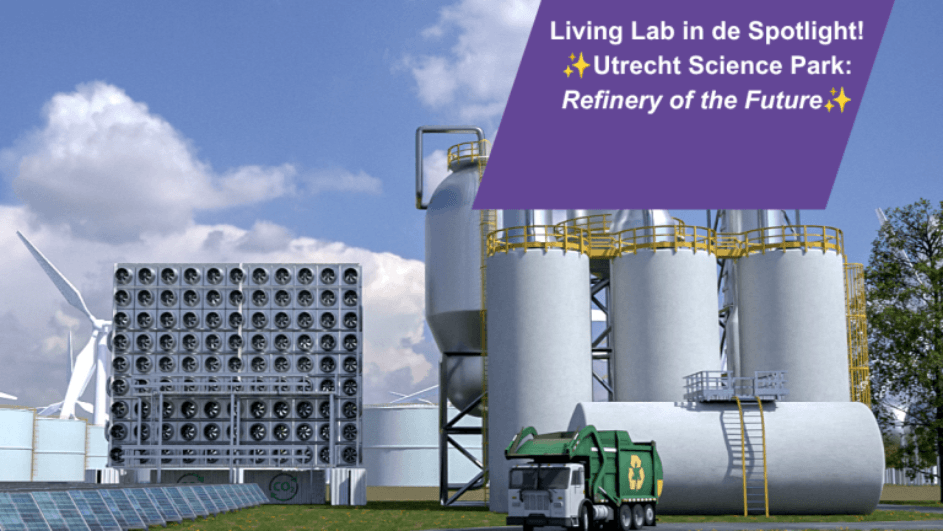
Living Lab in the Spotlight: Utrecht Science Park
Utrecht Science Park is home to several living labs focused on energy and circularity. These include Lumifield, which explores the generation and storage of solar energy, and the biogas digester, which uses organic waste as an energy source. On their own, these are already promising initiatives. Connected, they could become something much bigger: a functioning, learning model for a circular campus.
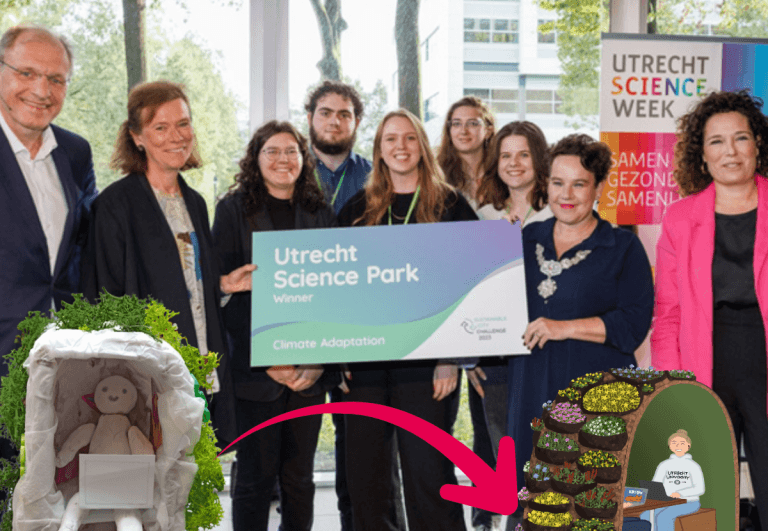
From student idea during challenge to ReGreen Hut at Dutch Design Week
On hot summer days, temperatures can rise significantly at Utrecht Science Park, while students are looking for places to study, relax and find some shade outdoors. At the same time, planting trees is not always straightforward: underground, the campus is crisscrossed by a dense network of cables and utility lines. So how can we create shade, greenery and places to relax without major changes to the ground?
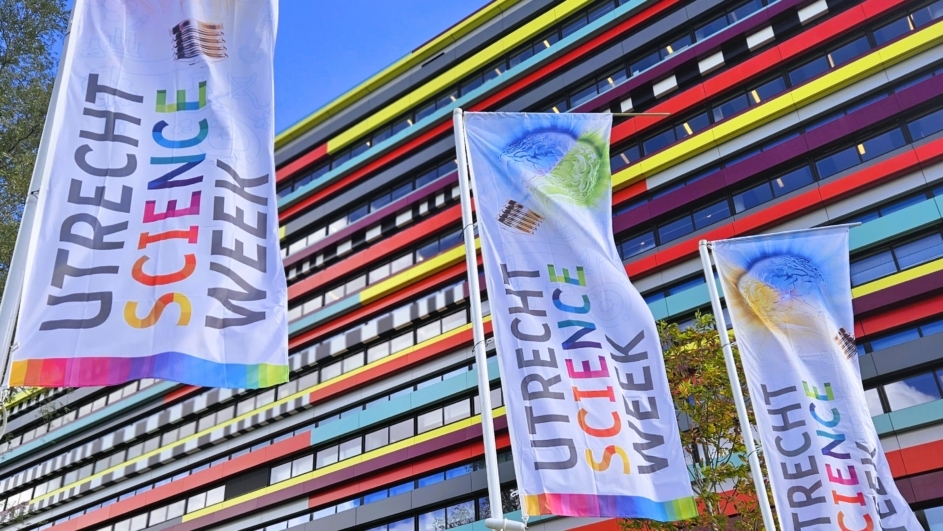
Utrecht Science Week kicks off: social and economic impact of Utrecht Science Park in the spotlight
The sixth edition of Utrecht Science Week takes place from Friday, 25 September to Sunday, 4 October. During this time, Utrecht Science Park opens its doors to the general public, showcasing how research, innovation, and collaboration lead to tangible societal and economic impact. At the same time, the week underscores the importance of sustained investment in knowledge and innovation.
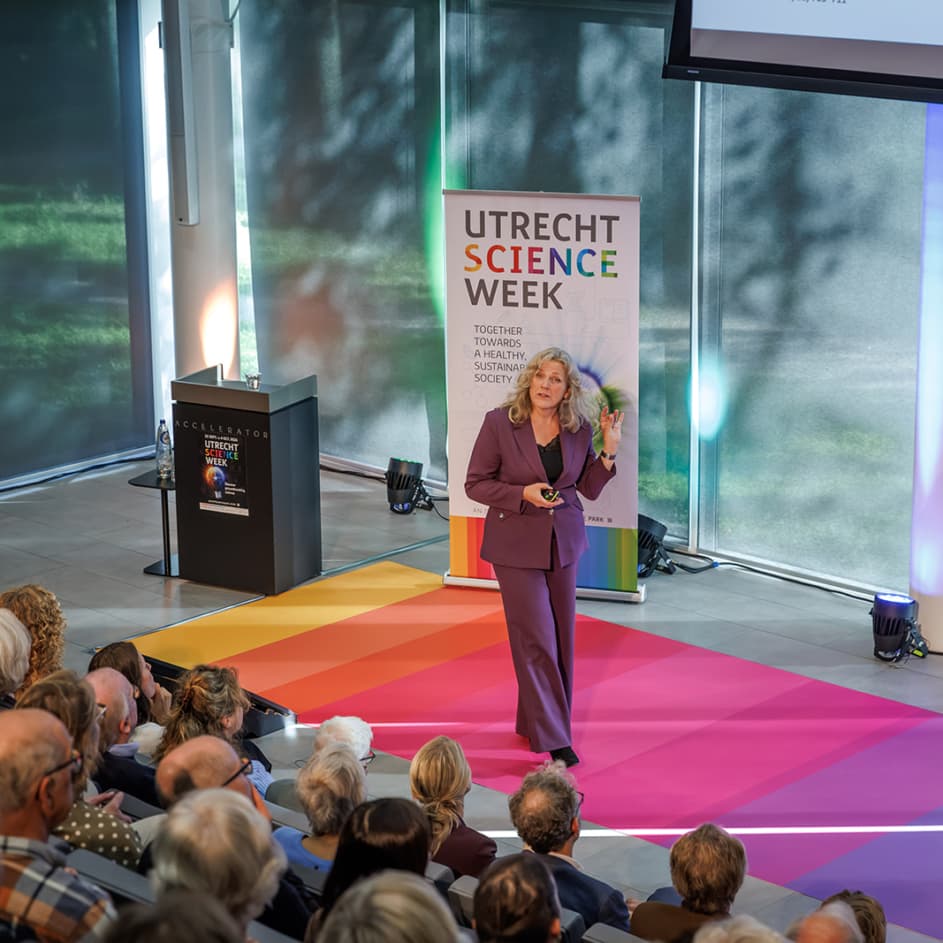
Looking back at Utrecht Science Week: research, education, and entrepreneurship in the spotlight
Utrecht Science Week 2026 has come to a close. For over a week, visitors enjoyed workshops, lectures, group discussions, and tours focused on science and innovation at Utrecht Science Park. With more than thirty program activities across over 25 locations, there were ample opportunities to experience science up close. We look back on a fantastic week that once again highlighted the essential role of collaboration, and the combination of research, education, and entrepreneurship, in addressing the societal challenges of our time.