Utrecht Science week: The Future of Veterinary Medicine Requires New Ways of Working Together
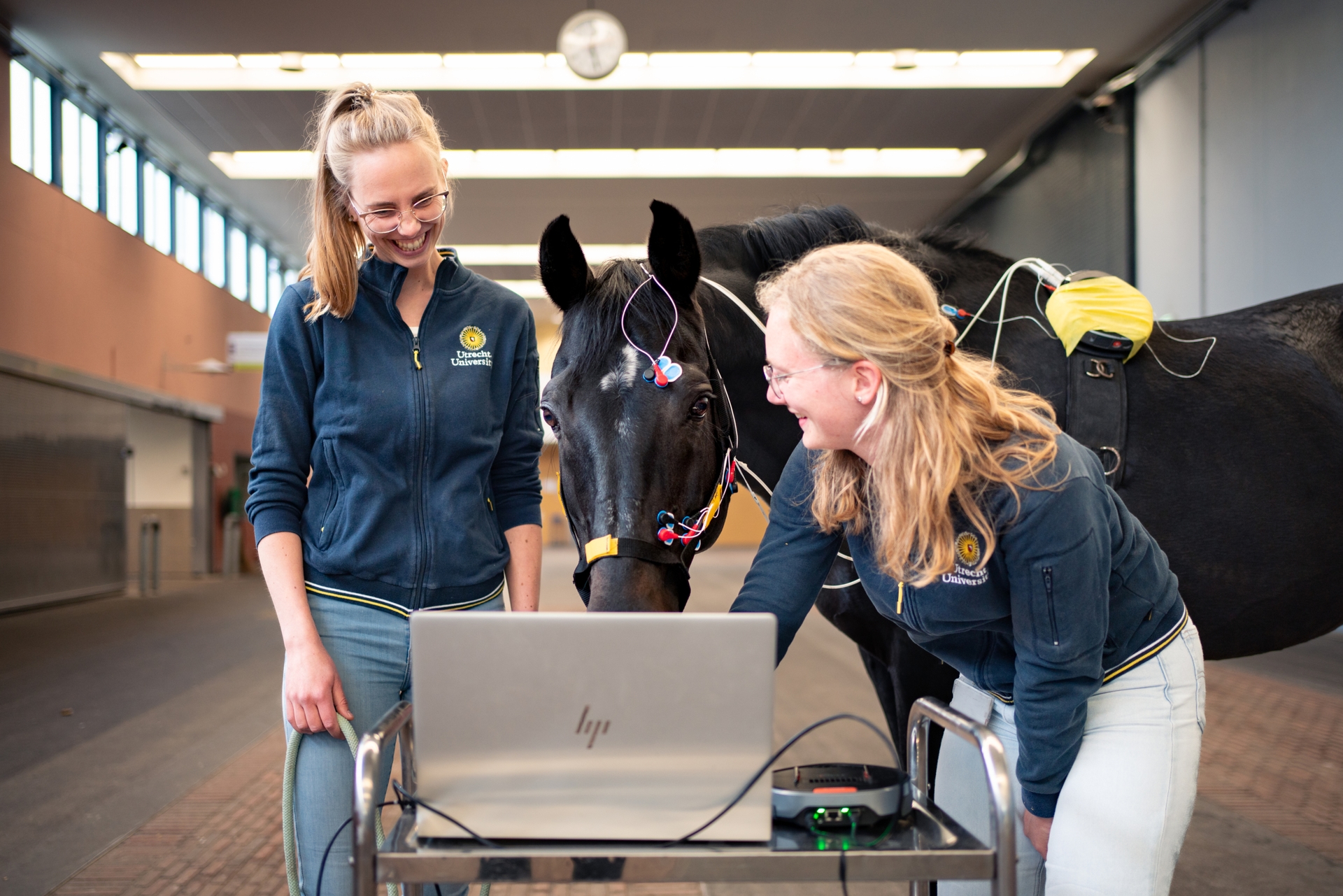
Veterinary medicine is changing rapidly. New technologies and AI are entering the field, issues surrounding animal health and welfare are becoming increasingly complex, and the labour market is under pressure. At the same time, there is a growing need for professionals who not only have up-to-date expertise, but who can continue to develop throughout their careers and collaborate across disciplines.
What will veterinary medicine look like in the future? And what does this mean for the professionals being trained to work in the field? During Utrecht Science Week, education, research and professional practice will come together to discuss these questions during the lunch dialogue The Future of Veterinary Medicine. The educational continuum from secondary vocational education (MBO) and higher professional education (HBO) to university education (WO) will be brought together with veterinary practices, wildlife rehabilitation centres and veterinary technology companies, among others.
Ahead of the dialogue, we spoke with Harold Bok, Vice Dean for Education at the Faculty of Veterinary Medicine at Utrecht University, and Ronald Vlasblom, lecturer in the 13f2 HBO Biotechnology programme and lecturer-researcher at the Innovative Testing in Health and Disease research group at HU University of Applied Sciences Utrecht. They discuss developments in veterinary medicine, the importance of collaboration between different disciplines, and what is needed to prepare professionals for the future.
What is currently happening in veterinary medicine?
Harold: Veterinary medicine is changing incredibly quickly. Healthcare is becoming more complex, new technologies and AI are entering the field, and society is placing different and higher demands on animal health, animal welfare and the quality of care. At the same time, the labour market is under considerable pressure.
For me, this means that we need to rethink how we educate professionals. We are no longer training students for a profession that will remain the same for the next 30 years. You need to be able to continue developing throughout your career. So the question is not only: what should a veterinarian or other veterinary professional be able to do upon graduation? More importantly, how do we ensure that they can continue to develop afterwards?
Why is ‘the future of veterinary medicine’ on the programme of Utrecht Science Week?
Harold: Because the future of veterinary medicine is much broader than veterinarians or veterinary education alone. Issues surrounding animal health, animal welfare, technology, sustainability and public health increasingly require collaboration between different disciplines. And here in Utrecht, we have an enormous amount of expertise gathered in one place. The interesting question is: are we making sufficient use of it?
Utrecht Science Week provides a great opportunity to step outside our existing educational programmes and structures and ask ourselves: if we look at veterinary medicine in 2030 and beyond, what professionals will we need, and how can we train them together?
Ronald: Because the future of veterinary medicine is not solely a veterinary issue; it is a multidisciplinary societal challenge. Utrecht Science Week brings together science, education, technology and professional practice. That is precisely the combination needed to accelerate the transition in veterinary medicine.
We also see that the professional field is clearly indicating that the need for future professionals extends beyond veterinary nurses and veterinarians. Biotechnologists, technicians, wildlife rehabilitation centres, the livestock sector and veterinary technology companies all play a crucial role. Utrecht Science Week is the perfect place to bring these worlds together.
What personally motivates you to help shape this future?
Harold: What motivates me most is the conviction that good education does not end when you receive your diploma. We have an excellent veterinary medicine programme in Utrecht, but in reality, the majority of your development as a professional only begins after those six years. I find those first years after graduation particularly interesting. How do we guide young professionals from being ready to start working to becoming truly independent professionals? And how do we ensure that they continue to develop afterwards?
That is why I would like to think much more in terms of a single educational continuum: from initial education to workplace learning, postgraduate development and, ultimately, lifelong learning. Increasingly, this should also involve working together with other professional groups.
Ronald: My motivation comes from working with professionals and future professionals. What I see increasingly clearly is that related areas of expertise reinforce one another in day-to-day professional practice. The boundaries between biotechnology, veterinary medicine, animal welfare and veterinary technology are becoming increasingly blurred.
Professionals work on similar issues, but they do not yet know enough about each other’s expertise. As a result, a great deal of potential remains untapped. There is enormous potential for learning from one another: biotechnologists bring precision, data skills and laboratory expertise; veterinary nurses bring practical knowledge, animal observation and continuity of care; and veterinarians bring clinical decision-making and responsibility.
Together, they form a powerful whole, but this requires better connections between education programmes and professional fields. I feel a responsibility to help make these collaborations possible: by connecting education, practice and research more effectively and by working together towards a future in which professionals strengthen one another.
What can the different educational programmes learn from one another and from professional practice?
Harold: A great deal. We still tend to think in terms of separate educational programmes. What do veterinarians, veterinary nurses and biotechnologists need to be able to do in practice? But perhaps we should turn that question around more often: what challenges are we jointly responsible for addressing, and which areas of expertise do we need to tackle them?
From there, it becomes much more logical to learn together as well. Students and professionals from MBO, HBO and WO can learn much more with and from one another, particularly around challenges arising from professional practice.
And practice is crucial in this process. Education and research bring new knowledge and innovation into practice. At the same time, professional practice keeps educational programmes focused on what professionals actually need in their day-to-day work. I would like to strengthen this exchange considerably.
Ronald: Above all, we can learn that the MBO, HBO and WO educational continuum should become a shared learning pathway. MBO programmes are strong in practice-oriented education, HBO in technology, biotechnology and hybrid learning environments, and WO in in-depth knowledge, research and clinical expertise.
By combining these strengths, we can create a continuous pathway through which professionals can enter at different stages, continue their education and retrain. In this process, professional practice can help us stay focused on what is needed now: new professional roles, additional procedures, technological skills and collaboration within multidisciplinary teams.
What would you like the dialogue to achieve?
Harold: I hope that, by the end, we will have a better shared understanding of the direction in which veterinary medicine is moving and what this means for education and professionals. And that we will break down boundaries: between MBO, HBO and WO, between different professional groups, and between education and practice.
But above all, I hope it does not remain just a conversation. It would be great if one or two concrete ideas emerge that we can actually start testing here in Utrecht. Then the lunch dialogue will not only be a conversation about the future, but also a first step towards actively shaping that future.
Ronald: It would be great if the dialogue produces three outcomes:
- A shared understanding of what the professional field will require in the near future.
- The outlines of new competencies for veterinary nurses, biotechnologists and veterinarians, as well as ideas about how these different disciplines can complement one another.
- The dialogue as a starting point for continuing to work together on these complex challenges.
Lunch Dialogue: The Future of Veterinary Medicine
On Monday 28 September 2026, Utrecht Science Week will host the lunch dialogue The Future of Veterinary Medicine. The event will bring together professionals and educators from MBO, HBO and WO, along with veterinary practices, wildlife rehabilitation centres and veterinary technology companies, among others.
Time: 12:00–14:00
Location: Stichting Utrecht Science Park, Heidelberglaan 11, Utrecht
Language: Dutch
Admission: Free, registration required
Capacity: 25 participants