New global model shows how to bring environmental pressures back to 2015 levels by 2050
A first-of-its-kind study in Nature finds that with bold and coordinated policy choices—across emissions, diets, food waste, and water and nitrogen efficiency—humanity could, by 2050, bring global environmental pressures back to levels seen in 2015. This shift would move us much closer to a future in which people around the world can live well within the Earth’s limits. “Our results show that it is possible to steer back toward safer limits, but only with decisive, systemic change,” says lead author Prof Detlef Van Vuuren, a researcher at Utrecht University and the Netherlands Environmental Assessment Agency (PBL).
The planetary boundaries framework, first introduced by an international team of scientists in 2009, defines nine critical Earth system processes that maintain the conditions under which human societies have flourished for the past 10,000 years. Crossing these boundaries increases the risk of destabilising the Earth system, pushing it into a much less hospitable state. To date, scientists estimate that six of these nine boundaries have already been crossed—those related to climate change, biosphere integrity, freshwater availability, land use, nutrient pollution and novel entities.
Coming back from the brink
This new study for the first time shifts focus to the future, exploring whether ambitious but technically feasible policies could change our trajectory. “This is the first time we’ve used a forward-looking global model to ask: how do things develop if we continue like this? Can we still avoid transgressing or come back from transgressing these boundaries? And if so, what would it take?” says Van Vuuren.
To answer these questions, the Planetary Boundaries framework was coupled to a comprehensive Integrated Assessment Model—Integrated Model to Assess the Global Environment (IMAGE)—which describes future human development and the possible impacts on the global environment. The model projected outcomes for eight of the nine planetary boundaries under different future scenarios, including those with strong environmental policy action.
Critical systems like climate and biodiversity are already outside safe limits, with most exceeding even the high-risk thresholds, indicating a looming multi-crisis scenario. Using projections for 2030, 2050, and 2100, the study shows that under current trends, all planetary boundaries except for ozone depletion are expected to be breached by 2050. “If we continue down pathways focused on national or local interests, things could deteriorate even further, emphasising the need for coordinated global action,” says Van Vuuren.
Five key measures to bend the curve
The researchers identify five measures that together could significantly reduce environmental transgression:
- Climate mitigation: Achieving the 1.5°C Paris Agreement target through aggressive reduction of greenhouse gas emissions
- Food-consumption change: A widespread shift to diets that are both healthy and good for the environment, as defined by the EAT-Lancet Commission, reaching 80% global uptake by 2050
- Reduction of food waste: Halving global food waste by reducing losses in supply chains and overconsumption
- Improved water-use efficiency: Reducing water withdrawal for energy, households, and industry by 20%, and for irrigation by 30%, to ensure environmental sustainability
- Improved nitrogen-use efficiency: Increasing nutrient-use efficiency to 70–80% in agriculture by 2050, up from 50% today
Combined, these measures could return the pressure on our planet to roughly that of 2015—a marked improvement over business-as-usual projections and a crucial step toward ensuring long-term human wellbeing while staying within the Earth’s limits.
Strong action needed
The study also shows it is possible to bring some of the planet’s systems back into the “safe zone” by 2050 if strong policies are put in place. However, for other systems, even the most ambitious efforts may not be enough by then, and we would still be exceeding safe limits. “To ensure a livable planet in the long run, even stronger actions will be needed beyond 2050,” says Van Vuuren.
The authors caution that the assumptions behind these scenarios are ambitious. “Systems are slow to change and we’re modelling near-universal shifts—like widespread dietary changes— which may be overly optimistic given current global trends,” they note.
“Nonetheless, the message is clear. We can still bend the curve,” says Van Vuuren. “While we can’t fully avoid all overshoot, we can come much closer to living within planetary boundaries. That makes a big difference.” In other words, he adds, “The planet is seriously ill, but it’s certainly not terminal yet.”
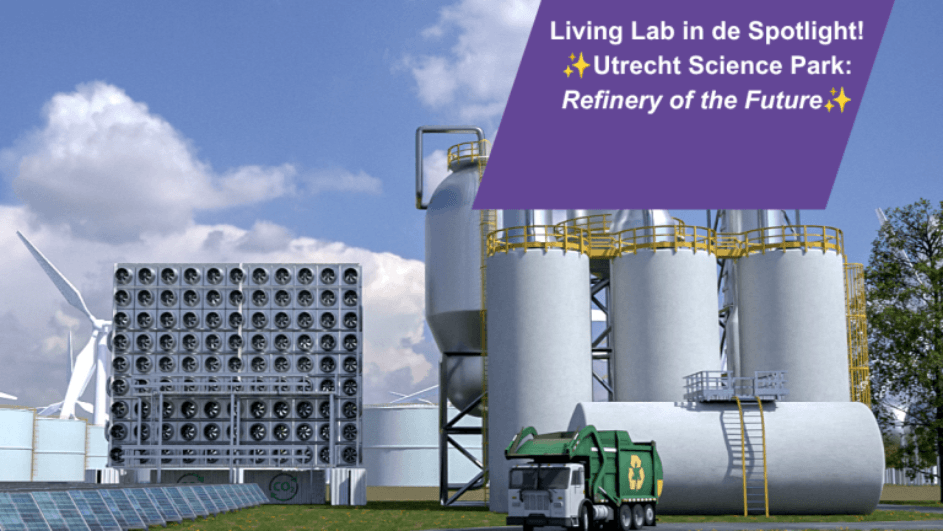
Living Lab in the Spotlight: Utrecht Science Park
Utrecht Science Park is home to several living labs focused on energy and circularity. These include Lumifield, which explores the generation and storage of solar energy, and the biogas digester, which uses organic waste as an energy source. On their own, these are already promising initiatives. Connected, they could become something much bigger: a functioning, learning model for a circular campus.
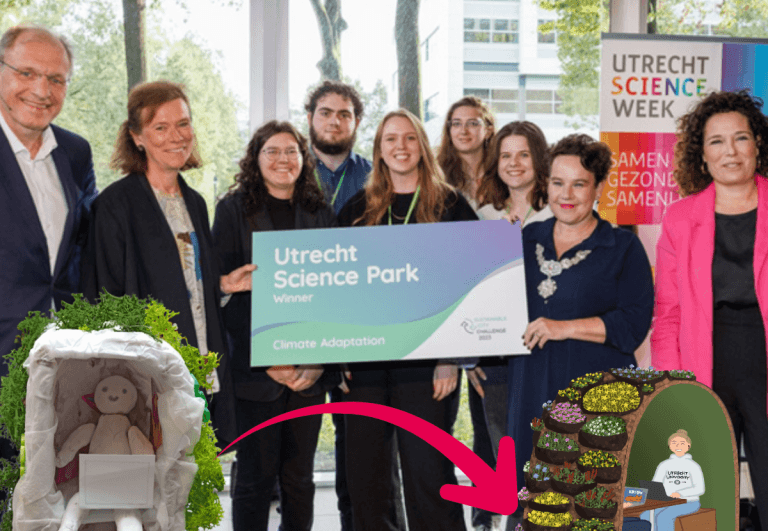
From student idea during challenge to ReGreen Hut at Dutch Design Week
On hot summer days, temperatures can rise significantly at Utrecht Science Park, while students are looking for places to study, relax and find some shade outdoors. At the same time, planting trees is not always straightforward: underground, the campus is crisscrossed by a dense network of cables and utility lines. So how can we create shade, greenery and places to relax without major changes to the ground?
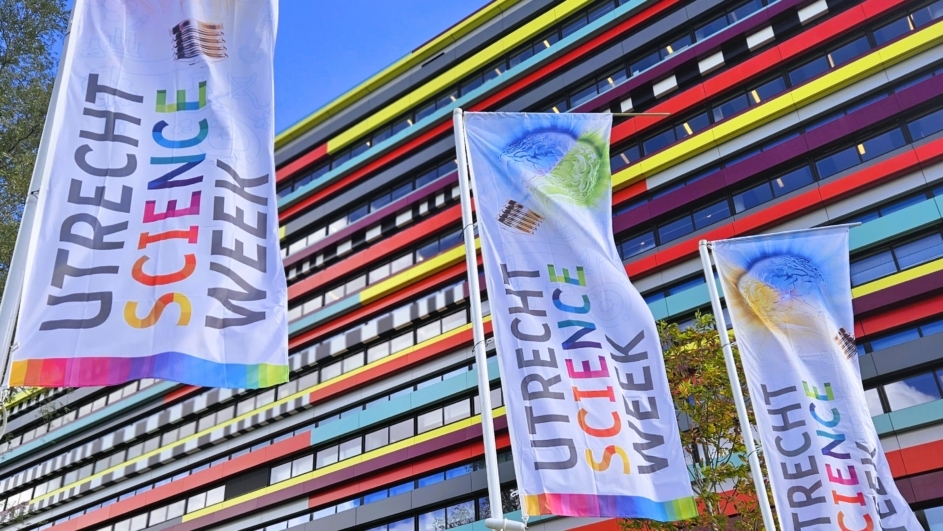
Utrecht Science Week kicks off: social and economic impact of Utrecht Science Park in the spotlight
The sixth edition of Utrecht Science Week takes place from Friday, 25 September to Sunday, 4 October. During this time, Utrecht Science Park opens its doors to the general public, showcasing how research, innovation, and collaboration lead to tangible societal and economic impact. At the same time, the week underscores the importance of sustained investment in knowledge and innovation.
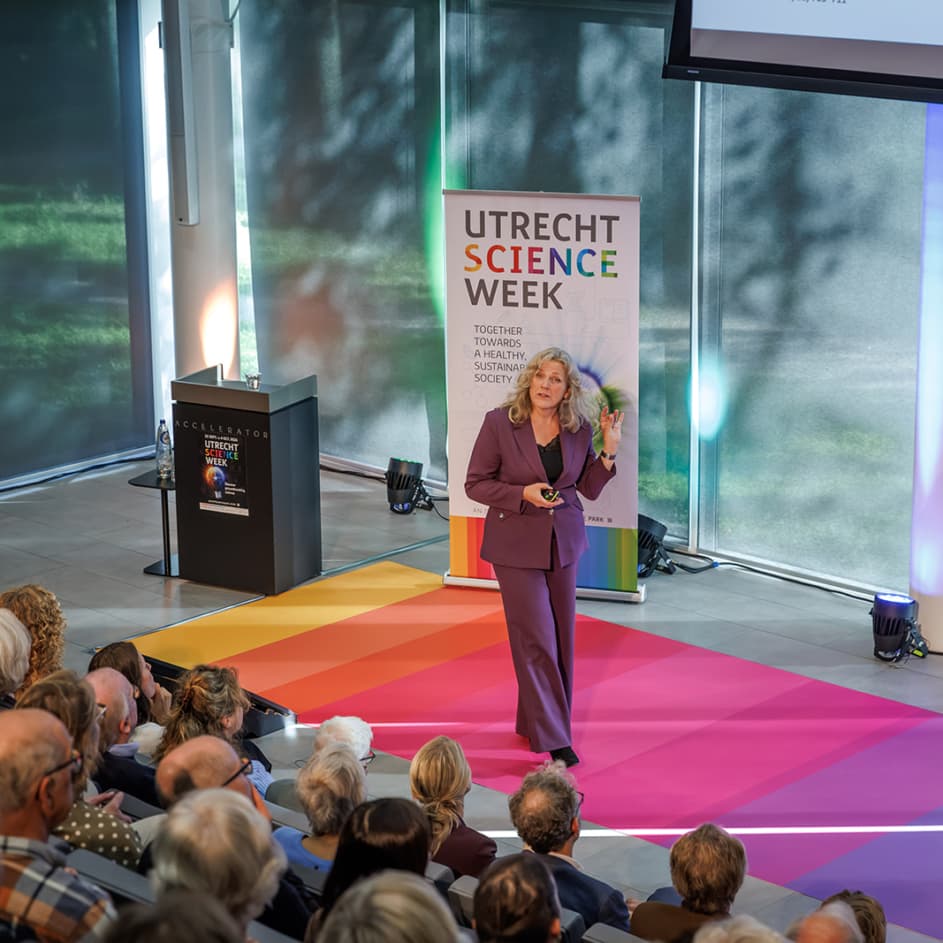
Looking back at Utrecht Science Week: research, education, and entrepreneurship in the spotlight
Utrecht Science Week 2026 has come to a close. For over a week, visitors enjoyed workshops, lectures, group discussions, and tours focused on science and innovation at Utrecht Science Park. With more than thirty program activities across over 25 locations, there were ample opportunities to experience science up close. We look back on a fantastic week that once again highlighted the essential role of collaboration, and the combination of research, education, and entrepreneurship, in addressing the societal challenges of our time.