Green walls can combat urban heat and help biodiversity
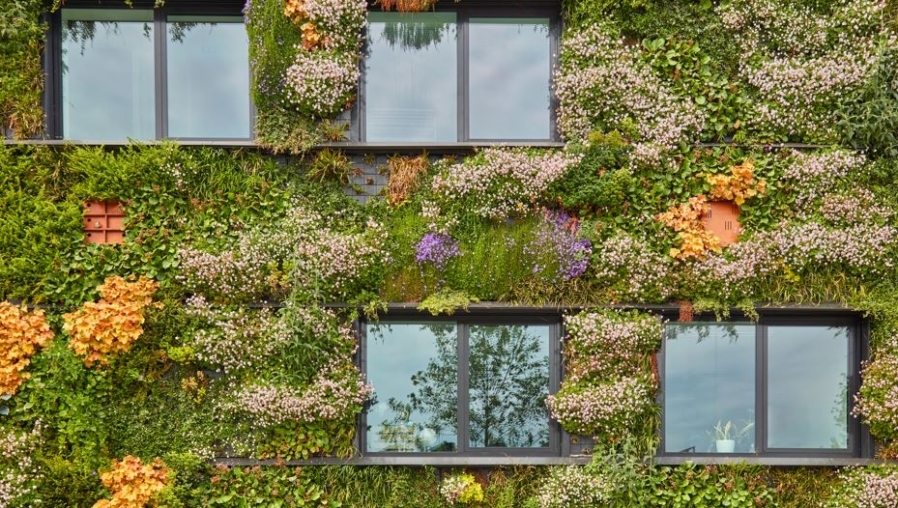
Plant-covered facades can help cool cities and boost biodiversity, a new study now confirms. The study systematically compares these ‘green walls’ with bare walls and natural cliffs. The research was led by Utrecht University ecologist Katharina Hecht, Utrecht University, and published in the journal Building and Environment. “Green walls can be much more than just a decorative trend.”
Plant-covered facades help cool urban areas and provide habitats for plants, birds, insects and other organisms. An international team of researchers draws this conclusion after systematically comparing green walls, bare walls, and natural cliffs.
“Green walls can be much more than just a decorative trend”, says Katharina Hecht. Up until now, construction companies and authorities promoting green walls have lacked hard evidence for their claims. Hecht’s study now sheds light on how much these lush, green walls boost biodiversity and under what conditions in addition to reducing urban heat.
Collaborative effort
The research was a collaborative effort, bringing together researchers from Utrecht University, including microbiologist Han Wösten, the Resilient and Inclusive Cities Lab at Singapore’s Nanyang Technological University, led by Perrine Hamel, and the Singapore-based company bioSEA, led by Anuj Jain. Together, they analysed a total of 20 walls in Singapore’s urban environments.
Cooler surface
Green walls were shown to significantly reduce air temperatures around buildings. Researchers found daytime cooling effects of up to 0.6 – 0.7 degrees Celsius between the front and back side of green walls.
“This might sound like a small difference,” says Hecht. “But in the context of urban heat, even small reductions can lower energy costs, and make buildings more comfortable to life and work in.” With more and more green walls being built, this cooling effect can contribute to mitigating the urban heat island phenomenon. “It also helps improve overall climate resilience in cities.”
More biodiversity
Biodiversity benefits were also significant: green walls hosted over 100 animal species, including insects, spiders, and birds. These numbers far surpass the number of species typically found on non-vegetated walls, which are only a handful.
Natural cliffs
Hecht’s team also mapped natural cliffs in urban environments, to see how a natural ‘wall’ would attract more biodiversity than man-made walls. Overall, natural cliffs supported slightly higher biodiversity levels.
“This shows that we can learn from nature’s design strategies to enhance man-made green walls,” says Hecht. While there is still room for improvement, she emphasizes that green walls serve as a vital alternative to natural cliffs in urban areas. “They provide valuable habitats in places that would otherwise be inhospitable for many species.”
Stepping stones
Building green walls is just the start, Hecht warns. For these walls to reach their full potential, the surrounding environment plays a crucial role. “What I found really interesting to confirm in our study is how important trees and other vegetation are,” she says. “The crowns of nearby trees and patches of greenery serve as stepping stones. They allow bees, bugs, and even small birds to hop from tree to tree, and eventually reach the green walls.”
Without this surrounding greenery, green walls may struggle to attract diverse species, limiting their ecological impact. “It’s about creating an ecological network,” says Hecht. “Green walls work best when they’re part of a bigger system of urban biodiversity.”
Temperate climates
While this study focused on Singapore’s tropical climate, Hecht believes the findings are applicable to temperate climates as well, including the Netherlands. “The principles would be similar”, says Hecht. “Although we would need to tailor the plant species and specific designs to the local biodiversity and weather conditions.” For instance, temperate climates often see mosses, perennials and local climbers to naturally colonize walls, which could influence the types of species that thrive on green walls.
The Netherlands, with its growing number of green infrastructure projects, could be an ideal setting for further research on green walls, says Hecht.
Follow-up project
She points out that creating networks of green spaces, as highlighted in her study, is just as critical in temperate regions to ensure that green walls function effectively as habitats. Earlier studies in the Netherlands, by students from Utrecht University, have already shown promising signs. But Hecht emphasizes that more empirical research is needed to confirm the potential of green walls to enhance biodiversity and climate resilience in northern Europe.
Hecht is already working on a follow-up project through Utrecht University’s Pathways to Sustainability programme. Her team is developing a digital system that collects data on the benefits of green walls and other sustainable building designs from various climates and locations, making it easier to link and compare results.
Student kicked off the project
The foundation of this research was laid by Leanne Haan, a Master’s student at Utrecht University. She conducted the initial fieldwork in Singapore. Haan spent eight months in Singapore collecting data, trekking through urban parks, and analysing green walls to gather the data that kicked off the project. Not only did this lead to critical data for the research project, it also established the collaborative framework with the Singapore-based researchers and organizations. Haan’s work was under co-supervision of Anuj Jain (bioSEA), Jaco Appelman (Utrecht University) and Katharina Hecht.
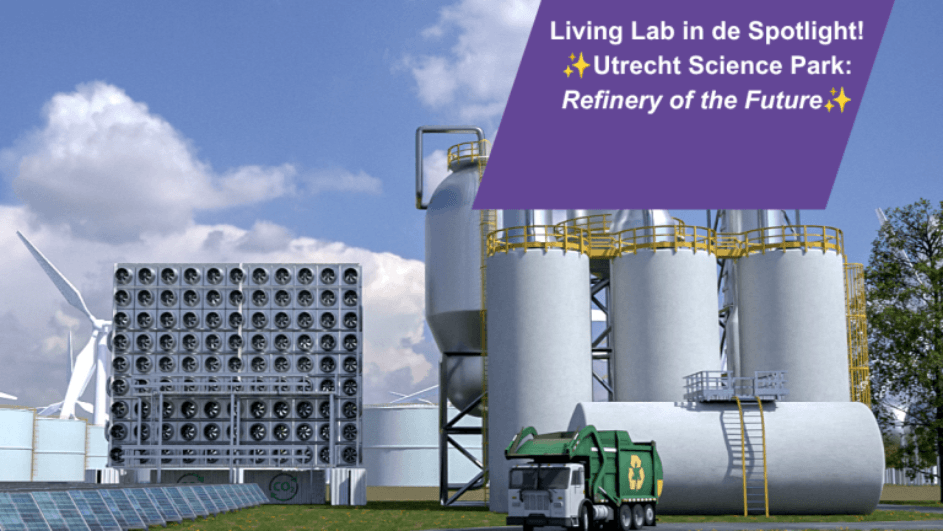
Living Lab in the Spotlight: Utrecht Science Park
Utrecht Science Park is home to several living labs focused on energy and circularity. These include Lumifield, which explores the generation and storage of solar energy, and the biogas digester, which uses organic waste as an energy source. On their own, these are already promising initiatives. Connected, they could become something much bigger: a functioning, learning model for a circular campus.
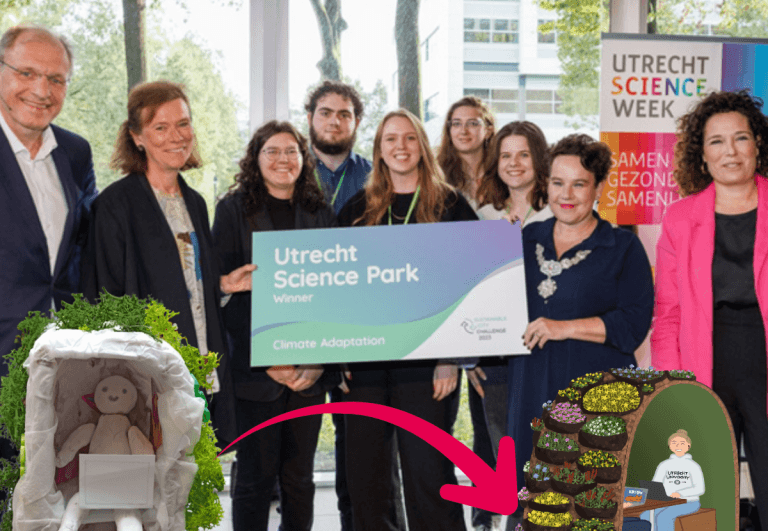
From student idea during challenge to ReGreen Hut at Dutch Design Week
On hot summer days, temperatures can rise significantly at Utrecht Science Park, while students are looking for places to study, relax and find some shade outdoors. At the same time, planting trees is not always straightforward: underground, the campus is crisscrossed by a dense network of cables and utility lines. So how can we create shade, greenery and places to relax without major changes to the ground?
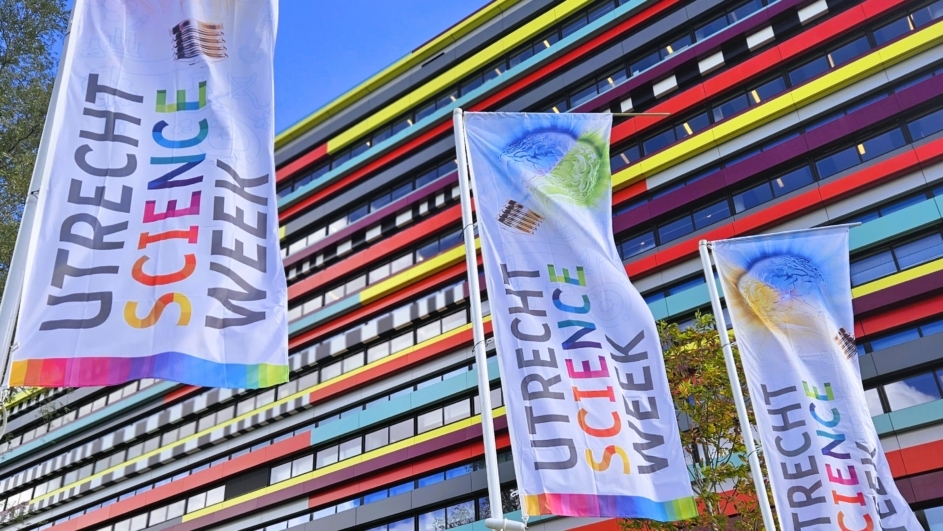
Utrecht Science Week kicks off: social and economic impact of Utrecht Science Park in the spotlight
The sixth edition of Utrecht Science Week takes place from Friday, 25 September to Sunday, 4 October. During this time, Utrecht Science Park opens its doors to the general public, showcasing how research, innovation, and collaboration lead to tangible societal and economic impact. At the same time, the week underscores the importance of sustained investment in knowledge and innovation.
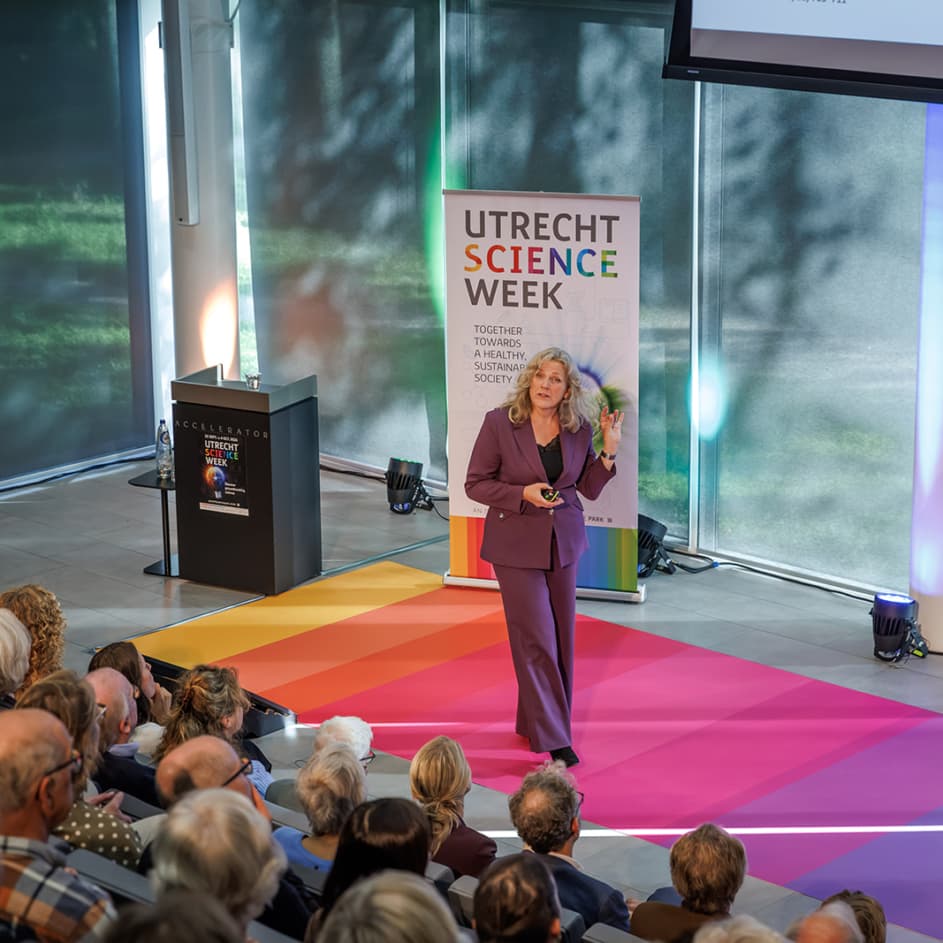
Looking back at Utrecht Science Week: research, education, and entrepreneurship in the spotlight
Utrecht Science Week 2026 has come to a close. For over a week, visitors enjoyed workshops, lectures, group discussions, and tours focused on science and innovation at Utrecht Science Park. With more than thirty program activities across over 25 locations, there were ample opportunities to experience science up close. We look back on a fantastic week that once again highlighted the essential role of collaboration, and the combination of research, education, and entrepreneurship, in addressing the societal challenges of our time.