First matches made on online platform for lab materials LABEXUSP: from worthless to valuable
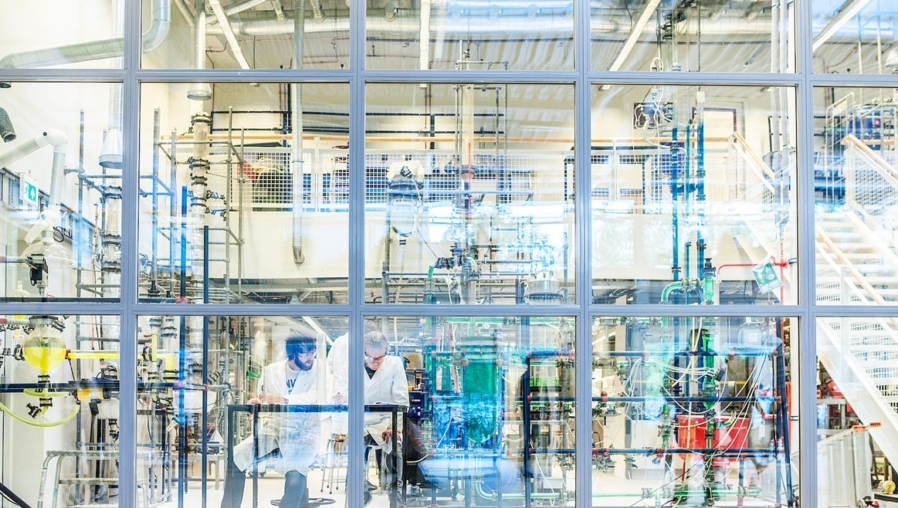
The Utrecht Science Park has a large number of laboratories containing a large amount of equipment, chemicals and disposables, which are used intensively. But when that is not (or no longer) the case, because a project has been completed, for example, those equipment and materials can still be very useful to fellow researchers or partners. In order to bring supply and demand together to encourage a more circular use of laboratory materials, the Laboratory Exchange Platform for the Utrecht Science Park (LABEXUSP) has been developed: a digital platform for equipment, chemicals and disposables. Currently, the platform is still in its pilot phase. Debóra van Ekeris and Judith Hendriks were one of the first with a match on the platform and are happy to share their experience.
Debóra Ekeris
Debóra, what do you do for work?
I work as a technician at Utrecht University, within the Department of Chemical Biology and Drug Discovery (CBDD). Here I am responsible for the management of the biological laboratories (orders, repair equipment, etc.) as well as working a lot on production and purification of proteins.
What equipment have you taken over and what will you do with it?
We have taken over cell culture plates, Spinfilters, Deepwell plates, Syringes, filters, needles. These items all go into the usage stock and will be used in our labs in the coming months.
What do you hope to find or offer on LABEXUSP in the future?
I mainly hope to find plastics that should no longer be used within companies (e.g. due to expiry date) and are otherwise thrown away. And still usable items that I find unused in cabinets during lab cleaning, I will certainly also offer via LABEXUSP. Hoping to make someone happy with it.
‘After this first match, a second one has already followed. I hope to collect the items soon.’
Judith Hendriks
Judith, what do you do for work?
I am a research analyst at Animals in Science and Society (DWM) in the Faculty of Veterinary Medicine. And I do analyses related to animal welfare issues associated with chronic stress. And as a member of the Veterinary Medicine Green Team, I enjoy participating in the LABEXUSP pilot.
What equipment did you offer?
I offered several items, such as lifting platforms, plateshaker, heat plate, racks, film cassettes. I had found the plateshaker a few years ago while moving a lab. The shaker still looked new, only on top there was a wire broken which could possibly be easily fixed (see photo). I thought it was a waste to throw away and to my surprise, within hours I had a match on lifting platforms and a plateshaker.
What do you hope to find in the future?
I recently broke a 3-litre Erlenmeyer flask. So if that is on there soon I would be very happy.
‘I think LABEXUSP is great for keeping a regular eye on and knowing what’s on it before buying something new.’
Next steps
It is good to see that the first matches have been made and results of the pilot are positive so far. Besides being able to look around, you can also actively let users know that you are in need of specific equipment or materials. In this way, supply and demand are optimally brought together. Partly in view of the successful matches already achieved in the pilot phase, it has been decided to continue LABEXUSP in its final form next summer. Then it will also be possible for other organisations at the Utrecht Science Park to join the platform.
It is wonderful to see that this collaboration of partners at the Utrecht Science Park is leading to sustainability of the labs on the Utrecht Science Park.
Interview: Thomas Hoogeboom on the future of Mobility & Health
Healthcare in the Netherlands is at a turning point. The new Societal Impact Platform Mobility & Health aims to connect knowledge and expertise across research disciplines, organizations and societal partners. We spoke to Thomas Hoogeboom, Professor of Physiotherapy Sciences and initiator of the platform, about the importance of mobility for health, the value of collaboration and what to expect from the kick-off during Utrecht Science Week.

How UtrechtInc. helps startups grow
From a promising idea to a startup: getting there takes more than a good idea. UtrechtInc is a startup incubator that supports students, researchers and entrepreneurs in the Utrecht region during the early stages of their startup. Through validation programmes, personal guidance and a network of experts and investors, UtrechtInc helps founders develop and test their ideas.

The new sports season at Olympos has kicked off again
The holidays are over, and the sports season has kicked off again! With packed schedules and tight deadlines, it is tempting to just keep working. Before you know it, you’ve spent hours in front of your screen or in the lab without taking a real break. Especially when things are busy, physical activity can help you unwind and gain new energy and inspiration.

Opening Utrecht Science Week with keynote by Juliette Legler on the hidden influence of environmental chemicals
On Friday, September 25, the annual science festival ‘Utrecht Science Week’ kicks off once again at Utrecht Science Park. We are pleased to announce that this year, Prof. Dr. Ir. Juliette Legler will deliver the Utrecht Science Lecture. Juliette Legler is Professor of Toxicology at the Faculty of Veterinary Medicine at Utrecht University and leads the ‘One Health Toxicology’ group at the Institute for Risk Assessment Sciences (IRAS).