Ureka Mega Challenge winner: communicating despite locked-in syndrome
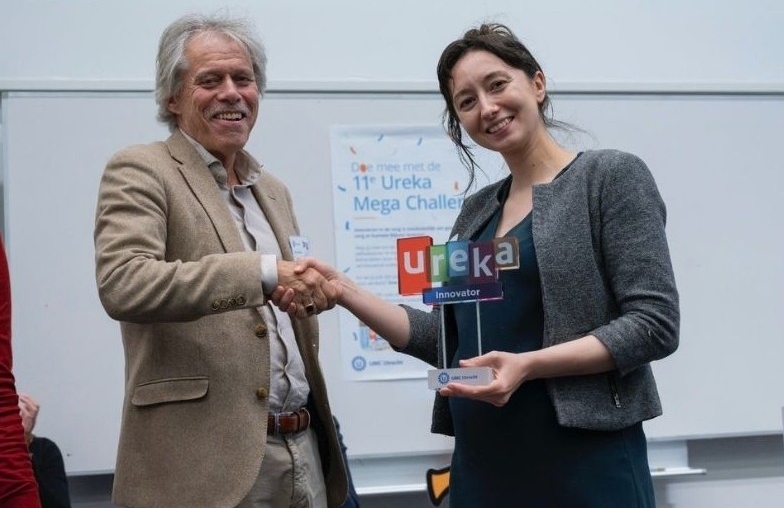
During Utrecht Science Week, the innovative project Alphabet won the Ureka Mega Challenge 2025. The digital solution helps people with locked-in syndrome communicate again and represents a major step forward in healthcare.
This innovative idea isn’t just sitting idle. It’s being truly transformed into an improvement for patients. Julia Berezutskaya of UMC Utrecht won the Ureka Mega Challenge 2025 with “Alphabet.” Congratulations!
With Alphabet, Julia and her team developed a digital solution for patients with locked-in syndrome (ALS, CVA, MS, brain trauma). People with this neurological condition are often completely paralyzed, but they do retain consciousness. They communicate, for example, through eye movements. People who aren’t completely locked-in, but have very limited communication, also benefit from this solution.
“Brain implants are now available that can record the signals the brain emits. Converting these signals into understandable text or instructions is still very difficult,” says Julia. “Alphabet is a major step forward in translating signals beyond just yes or no, for example. They can issue more commands, converting the patient’s thoughts into words or sentences. This allows patients to reconnect with the people around them and, for example, control appliances in their homes.”
Delighted with recognition and reward
Julia Berezutskaya is surprised, but especially thrilled, that Alphabet has been recognized and rewarded. “It makes me proud, because we know exactly what our patients need. That’s unique, and we want to realize this idea. With the award, we will take the next steps: protect our intellectual property and do everything we can to make our idea a success. We believe we will be ready to bring this innovation to market in five years.” Alphabet is therefore also being renamed: UCANACT. Julia and her team will receive €50,000 to continue their research.
About the Ureka Mega Challenge
The Ureka Mega Challenge is a unique, competitive challenge organized by UMC Utrecht during Utrecht Science Week. Innovation is key! Those who generate good ideas are given the opportunity to expand their research. This way, they contribute to improving care for patients, healthcare professionals, and/or society as a whole. Further development and implementation of good ideas is encouraged, facilitated, and partially funded.
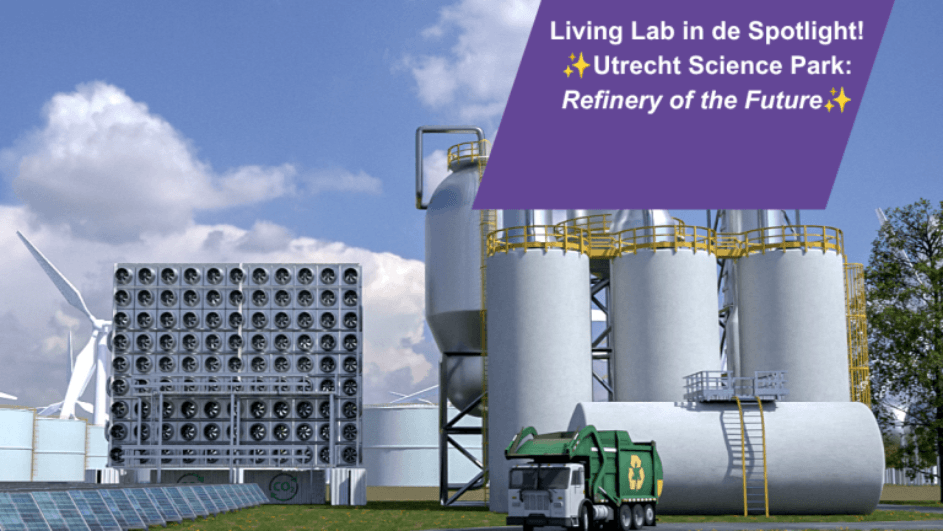
Living Lab in the Spotlight: Utrecht Science Park
Utrecht Science Park is home to several living labs focused on energy and circularity. These include Lumifield, which explores the generation and storage of solar energy, and the biogas digester, which uses organic waste as an energy source. On their own, these are already promising initiatives. Connected, they could become something much bigger: a functioning, learning model for a circular campus.
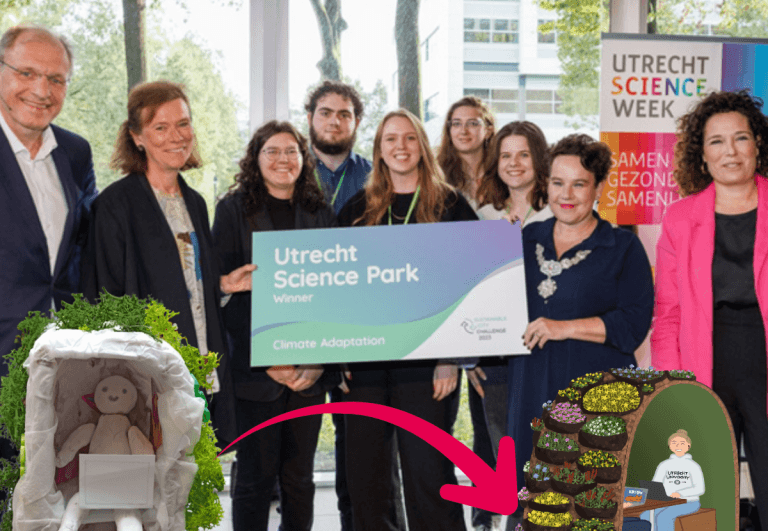
From student idea during challenge to ReGreen Hut at Dutch Design Week
On hot summer days, temperatures can rise significantly at Utrecht Science Park, while students are looking for places to study, relax and find some shade outdoors. At the same time, planting trees is not always straightforward: underground, the campus is crisscrossed by a dense network of cables and utility lines. So how can we create shade, greenery and places to relax without major changes to the ground?
Utrecht Science Week kicks off: social and economic impact of Utrecht Science Park in the spotlight
The sixth edition of Utrecht Science Week takes place from Friday, 25 September to Sunday, 4 October. During this time, Utrecht Science Park opens its doors to the general public, showcasing how research, innovation, and collaboration lead to tangible societal and economic impact. At the same time, the week underscores the importance of sustained investment in knowledge and innovation.
Looking back at Utrecht Science Week: research, education, and entrepreneurship in the spotlight
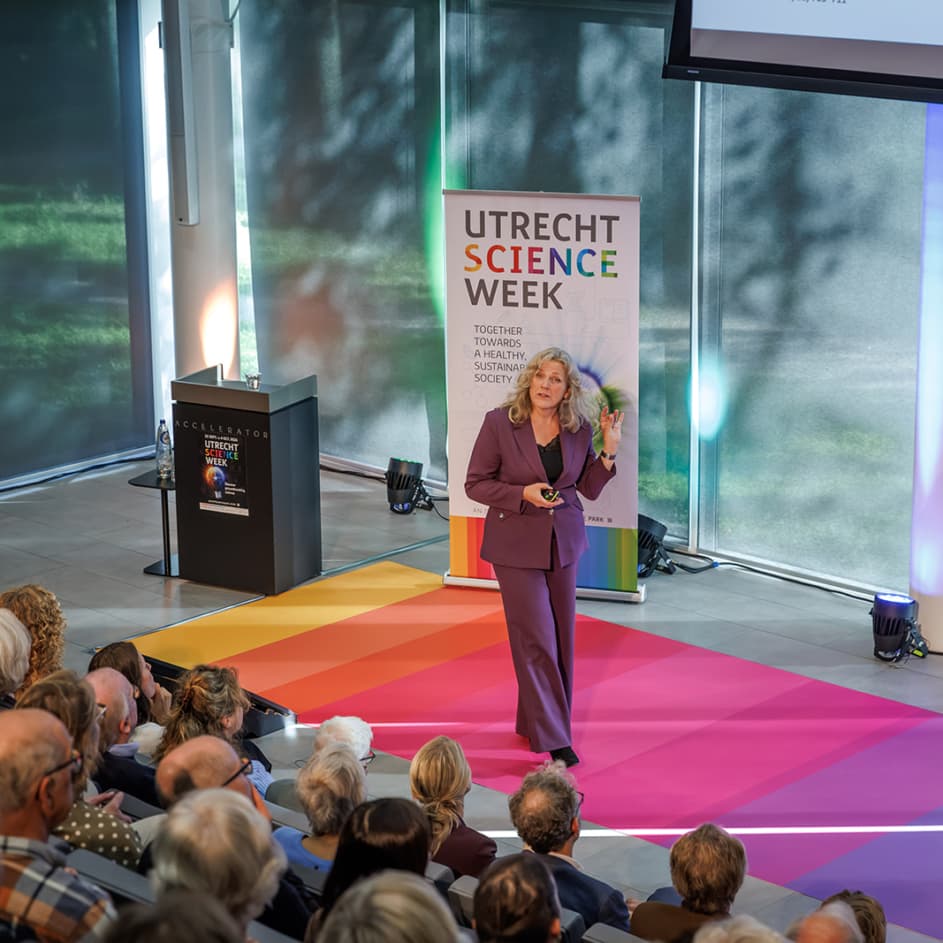
Utrecht Science Week 2026 has come to a close. For over a week, visitors enjoyed workshops, lectures, group discussions, and tours focused on science and innovation at Utrecht Science Park. With more than thirty program activities across over 25 locations, there were ample opportunities to experience science up close. We look back on a fantastic week that once again highlighted the essential role of collaboration, and the combination of research, education, and entrepreneurship, in addressing the societal challenges of our time.