Educate for tomorrow’s healthcare with 3D printing
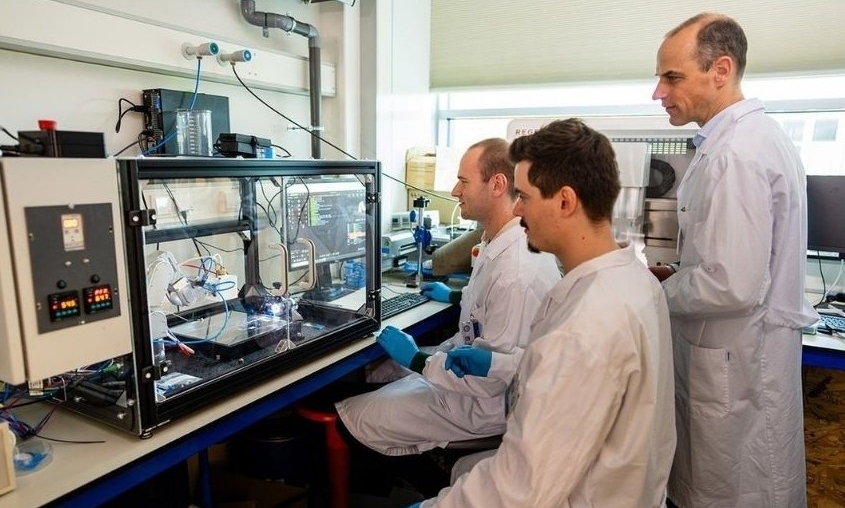
With a new minor in medical 3D bioprinting, HU University of Applied Sciences Utrecht and the University Medical Center Utrecht are training students for the healthcare of the future, in which 3D printing technology is playing an increasingly important role.
The future of healthcare is in the making – literally. On September 1st, a unique minor on medical 3D bioprinting, co-developed by UMC Utrecht, began at HU University of Applied Sciences Utrecht (HU). Fifteen students with a background in engineering or biology began a six-month intensive course on the latest applications of 3D printing technology in healthcare.
The minor is an initiative of UMC Utrecht and the innovation lab for medical 3D (bio)printing at HU. At UMC Utrecht, the research group of Jos Malda, Professor of Biofabrication in Translational Regenerative Medicine, has been conducting leading research on regenerative medicine and 3D bioprinting for years. Under the leadership of Lennard Spauwen, a researcher at HU and UMC Utrecht, the minor’s content was developed and implemented in a short time.
This is the first time that students have been taught this way in a field that is developing rapidly. They’ll learn what’s already happening in the 3D lab at UMC Utrecht—for example, printing cartilage models or structures for cell growth—and get a glimpse into the future of this technology. Lennard Spauwen: “The future of medical 3D bioprinting demands new expertise and multidisciplinary collaboration. With this minor, we’re training students for the healthcare of tomorrow.”
Collaborating at the Utrecht Science Park
A unique aspect of this minor is the intensive collaboration between education and research. The content was developed in close collaboration with several partners at Utrecht Science Park: UMC Utrecht, Utrecht University, HU (Institute for Life Sciences & Chemistry and Institute for Design & Engineering), the Regenerative Medicine Centre Utrecht, and the Innovation Center for Advanced Therapies (ICAT). This makes the minor a powerful example of how disciplines and institutions collaborate to bring innovations in healthcare closer.
Ready for the Future
Interest in the minor was high: the first group of fifteen students quickly filled. After this first edition – in February 2026 – the minor will be evaluated. If the experiences are positive, a new cohort will start in September 2026.
UMC Utrecht and HU are proud of this initiative. It demonstrates how we, together with partners, are investing in education that aligns with the innovations of tomorrow. By connecting research and education in this way, we ensure that students are well-prepared for a future in which 3D bioprinting becomes a permanent fixture in healthcare.
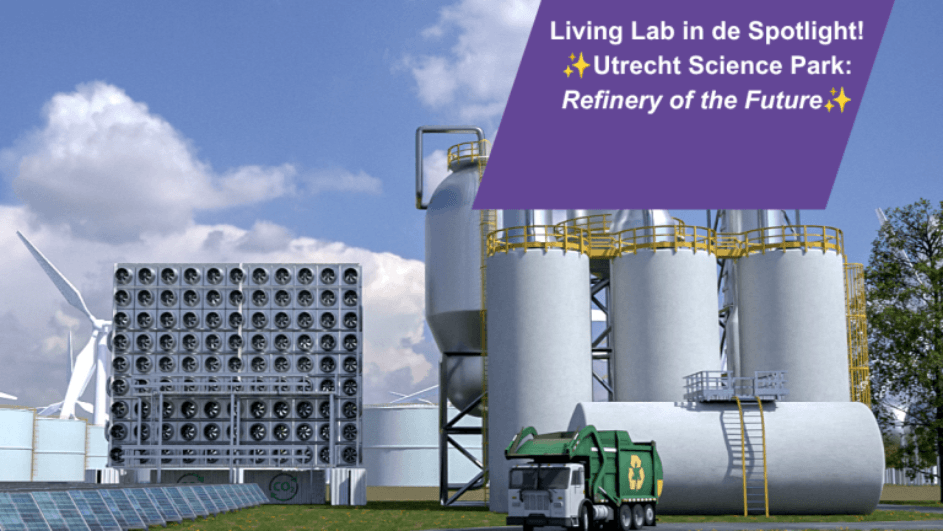
Living Lab in the Spotlight: Utrecht Science Park
Utrecht Science Park is home to several living labs focused on energy and circularity. These include Lumifield, which explores the generation and storage of solar energy, and the biogas digester, which uses organic waste as an energy source. On their own, these are already promising initiatives. Connected, they could become something much bigger: a functioning, learning model for a circular campus.
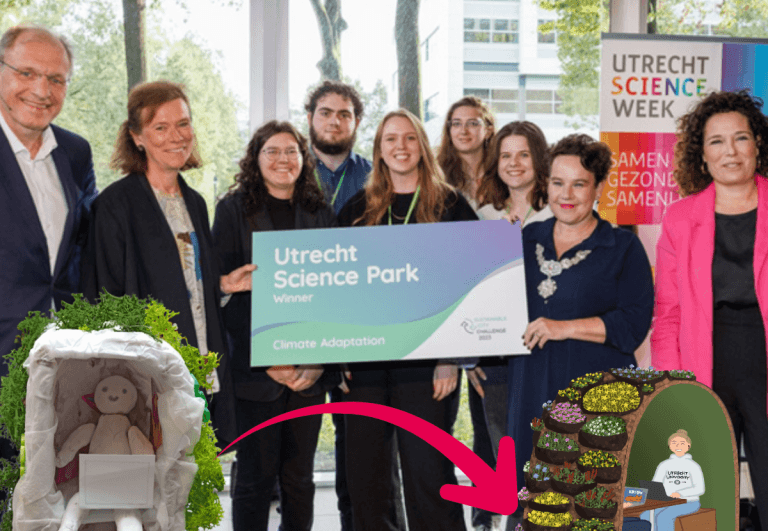
From student idea during challenge to ReGreen Hut at Dutch Design Week
On hot summer days, temperatures can rise significantly at Utrecht Science Park, while students are looking for places to study, relax and find some shade outdoors. At the same time, planting trees is not always straightforward: underground, the campus is crisscrossed by a dense network of cables and utility lines. So how can we create shade, greenery and places to relax without major changes to the ground?
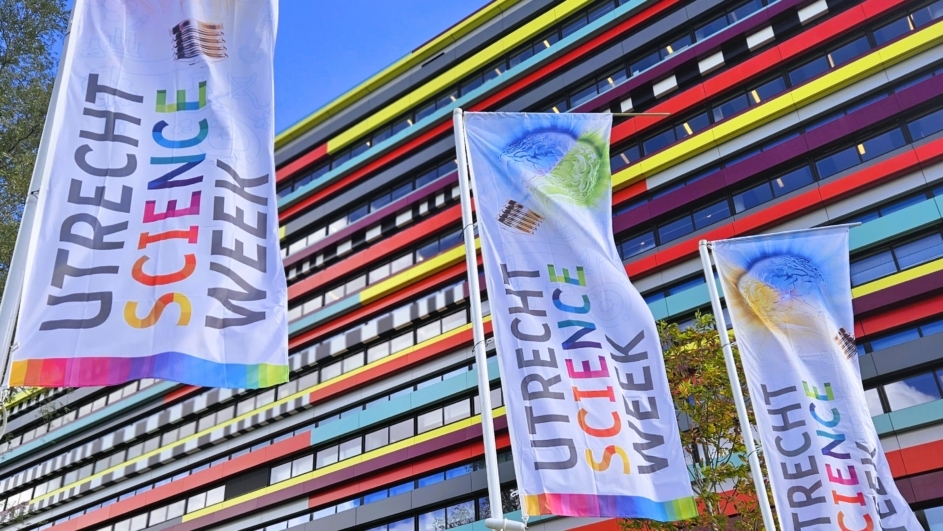
Utrecht Science Week kicks off: social and economic impact of Utrecht Science Park in the spotlight
The sixth edition of Utrecht Science Week takes place from Friday, 25 September to Sunday, 4 October. During this time, Utrecht Science Park opens its doors to the general public, showcasing how research, innovation, and collaboration lead to tangible societal and economic impact. At the same time, the week underscores the importance of sustained investment in knowledge and innovation.
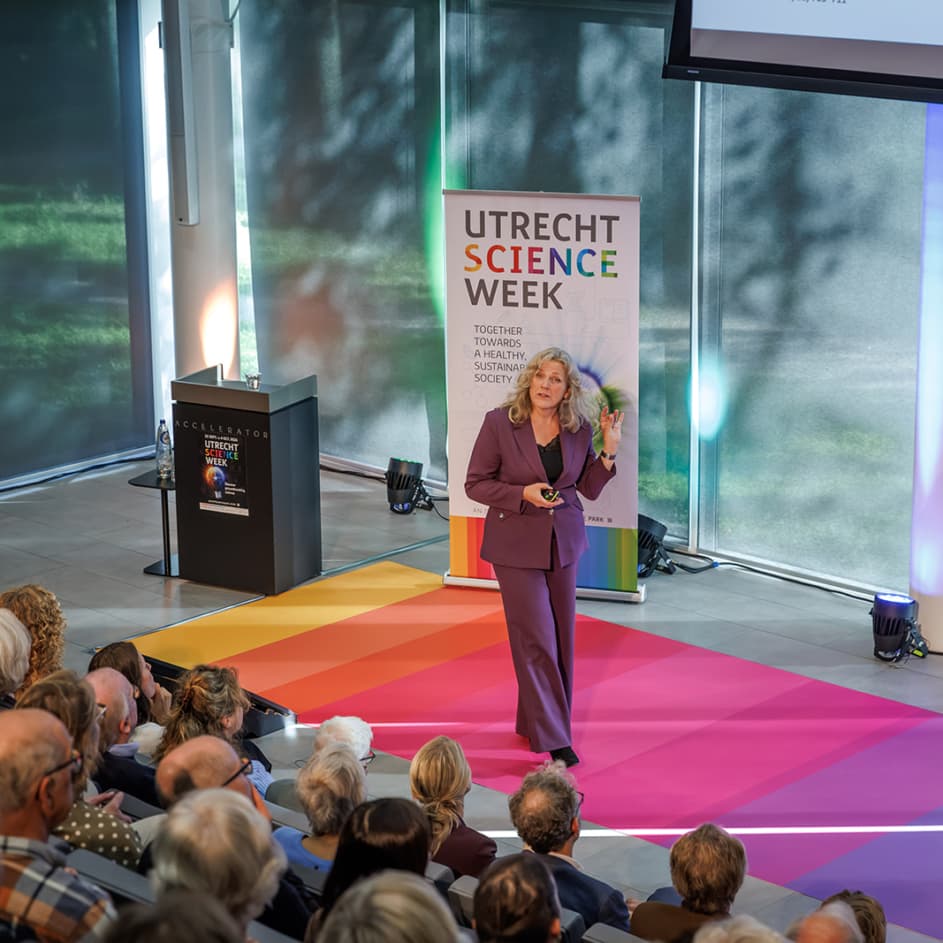
Looking back at Utrecht Science Week: research, education, and entrepreneurship in the spotlight
Utrecht Science Week 2026 has come to a close. For over a week, visitors enjoyed workshops, lectures, group discussions, and tours focused on science and innovation at Utrecht Science Park. With more than thirty program activities across over 25 locations, there were ample opportunities to experience science up close. We look back on a fantastic week that once again highlighted the essential role of collaboration, and the combination of research, education, and entrepreneurship, in addressing the societal challenges of our time.