Clarity on vascular damage in brain scans
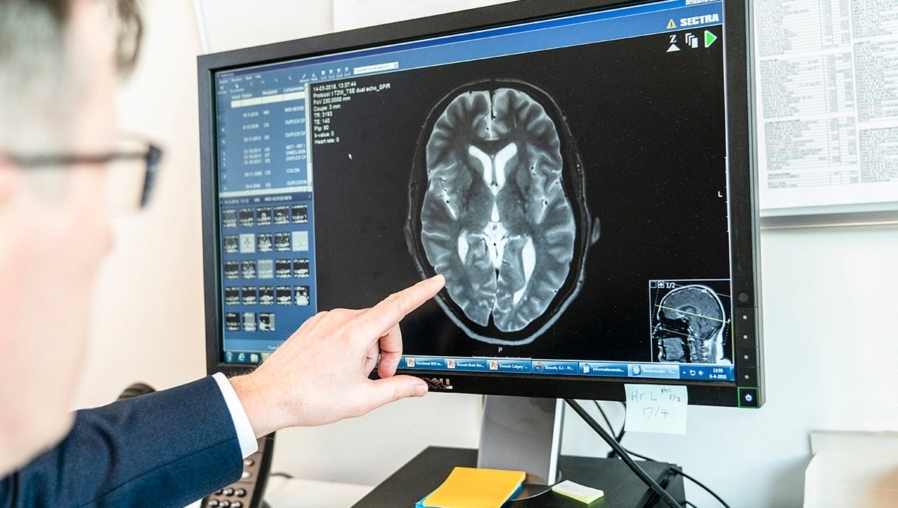
As people age, vascular damage often occurs in the brain. Researchers from UMC Utrecht and Erasmus MC have now developed reference values for this type of damage. These new standards help doctors objectively determine whether changes observed on brain scans are normal for a person’s age and gender or if they deviate from the norm. The researchers have published their findings in two scientific articles.
Reference values are important in healthcare and are often used to interpret research results. “When you take your child to a health clinic, they measure height and weight and compare that to growth charts,” says Prof. Geert Jan Biessels, neurologist at UMC Utrecht. “This allows you to immediately see what is normal and what is not. But in hospitals, brain scans are still largely evaluated by eye. This is subjective, and it often remains unclear whether, for example, vascular damage or shrinkage is appropriate for a patient’s age. As a result, many people are unnecessarily alarmed by their scan results.”
Vascular damage and aging
Even if they have never had a stroke, elderly individuals often have mild vascular damage visible on brain scans. This damage can become severe enough to cause cognitive problems or balance issues. The role of vascular damage is often overlooked or recognized too late. Biessels explains: “Scans can show this damage early on, but without reference values, it can be difficult to properly assess the severity.”
The results presented by the researchers are based on data from two large research projects (see sidebar), to which multiple research groups contributed. In total, more than 20,000 brain scans from thousands of participants were analyzed. These efforts produced detailed charts showing the normal values for different forms of vascular damage by age group and gender, similar to the growth charts used in health clinics.
“These standards provide us as doctors with much more certainty,” says Prof. Meike Vernooij, neuroradiologist at Erasmus MC and involved in the studies. “We can now better determine if what we see on a scan is acceptable in the context of normal aging or if there is reason for further investigation.”
Reassuring patients
The new charts help doctors reassure patients when their scans fall within the expected range. They also offer opportunities for prevention and intervention. For example, doctors can advise patients with brain damage that may lead to stroke or cognitive decline to exercise more, better control their blood pressure and cholesterol, and stop smoking. “Although we cannot stop brain aging, we can limit further damage in some cases by addressing risk factors,” says Biessels.
The researchers expect the new standards to soon become part of clinical practice. In addition to better patient care, the data also contribute to further research into diseases such as dementia and stroke.
International collaboration
The new results come from two collaborative projects:
- The first project, which is part of the Dutch TAP-dementia program, involved researchers from Rotterdam and Utrecht. Using over 11,000 scans from thousands of participants across a wide age range, they mapped the main manifestations of aging-related vascular damage. This damage included white matter lesions (small damages in the connections between brain regions), lacunes (scars from small infarcts), microbleeds, and atrophy (brain shrinkage). Read the scientific article.
- In the second project, the team from Utrecht led a collaboration between 15 research groups worldwide to establish reference values for white matter lesions. Due to its international nature, with participants of various ages, genders, and ethnicities, scanned with different scanners, the study’s results are broadly applicable.
Read the scientific article.

Living Lab in the Spotlight: Utrecht Science Park
Utrecht Science Park is home to several living labs focused on energy and circularity. These include Lumifield, which explores the generation and storage of solar energy, and the biogas digester, which uses organic waste as an energy source. On their own, these are already promising initiatives. Connected, they could become something much bigger: a functioning, learning model for a circular campus.
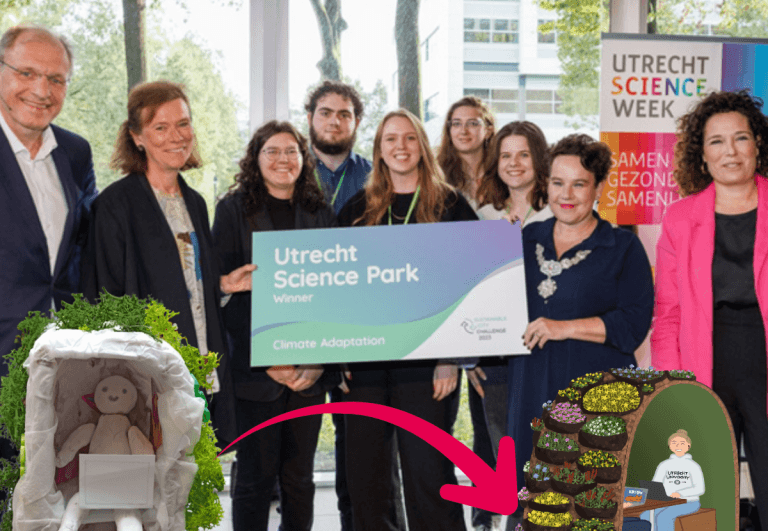
From student idea during challenge to ReGreen Hut at Dutch Design Week
On hot summer days, temperatures can rise significantly at Utrecht Science Park, while students are looking for places to study, relax and find some shade outdoors. At the same time, planting trees is not always straightforward: underground, the campus is crisscrossed by a dense network of cables and utility lines. So how can we create shade, greenery and places to relax without major changes to the ground?
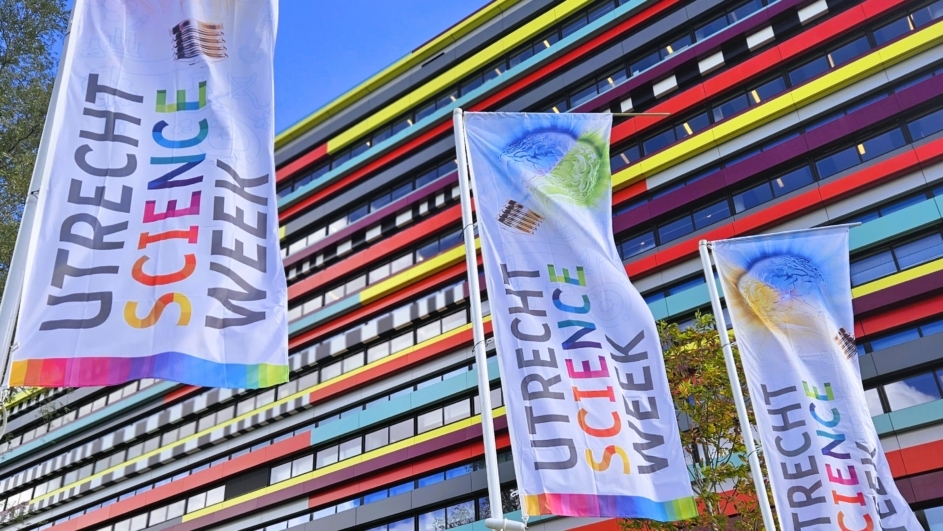
Utrecht Science Week kicks off: social and economic impact of Utrecht Science Park in the spotlight
The sixth edition of Utrecht Science Week takes place from Friday, 25 September to Sunday, 4 October. During this time, Utrecht Science Park opens its doors to the general public, showcasing how research, innovation, and collaboration lead to tangible societal and economic impact. At the same time, the week underscores the importance of sustained investment in knowledge and innovation.
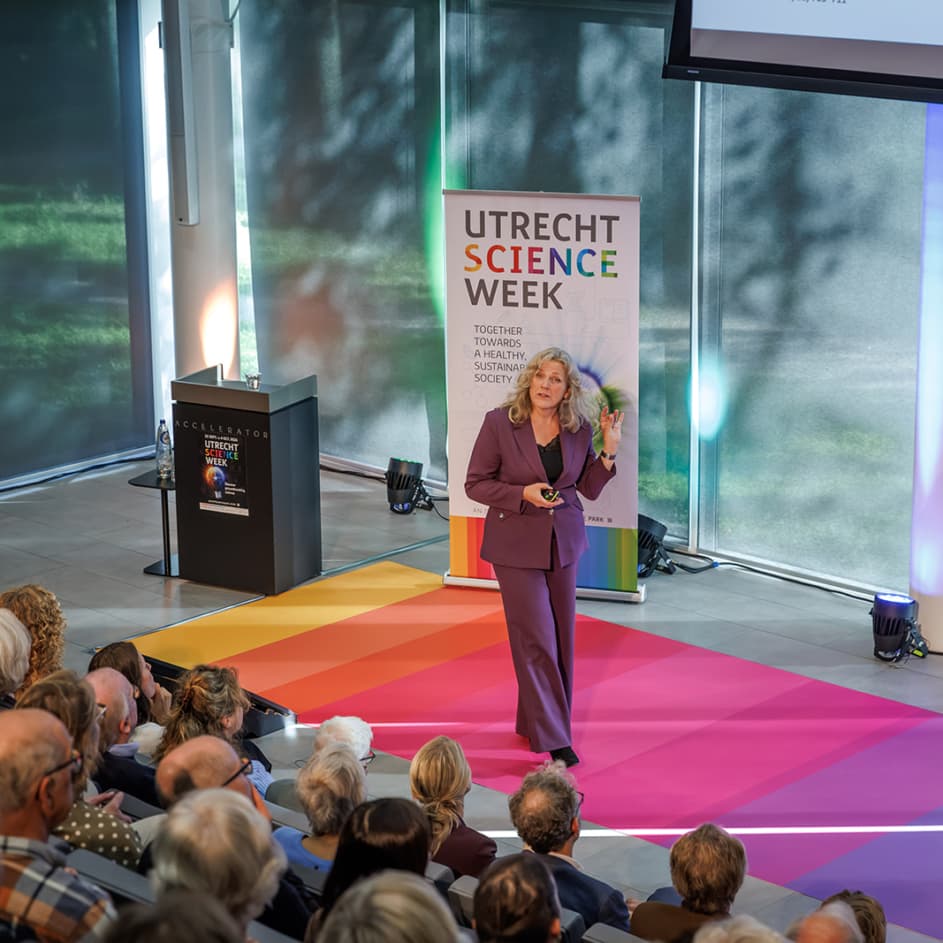
Looking back at Utrecht Science Week: research, education, and entrepreneurship in the spotlight
Utrecht Science Week 2026 has come to a close. For over a week, visitors enjoyed workshops, lectures, group discussions, and tours focused on science and innovation at Utrecht Science Park. With more than thirty program activities across over 25 locations, there were ample opportunities to experience science up close. We look back on a fantastic week that once again highlighted the essential role of collaboration, and the combination of research, education, and entrepreneurship, in addressing the societal challenges of our time.