Southern ground hornbill receives two 3D-printed beaks at University Veterinary Hospital
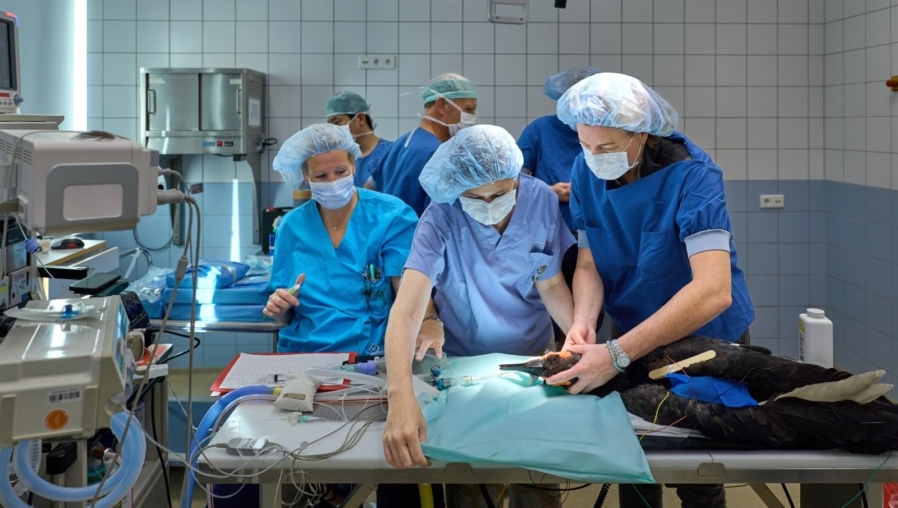
A southern ground hornbill at ARTIS has received two custom-made, 3D-printed prostheses for its broken upper and lower beak at the University Veterinary Hospital in Utrecht. The treatment is a collaboration between ARTIS, Utrecht University’s Faculty of Veterinary Medicine, UMC Utrecht and Amnovis. The procedure was a success: just one day after the operation, the hornbill was able to pick up food independently.
A beak is essential to a bird. The southern ground hornbill uses its beak extensively to groom its feathers and, in particular, to search for food, including by probing the ground with it. This can damage the beak, and beak injuries are a known problem in ground hornbills. After breaking its beak, a male southern ground hornbill was left with just two stumps. Although he managed reasonably well, his ability to carry out everyday activities was limited.
Two new beak parts made with a 3D printer
Using a CT scan and the preserved pieces of his original beak, specialists were able to reconstruct its correct shape. Two plastic prostheses were then 3D-printed and attached during a specialist surgical procedure using titanium components and screws.
The operation was performed by veterinary surgeons Bjorn Meij and Lucinda van Stee from the Faculty of Veterinary Medicine in Utrecht. Joëll Magré from UMC Utrecht’s 3D Lab designed a prosthesis consisting of a titanium base to attach to the beak, manufactured by a Belgian prosthetics company, and an adjustable nylon attachment that could be securely fitted to the base.
ARTIS veterinarian Martine van Zijll Langhout and bird specialist Yvonne van Zeeland, from the Birds and Exotic Animals Department, initiated and developed the project together with the animal care staff involved.
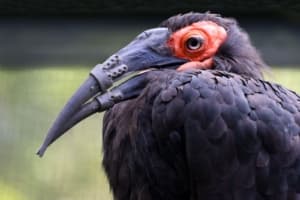
The upper and lower beak are secured with titanium components and screws. Photo: ARTIS, Marcel Bakker
Back in use the day after surgery
The big question was whether the hornbill would accept its new beak. It did not take long: on the very day of the operation, the bird began using the prostheses. The following morning, it picked up a small mouse from the ground on its own. After a few days, it also began grooming its feathers.
Its recovery will be closely monitored in the coming period. The hope is that the prostheses will continue to function well in the long term. If they do, this remarkable treatment could open up new possibilities in veterinary medicine.