Thousands of previously unknown proteins discovered
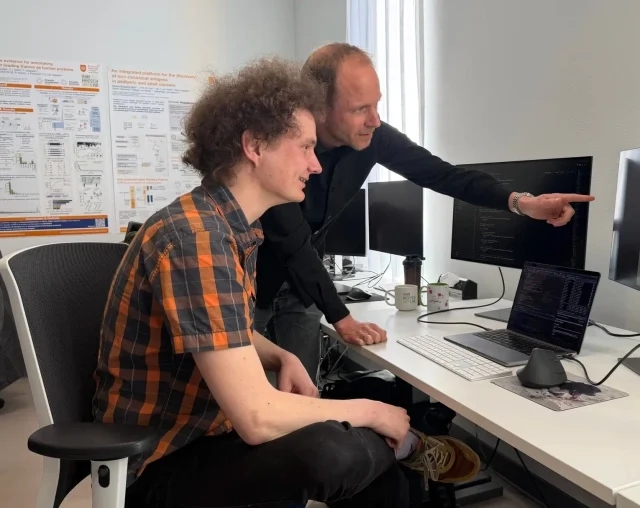
A group of international researchers has discovered 1,700 new proteins. The research data they collected has been made accessible to other scientists. These are small proteins that may play an important role in cells, for example in the development of diseases such as (paediatric) cancer.
The researchers hope to quickly learn more about the function of these newly discovered micro-proteins in the so-called “dark proteome,” which they refer to as peptideins. These proteins may provide potential starting points for new treatments.
“It was a very special moment when we realized: this is truly something new!” says Dr. Sebastiaan van Heesch, research group leader at the Prinses Máxima Centrum and Oncode Institute. Together with two other scientists from the United States, he led the study.
There is still much to learn about these thousands of newly discovered proteins. Leron Kok is a PhD candidate in the Van Heesch group and involved in the research: “What we do know is that they are produced by the thousands in every cell of our body. We have also shown that some of these peptideins are essential for cell survival: the cell dies when you remove the small protein.”
Discovering a new world together
Earlier research into the precise role of the microprotein involved in medulloblastoma took nearly four years. This was published by the Van Heesch group together with the research group of Dr. John Prensner from the University of Michigan, who is also part of the same international research group.
There are still many peptideins left to study. The researchers are therefore pleased that the research data on these new proteins is now accessible to other scientists through databases. This allows other researchers to include them in their own studies and indicate, for example, when they observe that one of the proteins is involved in a particular cellular process, carries DNA changes linked to diseases, or frequently appears in certain forms of cancer.
Researchers can also use the database to make their research results more complete. Thousands of additional peptideins that previously remained invisible in research results, despite being present in the cell, can now be included. Van Heesch says: “This is how we are discovering this new world of previously unknown proteins together.”
The results were published today in the leading scientific journal Nature. Earlier, both Nature and the equally prestigious journal Science published news articles about this research. The study was made possible through funding from many organizations. For the research conducted at Máxima, these included Oncode Accelerator, the Dutch Research Council (NWO), Oncode Institute, and KiKa.