Scientists strip cancer cells of their disguise using sound waves
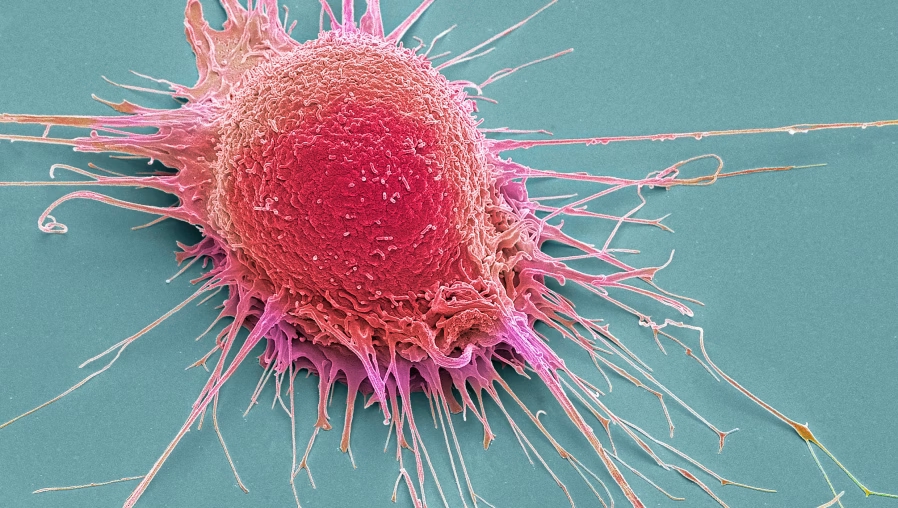
A combination of immunotherapy and ultrasound appears to be safe and may potentially help treat metastatic cancer in the future. However, research into this new treatment is still in an early stage.
Usually, the immune system can recognize cancer cells and eliminate them. However, tumor cells often manage to escape: they send signals to immune cells that essentially lull them to sleep. In this way, cancer cells disguise themselves as “not dangerous.” This allows the cancer to continue growing unnoticed and spread to other parts of the body.
Immunotherapy is an existing treatment that trains the immune system to recognize and destroy cancer cells. The therapy blocks the inhibitory signals sent by cancer cells to immune cells, reactivating them so they can neutralize the tumor. However, immunotherapy does not work for all types of cancer.
Physician-researcher Emma van Dijk (UMC Utrecht) and her colleagues treated six patients with different types of metastatic cancer for whom earlier, milder immunotherapy had not been effective. These patients received two forms of immunotherapy followed by a one-time ultrasound treatment, the same type of sound used in prenatal scans. Using a specialized device, the researchers focused the sound waves so they converged at a focal point, allowing them to destroy part of the tumor.
The patients tolerated the treatment well and experienced no side effects beyond those typically associated with immunotherapy. Van Dijk is presenting the interim results today at the European Conference on Interventional Oncology in Basel.
Disguise falling away
The targeted sound waves have two effects, Van Dijk explains. The vibrations create tiny air bubbles that pull the tumor apart. In addition, the sound waves slightly heat the tissue at the focal point, creating temperature differences. These differences can be precisely visualized using an MRI scanner, on which the patient lies. “This allows us to see exactly, down to the millimeter, where we are treating,” says Van Dijk.
When the tumor breaks apart, it also loses its disguise. Earlier research in mice showed that this process releases various proteins. This enables immune cells to recognize the cancer cells again and eliminate them. This effect was observed not only at the ultrasound treatment site, but also in metastases elsewhere in the body. Whether this works the same way in humans is still under investigation.
Future prospects
The research is still in an early stage. The goal was to determine whether the new combination treatment is safe and whether tumors can be effectively targeted with sound waves. That is why only a small number of patients participated. “We cannot yet say how effective the treatment really is,” Van Dijk notes.
However, in two of the six patients, tumors did shrink, and in one patient, metastases disappeared completely. Seeing a response in half of the patients is unexpected and rare for a safety study.
Christian Blank, an internist-oncologist at the Antoni van Leeuwenhoek Hospital in Amsterdam who was not involved in the study, is more cautious. “Previous immunotherapy had not worked, but these patients received two types of immunotherapy combined with sound waves. So it’s unclear whether the response was caused by the sound waves or the additional immunotherapy,” he explains. The patient group was also highly selective.
Sound waves
The idea of making tumors more sensitive to immunotherapy is promising, but not unique to sound waves, Blank adds. Radiation therapy can have a similar effect. Whether sound waves work differently or better has not yet been proven, as this comparison was not made in the mouse studies.
Van Dijk and her team are still analyzing patients’ blood to determine which proteins were released and in which patients. This may provide leads for more targeted research into which types of cancer are most likely to respond to this combination therapy. Larger studies will then be needed to confirm these findings.