Record number of children from across the province of Utrecht meet researchers
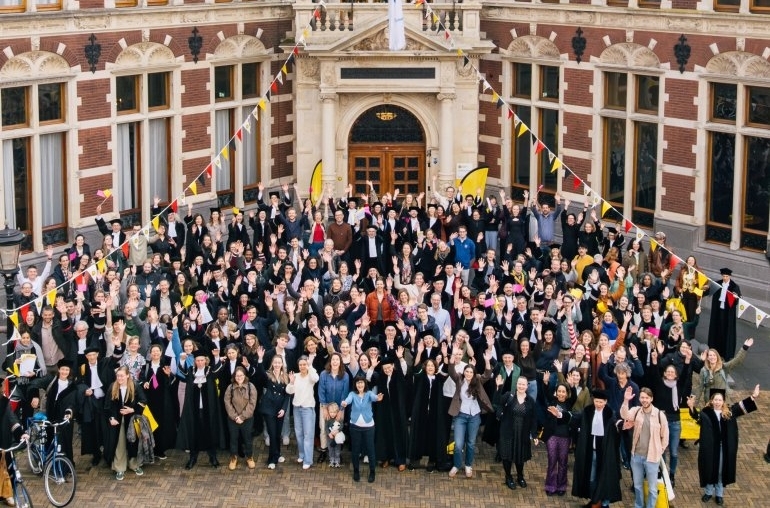
A morning spent interviewing, pipetting or philosophising with researchers from Utrecht. That’s what 3,400 children from Utrecht did on the morning of Wednesday 1 April during the eleventh edition of Meet the Professor. 280 researchers from Utrecht cycled to primary schools in the city and surrounding area to show the children who they are, what they do and what sparks their curiosity. In pairs, because research is something you do together.
Meet the…?
Meet the Professor has been running since 2016, but this year the programme was revamped. Children not only met professors, but also researchers in other roles: two-thirds of the participants were laboratory technicians, trainee researchers, students, lecturers or otherwise involved in research. In fact, one-third of the pairs did not include a professor at all. Schools from the province also took part for the first time, meaning that researchers now visited places such as Amersfoort and Zeist.
Science for everyone
Programme producer Lieke Dekker: ‘We want to introduce children to a wide range of research fields, methods and researchers, so that they can see how knowledge is created. Because science concerns everyone. That’s why we’ve opened up Meet the Professor to all researchers in Utrecht and all primary schools in Utrecht, including those in the wider region. It’s wonderful to see such a high level of interest.’
New perspectives
After a brief training session at the Utrecht University Museum, the researchers designed their own lesson. They let the children conduct their own research: from interviewing to pipetting and philosophising. Rector Magnificus Wilco Hazeleger: ‘We all learn from these visits: children gain a realistic picture of science and of researchers. And as a university, we discover new perspectives for our research. Because the children from our region ask such excellent and interesting questions!’