Personalized treatment of colon cancer
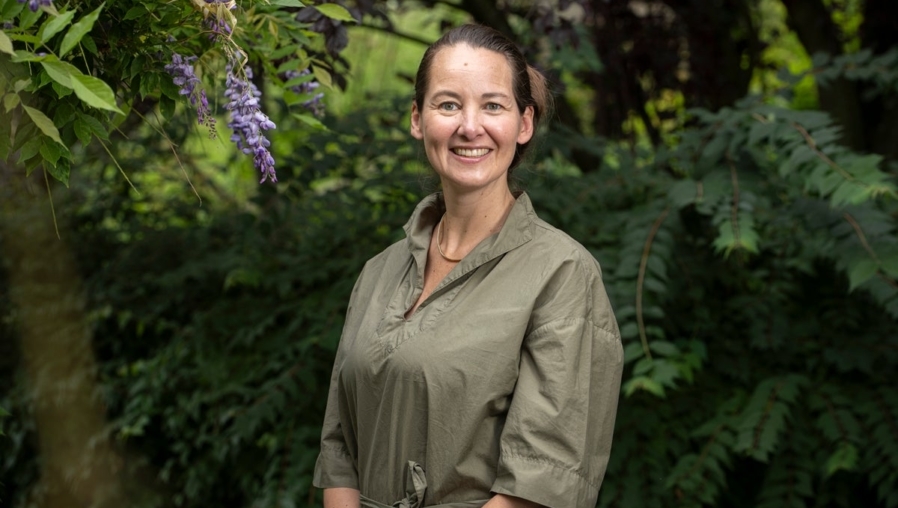
Treating people with bowel cancer faster with the latest therapies. Better tailoring treatments to the individual patient. Plus: preventing unnecessary treatments.
Internist-oncologist Jeanine Roodhart focuses on colorectal cancer and so-called ‘translational research’: research that directly translates new findings in the laboratory into better care for patients. As of July 15, 2026, she has been appointed UMC Utrecht’s Professor of Translational Medical Oncology.
“My ultimate goal is that every patient receives the treatment that best suits his or her tumor. No more treatment than necessary, but also no missed opportunities. We work on that together every day.” How exactly will Jeanine work on this in the coming years?
What suits which patient best?
Colorectal cancer is one of the most common forms of cancer in the Netherlands. Many patients face (a combination of) intensive treatments, such as chemotherapy, immunotherapy, or surgery. Not every treatment works equally well for every patient. At the same time, some people receive more treatment than necessary, and are therefore unnecessarily burdened.
Jeanine wants to change that. Her research focuses on better understanding tumors and predicting which treatment is best suited for an individual patient.
“My research focuses on improving the survival rate and quality of life of patients with colorectal cancer,” Jeanine explains. “We do this through innovation via translational research. We develop new treatments, improve existing therapies, and look for tumor characteristics that help to better tailor treatments to the patient.”
It is precisely contact with patients that reveals where there is still room for improvement. That is often where the most important research questions arise.
Jeanine Roodhart
Professor of Translational Medical Oncology
From lab to hospital bed
Translational research forms the common thread in Jeanine’s work. In this field, researchers in the laboratory collaborate closely with doctors in the consulting room. New insights from research are tested more quickly on patients in clinical trials. At the same time, patient experiences generate new research questions.
“An important strength of my work is the close connection between patient care and research,” says Jeanine. “We take what we see in the consulting room back to the laboratory. And we try to translate new insights from the laboratory into better care for patients as quickly as possible.”
Personal care
Colorectal cancer affects thousands of people in the Netherlands every year. For many patients, the disease has major consequences for their daily lives, work, and family. Although treatments have improved significantly in recent years, major challenges remain. Not every patient responds the same way to treatment.
Jeanine sees every day how important it is to better tailor treatments to the individual patient. Within the UMC Utrecht, she treats patients with colorectal cancer, including in a specialized consultation hour for complex patients and second opinions. In her consulting room, care, research, and innovation come together directly. This combination motivates her to constantly ask new research questions.
“It is precisely contact with patients that reveals where there is still room for improvement,” she says. “That is often where the most important research questions arise.”
On the border of disciplines
In addition to her consultations, Jeanine supervises early clinical studies. In these studies, the latest treatments and insights are tested on a small, carefully selected group of patients.
During these studies, she investigates, for example, which patients benefit from a new therapy and which patients might require less treatment. This aligns with UMC Utrecht’s ambition to make care increasingly personal and targeted.
Jeanine’s chair in Translational Medical Oncology therefore focuses not only on new therapies but also on preventing overtreatment. This is important for patients and for healthcare as a whole.
According to Jeanine, this calls for collaboration between different disciplines. “Successful innovation only arises when biologists, doctors, data scientists, and other specialists truly collaborate in a multidisciplinary way,” she clarifies. “It is precisely at the interface of disciplines that new ideas emerge.”
Predicting with mini-organs
Within the UMC Utrecht, Jeanine is Head of Research at the Department of Medical Oncology. An important part of her research involves working with so-called organoids. These are small mini-organs or mini-tumors that are grown in the laboratory from patient material. In the future, this will allow researchers to better predict how a tumor will respond to treatment.
“With organoids, we can test treatments on material from real patients,” she explains. “That helps us to better predict which therapy is promising and which is not.”
UMC Utrecht, the Hubrecht Institute, and other partners in Utrecht are among the international leaders in this field. The development of organoids has transformed cancer research worldwide.
Over the past few years, Jeanine has built up extensive biobanks of organoids from patients with colon cancer. These are used to test new medicines, better understand resistance to treatments, and determine so-called ‘biomarkers’.
Biomarkers are measurable characteristics that can help predict which treatment works best. Examples include specific genetic properties of tumors or their environment. Perhaps there is a DNA mutation, or certain proteins are behaving abnormally? By intelligently combining this information, researchers hope to be able to treat patients more effectively.
New medicines thanks to organoids
Jeanine’s research focuses, among other things, on patients for whom standard treatments are insufficient. Together with researchers from various disciplines, she seeks new combinations of medicines and ways to break resistance to therapies.
An example of that is the RASTRIC study, in which a new combination treatment for colon cancer is being tested. That therapy was developed based on research with organoids. It involves a mix of three existing medicines that have not previously been used in this combination for colon cancer.
“When this new combination treatment was first administered to patients, it unfortunately did not work as hoped for most. This experimental treatment also unfortunately failed to take effect in patients for whom standard therapies were no longer effective,” explains Jeanine.
Using the tissues and organoids from precisely these patients, we can now investigate the treatment more precisely in the laboratory. This helps to better understand resistance to the therapy and to develop new treatments specifically for these tumors that have become insensitive. In this way, the research contributes best to new treatments for the group of patients who need them most.
Innovation thanks to data and AI
In addition, Jeanine investigates how AI and digitalization can help to better analyze tumors. By combining large amounts of data, new opportunities arise to personalize treatments.
She therefore leads, among other things, the patient cohort platform of Oncode Accelerator, a national initiative intended to accelerate research into new cancer treatments.
Within the patient cohort platform, patient data, tumor material, organoids, and AI are combined to gain new insights more quickly. By collecting and analyzing data and materials on a large scale, researchers can discover patterns that previously remained hidden.
“By smartly connecting research, data, and patient care, we can accelerate innovation,” concludes Jeanine.
Curiosity and balance
In addition to research and patient care, education plays an important role in Jeanine’s work. She supervises PhD candidates, residents, and students, and is known for her personal mentoring style.
In 2022, she received the Daily Supervisor of the Year award from the Graduate School of Life Sciences at Utrecht University. According to her, good supervision goes beyond just scientific results.
I find it important to pay attention to the person behind the researcher. “Science requires curiosity and ambition, but also room for personal development and balance.”
Translating knowledge into better care
Through the strong connection between laboratory research and clinical practice, UMC Utrecht aims to make new discoveries available to patients more quickly.
That is sorely needed, Jeanine emphasizes. “A tremendous amount is currently happening in cancer research. New technologies are giving us increasing insight into tumors and treatment response. The challenge is to truly translate that knowledge into better care for patients.”
With her chair, she aims to contribute to a future in which treatments for colorectal cancer become increasingly personalized.
My ambition is to further develop UMC Utrecht into an international center for translational colorectal cancer research. Through national and international collaboration, new treatments can ultimately reach the patients who benefit from them more quickly.
Jeanine in brief
- Jeanine (1983) studied medicine and obtained her PhD at UMC Utrecht/Utrecht University.
- Subsequently, she was trained as an internist-oncologist/medical oncologist at the UMC Utrecht and the St. Antonius Hospital.
- Since 2018, she has been working as an internist-oncologist and researcher at the UMC Utrecht.
- In 2022, Jeanine became an associate professor at UMC Utrecht.
- As of mid-July 2026, Jeanine has been appointed Professor of Translational Medical Oncology.
- Jeanine lives in Bussum with her husband Reinier and 2 sons (9 and 12).
Why did you choose medical oncology?
I can combine personally supporting patients with the underlying biology of cancer. For example, I want to understand how tumors and metastases develop, why treatments do or do not work, the relationship between tumors and healthy cells, and how they make the immune system work for them. But in addition, I get to support people over the long term. I really get to know them and can mean a great deal to them. Together with the patients, I look at what is best for them at that moment and what aligns with both their personal circumstances and wishes, as well as the biology of the disease. As a medical oncologist, you get very close to people.