One hundred new birdhouses in the Botanic Gardens
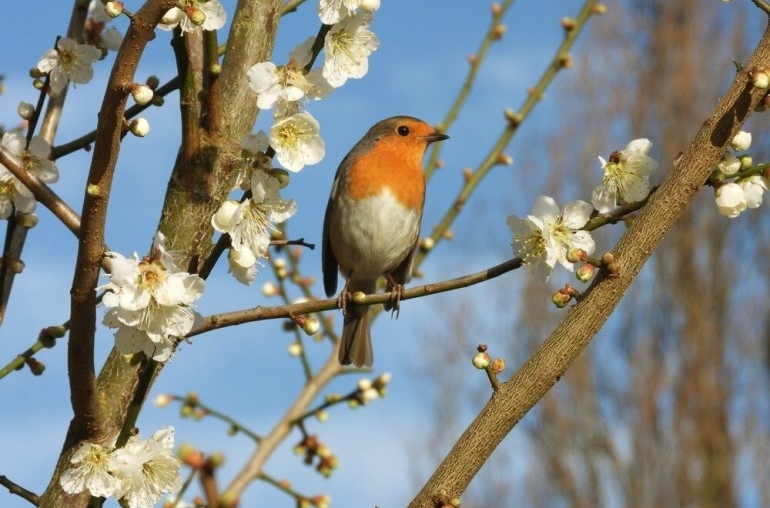
Around one hundred new nest boxes have recently been put up at Utrecht University Botanic Gardens. They were placed by intern Mila Brouwer (17), a student of Ecology & Wildlife. With this addition, there are now about two hundred nest boxes in the Gardens, providing birds with nesting sites and helping to map biodiversity in the area.
A tailored home
The nest boxes serve two important purposes: providing suitable nesting sites for a wider range of bird species and encouraging regular ‘feathered visitors’ to return to the Botanic Gardens. The boxes come in various shapes and sizes, tailored to different types of birds. There are low, round boxes for robins and wrens, and taller ones for starlings, nuthatches, and blue tits.
“Every bird gets its own tailored home,” says Mila, who mounted all the boxes and carefully considered their placement and height. “Some birds prefer lower spots, while others like to nest higher up. We also make sure to leave enough space between the boxes so the birds don’t disturb one another.”
The new nest boxes originated from a campaign at the Utrecht University staff Christmas market, where every birdhouse purchased automatically resulted in a donation to the Botanic Gardens, an initiative that aligns with the university’s ambition to strengthen biodiversity.
Mapping biodiversity
Next to installing the boxes, Mila also numbered them and mapped their locations digitally. “This allows us to carry out targeted research on birds in the Gardens from here on,” explains Gerard van Buiten, head gardener of the Botanic Gardens and Mila’s internship supervisor.
“By tracking which bird species nest where over several years, we can investigate whether changes in the Gardens affect the birds that breed here.” In this way, the nest boxes and the digital map contribute to strengthening biodiversity in the Utrecht Science Park area.
“When we removed old nest boxes, we sometimes found an egg from the previous year. From the pattern on the egg, as well as small feathers or food remains, you can often tell which bird nested in the box.”- Mila Brouwer, student Ecology & Wildlife at Yuverta
Detective work
But how do you actually know which bird has nested in a box? Mila explains: “When we removed older birdhouses, we sometimes found an egg from the previous year. You can often tell which bird it belongs to from the pattern on the egg. Leftover food, feathers and other traces can also reveal which bird has bred in a nest box.”
Mila looks back on her internship with a smile: “I’m quite sad to be leaving. It was a really fun project to work on. Sometimes you’ve just put up a birdhouse and you immediately see a bird fly in, it’s simply amazing to see that happen!”